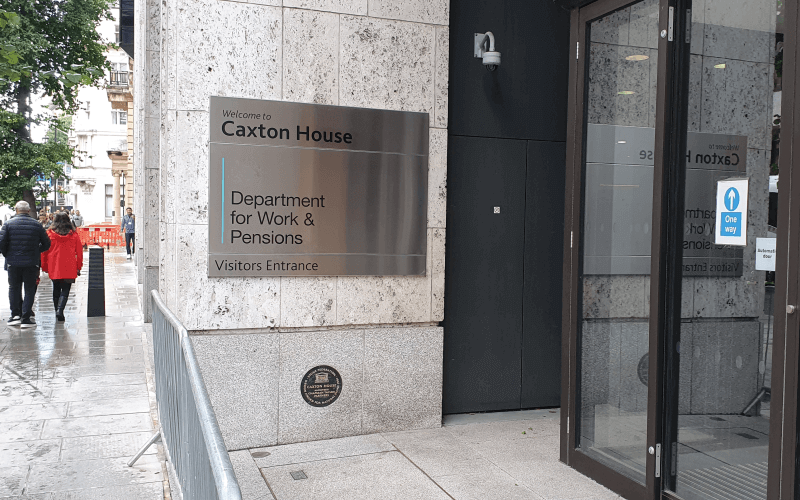
Department for Work and Pensions (DWP) civil servants who commissioned a key piece of research on claimants of out-of-work disability benefits blocked researchers from discussing “shocking” data showing how many of them had attempted suicide.
The research, commissioned in 2018, examined the “health, social and economic profile” of disabled people who receive employment and support allowance (ESA).
It was viewed as “a unique opportunity to gain valuable insights into the mental health and life circumstances of this group of people, and compare their experiences to those in the rest of the working age population”.
This was because it used data from the national Adult Psychiatric Morbidity Survey (APMS), England’s highest quality survey of the population’s mental health, whose results had been published in September 2016.
Disability News Service reported in November 2017 how the “shocking” APMS figures showed that more than two-fifths (43.2 per cent) of ESA claimants said they had attempted suicide at some point in their lives, while two-thirds (66 per cent) had had suicidal thoughts.
The following year, DWP commissioned social research agency NatCen to examine the “particular challenges and barriers faced” by ESA claimants to “inform thinking on how best to develop a health and disability benefit system that supports people into work, where possible, and to live independent lives”.
But it told NatCen not to include any discussion of the figures showing how many ESA claimants had tried to take their own lives, or how many of them had had thoughts of suicide.
And when NatCen passed its completed report to DWP, there was no mention of those figures.
Instead, the report showed that ESA claimants were “a population reporting high levels of stress”, while “many faced serious debt arrears” and were “more likely to live by themselves, have a small network, and feel isolated and lonely”.
There was no mention of attempted suicide, self-harm or suicidal ideation.
Last week, DNS reported how Conservative ministers prevented the report from being published and ensured it was not included in a “health and disability” green paper.
The NatCen report was only finally published last autumn by the new Labour government, as part of a batch of 31 research papers the last government had “sat on” for up to six years.
This week, a NatCen spokesperson refused to confirm that DWP asked for the figures to be excluded from the report.
Instead, she said: “Self-harm and suicidality were not part of the agreed scope of this particular report as the topics were covered in 2014 in the main APMS report.
“This is all we are aware of as commissioned researchers on the project.”
She later added: “As the DWP were the commissioners of this research, you will need to talk to them for more information.
“All we can say is that self-harm and suicidality were not part of the agreed scope of this particular report.”
DWP was asked on Monday how it justified telling NatCen to omit discussion of the figures from its report, and whether it now regretted that decision.
Despite confirming receipt of the questions on Monday, and later apologising for the delay in responding, it had failed to produce a response by noon today (Thursday).
The years after the NatCen report was commissioned were marked by Conservative governments continuing to push for measures that would make it harder for disabled people to receive ESA and other out-of-work disability benefits.
This led eventually to a consultation on proposals, published in September 2023, for tighter restrictions on the work capability assessment, which would cut spending by about £3 billion over four years.
Last week, disabled activist Ellen Clifford succeeded in persuading the high court that the consultation was “misleading”, “unfair” and “unlawful” (see separate story).
The years since the NatCen report was commissioned were also marked by the suicides of many claimants of ESA and its universal credit equivalent, including Roy Curtis in 2018 and Kevin Gale in March 2022, and the death following self-harm of Nazerine Anderson in June 2023.
A note from the editor:
Please consider making a voluntary financial contribution to support the work of DNS and allow it to continue producing independent, carefully-researched news stories that focus on the lives and rights of disabled people and their user-led organisations.
Please do not contribute if you cannot afford to do so, and please note that DNS is not a charity. It is run and owned by disabled journalist John Pring and has been from its launch in April 2009.
Thank you for anything you can do to support the work of DNS…
 Ministers silent over Milburn’s foul-mouthed outburst after he was challenged on safeguarding
 Union report exposes how staffing crisis at DWP is harming ‘vulnerable’ claimants
 Thousands of disabled people could benefit from activist’s universal credit and council tax court win