The children’s commissioner has said she has become “increasingly dismayed” by the number of disabled and other children with “complex needs” who are being deprived of their liberty by the state.
In a report commissioned by the Department for Education and NHS England, Dame Rachel de Souza said that more than 1,000 children a year who were not in secure settings in England were being subjected to high court deprivation of liberty orders*.
Many of them have learning difficulties, are autistic, or have experience of mental distress, mental ill-health or trauma.
The deprivation of liberty orders may allow them to be supervised constantly, prevented from leaving their accommodation when they want to, denied phone and internet access, and restrained by staff.
Dame Rachel said the children affected were often “extremely isolated, and largely hidden from view”.
Nearly all the children are in the care system, she said, but some are living in “highly unsuitable” settings, such as illegal children’s homes, Airbnb accommodation, or hospital wards while awaiting discharge.
As part of the report, her office interviewed 15 children in the care of English local authorities who had experience of having their liberty restricted.
They often questioned why they and their families had not been supported before their situation “escalated beyond their control”, and why their behaviour was often labelled as challenging and risky, “instead of being recognised as a response to trauma”.
Some of them, particularly those who were autistic or had a mental health diagnosis, had experienced multiple episodes of being physically restrained, which added to their distress.
One of them, who was 15 at the time they were interviewed, said: “I can say what I like, and people can pretend to listen, but it never gets took into consideration, ever.”
Another, aged 17, said: “When I was first on the deprivation of liberty order I wasn’t actually told anything about it… They told me to attend a court hearing via video link… I didn’t have any legal advice… I didn’t have a clue.
“They were just mentioning deprivation of liberty, this that and the other.
“I didn’t even know about it or what it was to be honest… I didn’t have a guardian at that stage… It was very, very quick.
“And then I moved to a worse, unregulated care setting.”
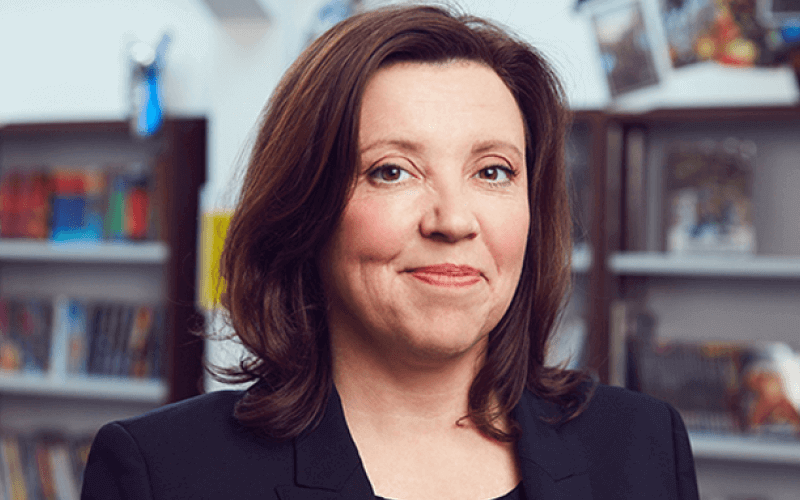
Dame Rachel (pictured) said: “The fact that we have so many children living under these circumstances is one of the strongest arguments that can be made for the urgency of reforming children’s social care.”
She added: “We need more support for families and children early on, and a care system that is fit for purpose so that children do not reach crisis point.”
And she said that, for the “very small number” of children who need controls on their freedom to keep them or others safe, “we must make sure they have not only excellent, individualised care, but also full protection under the law”.
She also said there was a “clear and urgent need for more specialist children’s homes”.
The report concludes: “All children who are looked after in the care system should have safe and supportive homes.
“If this cannot be with kinship or foster carers, it must be in registered children’s homes with a nurturing environment, where children can feel safe, loved, and empowered to access the help they need to address their mental health difficulties, risks, and trauma.
“It should never be the case that a child is deprived of their liberty due to a lack of appropriate provision, or that a deprivation of liberty order is used to enable local authorities to place children in accommodation that would otherwise be unsafe.”
Among multiple recommendations, the report describes 10 goals, including that children have support to avoid a deprivation of liberty wherever possible; that they are heard and involved at all stages of any intervention; and that every looked after child “lives in a quality home that meets all of their needs”.
It also calls for a new legal framework to protect all children deprived of liberty; and it says they should receive support for as long as they need it.
In response to the report, education secretary Bridget Phillipson said: “Children who have been deprived of their liberty are facing the most heart-breaking experiences, with many being retraumatised by a system that can’t meet their needs.
“That is why I’ve confirmed plans to break down the barriers to opportunity that they are facing, including by developing new community-based provision to meet their needs to give children the best life chances.
“Our reforms will go even further to give vulnerable children the best life chances by lifting the curtain on care providers profiteering off of vulnerable children, tackling unregistered placements and shifting the focus back to earlier intervention to help children achieve and thrive.”
*A deprivation of liberty occurs when restrictions are placed on a child, without valid consent, that are beyond what would normally be expected for a child that age
A note from the editor:
Please consider making a voluntary financial contribution to support the work of DNS and allow it to continue producing independent, carefully-researched news stories that focus on the lives and rights of disabled people and their user-led organisations.
Please do not contribute if you cannot afford to do so, and please note that DNS is not a charity. It is run and owned by disabled journalist John Pring and has been from its launch in April 2009.
Thank you for anything you can do to support the work of DNS…
 Relationship and sex education failures put disabled pupils at risk of abuse, says new report
 Ministers launch ‘inclusion base’ guidance after research finds concerns over existing units in schools
 EHRC’s ‘heart-breaking and disgraceful’ failure to name its one disabled commissioner