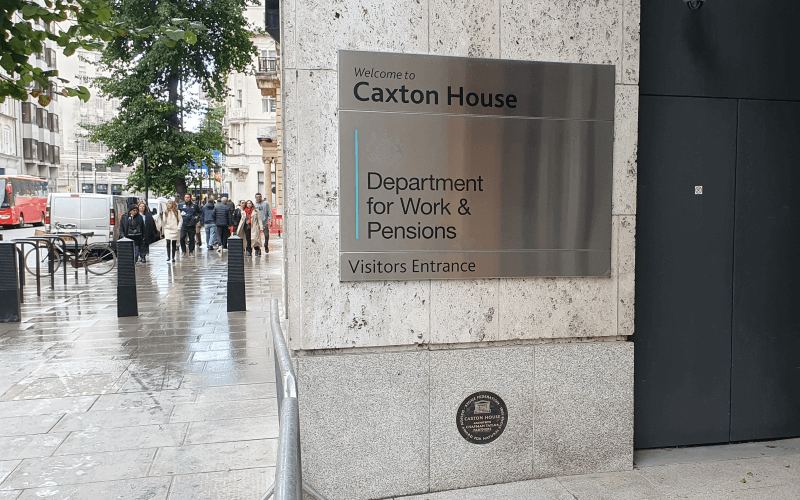
Disabled people who have taken part voluntarily in a government employment support programme have been more likely to find jobs than claimants who were forced into the scheme, research has found.
An updated research report on the programme, carried out on behalf of the Department for Work and Pensions (DWP) and first published last October, analyses the success of the Work and Health Programme (WHP), which was launched in England and Wales between November 2017 and April 2018.
The programme has been delivered by various private sector and charity service-providers, and taking part was voluntary for those referred to the “disability group”.
But taking part in the WHP was compulsory for claimants of jobseeker’s allowance and universal credit who had been unemployed for two years – before the government introduced its Restart programme in 2020 – although many in this group would also have been disabled people.
Researchers compared the results under the private and voluntary sector WHP providers with the kind of support being offered by DWP through Jobcentre Plus.
They found that those who took part in the WHP voluntarily were significantly more likely than those who received the typical jobcentre job support voluntarily to have done some paid work since starting the programme (27 per cent compared to 22 per cent).
But those who took part voluntarily were also working longer hours than those who were forced to take part, and they were more likely to be employed full-time.
More than a quarter (26 per cent) of those who took part in the WHP voluntarily had started some paid work since being referred, compared with just 17 per cent of those who were forced to take part, while the proportion in work at the time of the survey in 2021 was also higher (17 per cent compared with 11 per cent).
More than 80 per cent of those who received WHP support said they were either fairly or very satisfied with that support.
One said: “They seem to want to get people back into work, while the [other programme] workers could not have cared less.”
By May last year, 410,000 people had been referred to the programme, with 316,000 of them in the disability group.
Referrals are due to end in September, with most new referrals now likely to be disabled people.
Under the programme, each participant is allocated a key worker who meets them regularly and provides support for up to 15 months, as well as referring them to specialist support if needed.
Support includes financial, housing, health and childcare advice, as well as in-work support for many of those who secure jobs.
The report concluded: “Voluntary participation was highlighted as a critical aspect of the WHP and created a basis for genuine conversation with key workers about readiness for work, the barriers participants faced and their individual needs, for those in the voluntary groups.
“The extended time available for key workers to build rapport with participants was also mentioned as a significant development.
“In contrast, the JCP Work Coaches interviewed, acknowledged that time constraints meant they were not able to focus on individuals as much as they might have wanted to.”
It added: “The overall findings indicated a range of positive outcomes for all WHP participants.
“However, the impact analysis showed that outcomes were generally more positive for voluntary participants than mandatory participants.”
The ongoing research has been carried out by Kantar Public on behalf of DWP since 2018.
A note from the editor
Please consider making a voluntary financial contribution to support the work of DNS and allow it to continue producing independent, carefully-researched news stories that focus on the lives and rights of disabled people and their user-led organisations.
Please do not contribute if you cannot afford to do so, and please note that DNS is not a charity. It is run and owned by disabled journalist John Pring and has been from its launch in April 2009.
Thank you for anything you can do to support the work of DNS…
 Instagram, Facebook and TikTok fail to act on animations spreading hate and lies about PIP claimants
 Disabled people who rely on PIP face ‘constant fear’ that physical activity could see them lose their benefits
 Leaked DWP ‘corner-cutting’ plans reveal changes to checks on assessments that will cause ‘even more risk’