
The Department for Work and Pensions (DWP) is about to begin a “life-threatening” project that will finally reassess the remaining 150,000 working-age disabled people who are still receiving disability living allowance (DLA) for personal independence payment (PIP).
Just months after completing* the project to migrate about 880,000 claimants of income-related employment and support allowance (ESA) onto universal credit, DWP is now about to try to complete the migration of working-age DLA claimants onto PIP, a long-delayed process which has already taken more than a decade.
The ESA migration saw nearly 23,000 disabled people fail to claim universal credit and have their benefit claims closed, raising concerns over whether many of them had been left destitute.
Now DWP risks a similar proportion of disabled people with high support needs falling through the department’s safety net as it starts to reassess tens of thousands of DLA recipients, a development first reported by the Independent.
The reassessment process comes seven years after one of the most high-profile tragedies caused by the department’s PIP policies and failures, which was closely linked to a young disabled mum’s attempt to move from DLA to PIP.
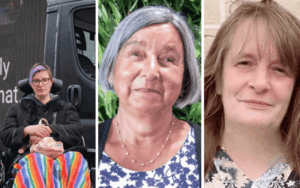
Philippa Day (pictured) took her own life several months after DWP stopped her DLA when it did not receive the PIP2 reassessment form she had posted to the department, causing her life to spiral out of control.
The 27-year-old, from Nottingham, died in hospital after falling into a coma in August 2019**.
Figures later showed that, from 2016 to 2019, there were roughly 20,000 “disallowances” of DLA a year from disabled people who had failed to return their PIP2 re-assessment form so they could apply for the new PIP benefit.
From November 2019, soon after Philippa Day’s death, the number of DLA disallowances for failing to return the PIP2 form began to fall.
The following year, there were less than 9,000 DLA disallowances, in 2021 there were about 5,000, and in the year to October 2022 there were about 4,000, with an average of about 400 a month, compared with 2,898 in September 2019.
DWP could now be risking similar tragedies to the death of Philippa Day if it does not take steps to protect the remaining DLA claimants during its new migration and reassessment process.
Rick Burgess, a spokesperson for Greater Manchester Coalition of Disabled People, said: “We suspect the reason this cohort was kept on DLA is because these are some of the most complex cases with people with the highest support needs.
“The DWP could do all the work of transferring to PIP themselves and not endanger these claimants; this is what we would urge them to do, if they must.
“However, with PIP being reviewed, it is questionable why [they even need to] move this cohort at this moment.
“The DWP are repeating the invitation method [inviting DLA recipients to submit a claim for PIP], which they know will mean several thousand claims will not be taken up.
“This will leave thousands of disabled people in life-threatening extreme poverty.”
DWP declined to say this week why it does not simply transfer the 150,000 disabled people directly onto PIP without putting them through the arduous PIP claim and assessment process.
It also declined to say if the migration process risked many claimants failing to apply for PIP and falling through the safety net, just as appears to have happened with the migration from ESA to universal credit.
More than a quarter of the 150,000 or so working-age claimants who still receive DLA receive the highest rate of the care component of the benefit.
PIP was introduced by the Conservative-Liberal Democrat coalition in 2013 as a replacement for working-age DLA, with the aim of cutting spending by 20 per cent.
But the transfer of DLA claimants to PIP has been paused since 2020, with more than 150,000 working-age disabled people still receiving DLA more than a decade later.
Now ministers appear to have given the instruction to clear these remaining claimants ahead of their new PIP reforms, likely to be announced later this year following the Timms review and then pushed through parliament next year.
DWP says it plans to pilot the process – this appears to be set to begin in September – so it can identify the additional support required for DLA claimants before resuming the migration process.
It says it is committed to ensuring that customers in vulnerable situations receive the support they need during migration.
A DWP spokesperson said: “We are not currently resuming the transfer of remaining adult claimants on DLA to PIP.
“A reassessment only occurs if a recipient reaches 16, reports change in circumstance or voluntarily claims PIP.
“We are reviewing a random sample of 3,000 cases, and the findings will help determine any additional support needed, including safeguarding measures, when active transfers resume.”
Meanwhile, the Ministry of Housing, Communities and Local Government has confirmed that Sir Stephen Timms will remain as the disability minister, following the new prime minister’s major ministerial reshuffle last week.
Questions had been raised after the government’s website described Sir Stephen as a DWP minister and minister for equalities when previously he had been described as minister for social security and disability.
But MHCLG confirmed yesterday that he would “continue his work on the disability brief”, and that the website would be updated in due course.
Although DWP provided no update on his ministerial title, it looks likely that he will continue as minister for social security and disability.
*A small number of complex ESA cases have yet to be dealt with
**The Department: How a Violent Government Bureaucracy Killed Hundreds and Hid the Evidence, DNS editor John Pring’s book on the years of deaths linked to DWP’s actions and failings, including that of Philippa Day, is published by Pluto Press
 Budget is ‘miniature sticking plaster’, disabled people warn as they await Timms and Milburn reports
 Alarm bells ringing after minister says all work is good for health, and he wants ‘everyone’ to get a job
 PIP review member delivers powerful rebuttal to research by colleague that called for cuts to child DLA