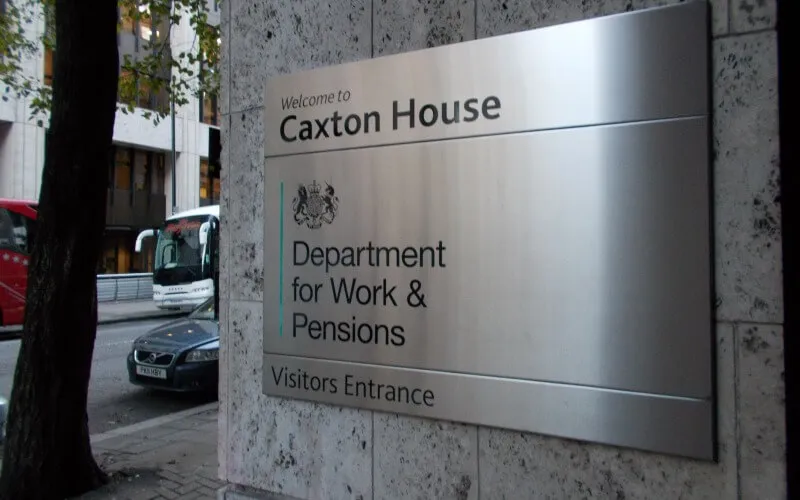
The Department for Work and Pensions (DWP) has been told by a tribunal to release a secret, high-level report that is likely to expose the flaws in the support it provides to “vulnerable” claimants of universal credit.
The information rights tribunal has told DWP that it must release the 2019 report by the former Prime Minister’s Implementation Unit (PMIU), as well as other confidential reports and documents that are also likely to expose flaws within the universal credit system.
Tribunal judge Stephen Cragg, who led the three-person panel, told DWP there was “a strong public interest” in releasing the PMIU report and a DWP paper on the effectiveness of the support it provides through universal credit.
He said this would “allow scrutiny of the quality of the research and report and whether… any progress on the recommendations had been made”.
He also said it was in the public interest for DWP to release documents relating to the “migration” of claimants of legacy benefits like employment and support allowance onto universal credit through DWP’s “Move to Universal Credit” programme, previously known as “managed migration”.
And he said he agreed with information commissioner John Edwards that the public was “entitled to be well informed as to the reasoning behind policy decisions which are likely to shape British society”.
DWP said this week that it was carefully considering the tribunal’s decision.
The tribunal had been hearing DWP appeals against three decisions made by the Information Commissioner’s Office, all of which found last year that the various universal credit documents should be released.
The cases revolved mostly around whether the public interest in releasing the documents outweighed DWP’s arguments that ministers needed to be allowed to consider policy options in private and to receive and consider “free and frank” advice and views from civil servants without the risk of them being seen by the public.
But the information commissioner had criticised DWP’s “generic and superficial arguments regarding the balance of the public interest”.
One of the DWP appeals related to a freedom of information case taken by Disability News Service (DNS), and another to a case taken by Owen Stevens, from Child Poverty Action Group.
But the tribunal’s ruling is a particular success for campaigner John Slater, who has spent years using freedom of information laws to hold DWP to account for its failings, and played a key role in responding to the appeals, providing both written and oral evidence to the tribunal.
He has raised concerns about the impact of the managed migration to universal credit on disabled people receiving out-of-work benefits.
But he has also raised concerns about DWP’s decision to set up a publication scheme that means papers from its universal credit programme board (UCPB) are only considered for release after two years.
Slater has believed, since the scheme was set up, that DWP intended to use it to block or delay important information that was presented to the board, and that DWP and other government departments would use it more widely to block freedom of information requests.
It was only when a tranche of UCPB papers was released in October 2021 that the existence of the PMIU report became known and Slater, DNS and Stevens could request its release under the Freedom of Information Act.
This means the PMIU report is already four years old.
In a written witness statement for the appeal, DNS editor John Pring told the tribunal that the PMIU report was “clearly commissioned to examine serious concerns that could, if not addressed, cause serious harm or even death to claimants in vulnerable situations”.
He added: “These are issues of grave and vital importance, and the public has every right to know how safe the Universal Credit system is.”
Pring provided the tribunal with details of disabled people who had been caused harm by the universal credit system, including a disabled man left needing hospital treatment three times for suicidal thoughts caused by months of failures by universal credit advisers and jobcentres.
Judge Cragg said in his ruling that the documents Slater was seeking “go beyond what is already available in the public domain and provide useful information about the UC programme, which allows for greater transparency into the workings of the programme and greater understanding of the difficulties that are encountered”.
Supporting the release of the documents, he said there were “strong arguments for transparency and accountability for a programme which may affect millions of UK citizens and process billions of pounds”.
The tribunal’s decision is a significant blow for DWP civil servant Neil Couling, who is responsible to parliament for implementation of universal credit and has played a major role in welfare reforms affecting disabled people over the last three decades.
He had argued that releasing the PMIU report and the paper on the effectiveness of universal credit support “in an uncontrolled way… would be likely to lead to public confusion and unfair criticism of the Universal Credit programme”.
A note from the editor:
Please consider making a voluntary financial contribution to support the work of DNS and allow it to continue producing independent, carefully-researched news stories that focus on the lives and rights of disabled people and their user-led organisations.
Please do not contribute if you cannot afford to do so, and please note that DNS is not a charity. It is run and owned by disabled journalist John Pring and has been from its launch in April 2009.
Thank you for anything you can do to support the work of DNS…
 Disabled activists ready to fight back against ‘unsafe’ and ‘punishing’ cuts demanded by Milburn report
 Union report exposes how staffing crisis at DWP is harming ‘vulnerable’ claimants
 Thousands of disabled people could benefit from activist’s universal credit and council tax court win