A bill that aims to legalise assisted suicide will have a “serious and profound” negative impact on how disabled people’s lives are valued by society, MPs have been warned.
Fazilet Hadi, head of policy at Disability Rights UK (DR UK), told MPs on a committee examining the terminally ill adults (end of life) bill that they had a responsibility to consider the impact the legislation would have on disabled people, and on wider society.
DR UK was the only disabled people’s organisation asked to give oral evidence to the committee on the private member’s bill, which is being led by Labour’s Kim Leadbeater, and its invitation only came following last week’s criticism of her decision to sideline DPOs completely from that part of the parliamentary process.
The bill aims to legalise assisted suicide for those in England and Wales who are terminally-ill and have less than six months to live.
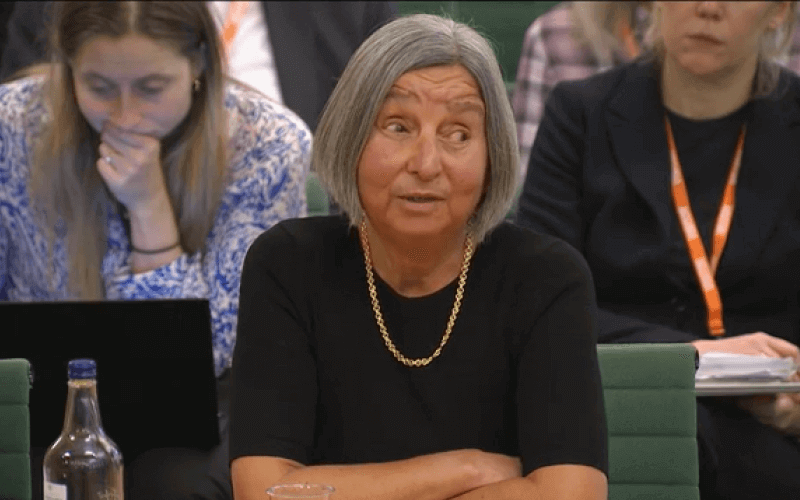
Hadi (pictured) told the cross-party committee yesterday (Wednesday): “We are a country that is unequal, that has internalised ableism against disabled people, so I do think the bill will have a serious and profound negative impact against the valuing of disabled people’s lives.
“This bill will go into the real world and that’s what’s happening in the real world – people aren’t getting social care, they aren’t getting palliative care, they are dying earlier.
“This bill is going to be plunged into a society that has deep, entrenched health inequalities that don’t play out well for people that are poorer.”
In the real world, she said, the bill would have “implications for the way that people think, for the way doctors, health authorities, think about disabled lives.
“In the real world, disabled people who already face challenges in their lives being valued, we will come across that shift in culture much more widely than this bill wants to happen.”
She then told the MPs on the committee – which has a significant majority in favour of legalisation – of their own responsibilities when considering the bill.
She said: “Parliamentarians, I know you want to look at the problems of individuals, but also you have a responsibility to think about the society we want to create.
“We have already got an uphill struggle convincing people that our lives are of equal value and this bill actually hinders us in that aspiration and ambition rather than helping us.”
She also raised concerns about the role and power being given to doctors under the bill.
Asked by Labour’s Naz Shah – who is opposed to legalisation – about disabled people’s experiences of coercion by members of the health and care professions, she said: “Our experience of the NHS and of the medical profession isn’t wholly positive and we often find that doctors, because they can’t treat or cure us, do devalue our lives.”
She said it had been suggested to disabled people by doctors that their lives were “expendable”.
She said: “If doctors aren’t on our side… that poses a big cultural issue for the NHS but also for us having confidence in the NHS.
“I actually find the NHS one of the organisations and institutions in this country that is least comfortable with disability.
“Honestly, I could get better equality probably at my railway station.”
She warned of giving doctors the powers to “steer us towards assisted dying [as] they are not a group who is always on the side of people with disabilities”.
She said: “We only have to go back five years to the Covid pandemic to see how disabled lives were devalued… the ‘do not attempt resuscitation’ notices, we all know that disabled people sometimes didn’t receive access to critical care, we all know that people with learning disabilities, young people, were disproportionately dying.
“I really think the real-world implications always have to be tested; this isn’t an abstract exercise, this bill, it will land in a society that is rife with inequality.”
She concluded at the end of the evidence session that the bill should be scrapped, rather than improved.
She said: “I can’t suggest any way in which this bill could be strengthened, and that’s because it’s the society it will land in is the thing that needs to change, not the bill, and at the moment there’s very little likelihood of that society becoming more equal, having better public services, having less health inequality, in the next few years.”
DR UK’s invitation to speak to the committee only came on Monday, after suggestions last week – reported by Disability News Service – that the committee may have breached the UN Convention on the Rights of Persons with Disabilities (UNCRPD) by failing to invite any DPOs to give oral evidence.
The coalition of DPOs that monitors the implementation of the convention in the UK welcomed the decision to invite DR UK this week, but said the move had come “too late in a process that has been inaccessible and dismissive of Deaf and disabled people’s concerns”.
Tracey Lazard, chief executive of Inclusion London, said: “We are relieved that a DDPO* will now be heard from by MPs on the committee.
“However, our concerns about lack of engagement are much wider than just oral evidence.
“The bill is travelling through parliament at a speed that is completely inaccessible to Deaf and disabled people.
“The cards are powerfully stacked against Deaf and disabled people to be able to share our expertise with MPs as they scrutinise such an important bill.”
In the same evidence session that Fazilet Hadi gave her evidence, Baroness [Kishwer] Falkner, chair of the Equality and Human Rights Commission, told MPs on the committee that social care was an “integral part of this story”.
She warned that the government was not going to be revealing its long-term reforms to adult social care until at least 2028.
She said: “One of the things that all of you need to think about is whether [legalising assisted suicide before reforming social care] is putting the cart before the horse, whether deciding on these provisions, which are integrally linked to the other aspects of disability and access to care… whether this is the right order of things.”
Asked if the bill would uphold the rights of all groups protected under the Equality Act, she said there were “important and serious considerations” about several rights that were “engaged” under the bill.
Baroness Falkner said: “We are not clear, at this point in time, that the reservations we have about them can be resolved without further changes.”
She added: “We are not entirely clear that a private member’s bill is the suitable vehicle for this, to be entirely honest.”
Baroness Falkner said the commission – which is officially neutral on the question of legalisation – believed instead that a government bill, or a government-sponsored bill, would allow a “whole of government approach” that would examine the implications for disability rights, older people’s rights and minority ethnic communities and would be “a better place for parliament to actually engage with this profoundly important issue”.
*Deaf and disabled people’s organisation
A note from the editor:
Please consider making a voluntary financial contribution to support the work of DNS and allow it to continue producing independent, carefully-researched news stories that focus on the lives and rights of disabled people and their user-led organisations.
Please do not contribute if you cannot afford to do so, and please note that DNS is not a charity. It is run and owned by disabled journalist John Pring and has been from its launch in April 2009.
Thank you for anything you can do to support the work of DNS…
 Relief and tears after MPs reject assisted dying bill, as attention turns to palliative and social care
 Disabled MPs voted against assisted dying bill by two to one, records show
 Government admits disabled people may face ‘subtle pressure’ to choose an assisted death, if bill passes