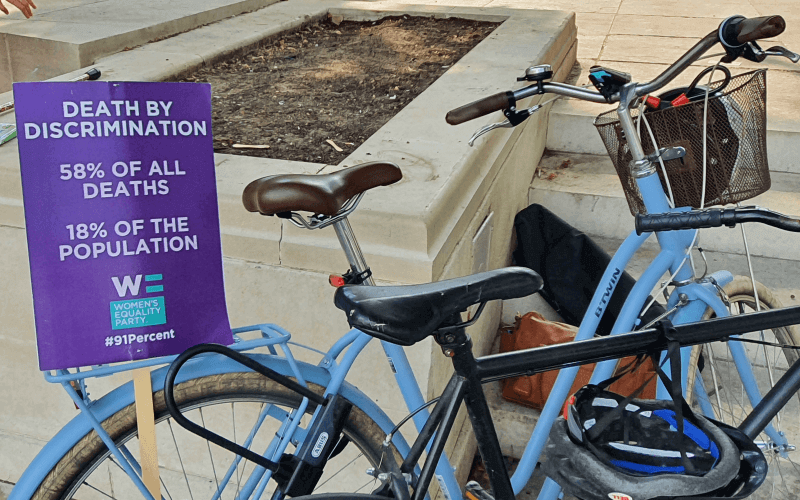
The impact of vaccine decisions, “do not attempt resuscitation” notices, school closures, cuts to care, and other aspects of the pandemic, had a combined effect on disabled people that “felt relentless”, three disabled people’s organisations have told the Covid inquiry.
They were making a submission to the preliminary hearing of the tenth and final module of the public inquiry, which will focus on the impact of Covid on key workers, on those considered the “most vulnerable” to the virus, and on people who were left bereaved.
It will also examine the impact on mental health and wellbeing, and of measures put in place to combat Covid.
The national disabled people’s organisations (DPOs) Disability Rights UK, Inclusion Scotland and Disability Action (Northern Ireland) are “core participants” in the module, although the public hearings are not due to take place until early next year.
Barrister Kate Beattie, of Doughty Street Chambers, representing the three DPOs, said the combined impact of the various aspects of the pandemic on disabled people’s mental health and wellbeing “felt relentless”.
She pointed to disproportionate mortality rates; “do not attempt resuscitation” notices; decisions on who was prioritised for vaccines; prolonged shielding by those who could not be vaccinated; the use of the so-called “clinical frailty scale” and “ceilings of care” in hospitals; school closures; and local authorities’ “easements” to their duties under the Care Act and the Children and Families Act.
She said: “For disabled people, these matters did not happen in isolation.
“They were not experienced as separate events but were combined and felt relentless.”
The DPOs also called on the inquiry to examine the experiences of disabled key workers.
Beattie said disabled people with jobs were more likely to be going out to work during the pandemic rather than working from home, compared with non-disabled workers, and they worked in jobs that were more exposed to Covid.
The three DPOs also called on the inquiry to examine which safeguarding measures had been in place to protect people who were “isolated in psychiatric wards” during the pandemic.
NHS statistics suggest that from 2020 to 2021, the use of the Mental Health Act increased by about 4.5 per cent, Beattie told the inquiry.
At the same time, external monitoring of institutional settings was reduced, with the Care Quality Commission suspending onsite visits to carry out Mental Health Act monitoring reviews, which were replaced with video calls.
Visits from family, friends and advocates “were also restricted and for periods ceased totally”.
But the DPOs told the inquiry hearing that some of the “innovations” introduced during the pandemic – including more widespread use of working from home, and the use of masks to reduce the risk of infection for immunocompromised people – had reduced the “adverse impact” on disabled people.
And they called on the inquiry to examine the positive impact of DPOs co-designing policy during the crisis.
They said the inquiry should explore the use of co-design “beyond slogans, so that it can become the ordinary way in which government works and, indeed, a new way of binding state and society together”.
Kate Blackwell KC, lead counsel to the inquiry for module 10, said the pandemic had had “disproportionate effects on different parts of society”, including those who were clinically vulnerable and clinically extremely vulnerable to the virus and were required to “shield for prolonged periods, often in isolation, raising concerns about mental health, loneliness, and access to essential services”.
A note from the editor:
Please consider making a voluntary financial contribution to support the work of DNS and allow it to continue producing independent, carefully-researched news stories that focus on the lives and rights of disabled people and their user-led organisations.
Please do not contribute if you cannot afford to do so, and please note that DNS is not a charity. It is run and owned by disabled journalist John Pring and has been from its launch in April 2009.
Thank you for anything you can do to support the work of DNS…
 Ministers’ decision to slash accessible housing targets was ‘unprincipled’, but Timms says they were right
 Free social care is coming… but only if you’re over 65, government confirms after Burnham speech
 Minister makes ‘feeble’ U-turn after criticism of failure to coproduce government’s Plan for Disability