
 The treatment of people with learning difficulties should be “significantly improved” right across the criminal justice system, from arrest to sentencing, according to a new report.
The report concludes that the needs of offenders with learning difficulties are going unnoticed when they are arrested by police, appear at court, and during sentencing.
And it says that little has improved since an independent inquiry, headed by Lord Bradley, reported in 2009 that more should be done to keep offenders with mental health conditions and learning difficulties out of the prison system.
One of the key problems is that there is no agreed definition of what a “learning disability” is, says the new report, although previous research suggests that up to one third of the adult prison population have such an impairment.
The report, which covers the first of two phases of a joint inspection by the inspectorates for the probation service, police and Crown Prosecution Service (CPS), and the Care Quality Commission, says that examples of good practice are “the exception rather than the norm”.
The bosses of the four organisations said it was “disappointing” that little had changed with the screening of detainees for learning difficulties at the point they were arrested.
Only one of the police forces visited for the report has introduced a way to “divert” offenders from ending up in custody, on the grounds of a mental health condition or learning difficulty, while police officers are often unable to understand the difference between mental distress and learning difficulties.
And in two-thirds of cases inspected, the police failed to pass the CPS information about the offender’s learning difficulty before the decision was made to charge them with an offence.
The report says that the court environment “could very easily, and with little extra cost, be made less intimidating for defendants (and witnesses) with learning disabilities”, through the use of information displays, easy read documents, and equality training for court staff.
Michael Fuller, chief inspector of the CPS and chair of the criminal justice chief inspectors group, said: “Although we found some excellent examples of professionals going the extra mile to ensure that individual offenders with learning disabilities received the appropriate support they required, such instances were exceptional and these deficits were mirrored across the criminal justice system.
“A balance needs to be struck between the support needs of those with learning disabilities and the need to hold them to account, where appropriate, for their offending.”
The bosses of the four organisations concluded: “We found unwieldy processes, the absence of services or a simple lack of knowledge and training led to offenders with a learning disability being perceived as a problem to be processed, rather than an individual with particular needs requiring individual help.
“Far too often offenders with learning disabilities were not receiving the support they required to address their social care needs, or to reduce their risk of harm to others and their likelihood of reoffending.”
They welcomed the Department of Health decision to provide an extra £25 million for mental health professionals – as part of the government’s “liaison and diversion” trial – to help ensure that decisions about charging and sentencing take into account mental health conditions, learning difficulties and substance misuse problems.
The Labour government had pledged that, by 2014, all criminal courts and police stations would have access to “liaison and diversion services” that could assess the health needs of offenders.
These services would “reduce the number of people with learning disabilities and mental health problems who are in prison unnecessarily” and allow the police and courts to make “informed decisions about charging and sentencing”.
But Juliet Lyon, director of the Prison Reform Trust, said resources had been cut and the timescale for a full national liaison and diversion service had been delayed by the coalition from 2014 to 2017.
She said: “For too long people with a learning disability, many of whom should be diverted from police stations and courts into social care, have ended up in prison as a default option, while others are left without the support they need as they continue through the justice process.”
30 January 2014
 Home secretary delays implementation of ‘long-overdue’ measure on disability hate crime
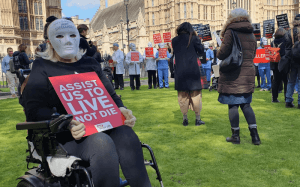 Burnham delivers significant blow to assisted dying bill as he launches attempt to ‘fix’ social care funding
 Disabled MP stays silent over key concerns as she says she will co-sponsor assisted dying bill