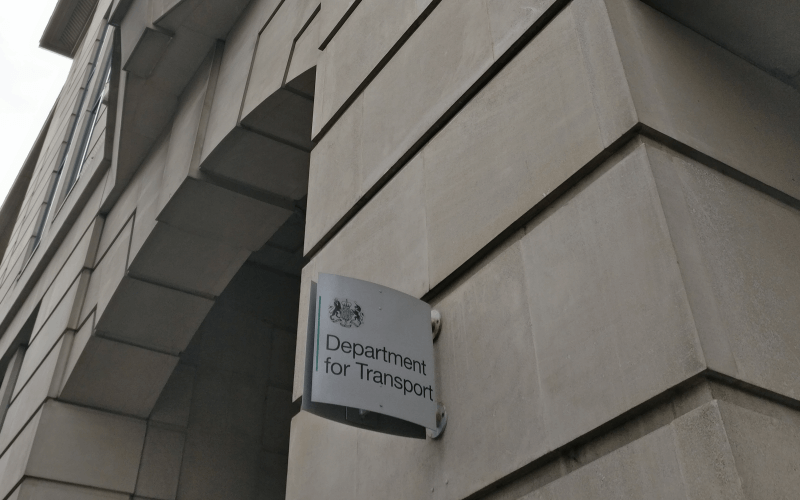
A government department has blamed the pandemic for a five-year delay in publishing a report that suggested major changes to the public transport system would be needed to address the barriers faced by disabled people with invisible impairments.
The report by Ipsos MORI was handed to the Conservative-led Department for Transport (DfT) in October 2019, but it was only published last Thursday, when it was released quietly on the DfT website.
Ipsos MORI had interviewed 20 people with non-visible impairments, including autistic people, people with learning difficulties and people with mental ill-health.
The research showed the importance of public transport, and how it provided independence and confidence, and helped interviewees with their social lives.
But many of those interviewed said they experienced barriers when using public transport, causing anxiety, stress and a lack of self-confidence, particularly when travelling alone.
The most frequent problems came on bus journeys, despite their potential importance in enabling local trips, which meant that many of those interviewed travelled by car instead.
Barriers faced by those interviewed for the research included the anxiety caused by communicating with transport staff, particularly on buses, where drivers are “generally perceived as unhelpful and inconsiderate towards passenger needs”.
Other barriers included the difficulty of planning bus journeys in advance because of a “lack of cohesive information”; a lack of real-time information; overcrowded peak-time buses; concerns about personal safety and being targeted because of their impairment; and cost.
Trams “were viewed positively as a reliable mode of transport, with no unpredictable changes to routes or timetables”, while cars, walking and taxis all provided “more flexibility and control over journeys”.
Coping methods included the use of journey planning mobile phone apps, travelling with someone, and making a journey at quieter times.
Ideas for making public transport easier included the use of assistance cards that identify someone as having an invisible impairment; greater clarity on bus fares; wider use of cashless payment on buses; a greater emphasis on passenger safety on buses and in taxis; and wider use of companion bus passes.
DfT had commissioned the research to try to address a “large evidence gap” concerning accessibility for people with invisible impairments, and what impact different policies might have on them.
The aim had been to provide evidence ahead of more detailed research into how barriers could be addressed.
The report concluded that future research “should focus on using local buses in particular as these could be used more widely for short, regular, frequent trips”.
Asked why it had delayed publishing the report for five years, DfT refused to provide a statement, offering only some background points in response.
It claimed that work on the report was paused because of the Covid-19 pandemic, while the report was then finalised and prepared for publication this year, but was delayed again because of the general election.
DfT denied that its publication was delayed because of the cost of addressing the barriers outlined in the report.
It said the report’s findings would be considered when developing future policy.
Meanwhile, new regulations that came into force on Tuesday (1 October) should make it easier for some disabled people to use local bus and coach services.
The Public Service Vehicles (Accessible Information) Regulations 2023 require operators of local bus and coach services to provide audio and visual information about the route, the direction of travel and each upcoming stop, and they apply to England, Wales and Scotland.
The deadline means all vehicles first used on local services since 1 October 2019 must now comply with the regulations, while there is a “staggered deadline” for older vehicles through to 2026, and vehicles that are “partially compliant” must be fully compliant by 2031.
A note from the editor:
Please consider making a voluntary financial contribution to support the work of DNS and allow it to continue producing independent, carefully-researched news stories that focus on the lives and rights of disabled people and their user-led organisations.
Please do not contribute if you cannot afford to do so, and please note that DNS is not a charity. It is run and owned by disabled journalist John Pring and has been from its launch in April 2009.
Thank you for anything you can do to support the work of DNS…
 National accessibility standards are crucial for addressing transport barriers, Tories hear at conference
 Government refuses to say how many rail stations will provide level boarding after major investment
 McFadden and Alexander keep their jobs, but Burnham replaces social care ministers