The Department for Work and Pensions (DWP) has admitted it has no figures to show how many disabled people who cannot work are having their benefits “sanctioned”, just as the government announced reforms that will expose many more to strict conditions.
Although the department regularly releases data that shows how many universal credit claimants are being sanctioned for failing to follow its rules, these figures do not show how many of those in the limited capability for work (LCW) group are being sanctioned.
The LCW group is for disabled people and others with health conditions who have limited capability for work now but need to prepare for work in the future.
But last week’s disability benefits green paper and consultation, Pathways to Work, said the government planned to “change the current system from one based on almost no contact” for disabled people who have been found not fit for work “to one based on keeping in touch and generating opportunities to help people improve their health and employment prospects”.
This will include those in the LCW group but also most of those in the limited capability for work-related activity group.
DWP says this move towards “active engagement” will have the “ultimate backstop of sanctions to underpin the expectations of engagement”, although it claims this will be used “only as a last resort”.
But despite announcing these sweeping reforms, DWP has now confirmed to Disability News Service (DNS) that it cannot provide figures that show how many disabled people in the LCW group are currently having their benefits sanctioned, and for how long, and that it is too expensive to find out.
DNS had asked through a freedom of information request for versions of the latest universal credit sanctions statistics, released last month, that showed figures only for those in the LCW group.
But DWP said in its response that it would be too expensive to produce those figures.
It said the department “cannot break down any of the Universal Credit (UC) sanctions data by stage of UC health, as the UC Work Capability Assessment information, which is only available from April 2019, is held separately and not included in the sanction dataset.
“To perform the complex and iterative data merging required to be able to provide any sanctions data for those in the limited capability for work group would exceed the cost limit [of the freedom of information request].”
The February figures show that, in the year to October 2024, the department made more than 600,000 decisions to sanction a universal credit claimant’s benefits, with the most common reason being a failure to attend or take part in a mandatory work-related interview.
The most frequent sanctions were those imposed for between four and 13 weeks.
But none of these figures, and others in the statistical release, show how many disabled people in the LCW group have been sanctioned.
Dr David Webster, a sanctions expert and an honorary senior research fellow at the University of Glasgow’s School of Social and Political Sciences, has been publishing regular, influential briefings on DWP sanctions for more than 11 years.
He said: “Almost nine years on from the start of universal credit rollout in May 2016, we still don’t have a suite of official statistics which is comprehensive enough to tell us how the system is working.
“Data on sanctions on disabled people is only one of the obvious gaps. Information on the appeal system is another.
“Given that the government now seems set on keeping universal credit, publishing fuller statistics should be a priority.”
Caroline Selman, senior researcher at Public Law Project, which is running a project on sanctions with Central England Law Centre, said: “Sanctions can push people into extreme financial hardship, poor physical and mental health and harmful spirals of debt, as we know from the work we are undertaking with Central England Law Centre, through which they have received 200 enquiries about sanctions.
“Meanwhile, a DWP internal evaluation has suggested that sanctions also lead to people moving into work less quickly and earning less when they do.
“It is therefore concerning if the government is making decisions about its approach to these harmful measures without understanding, or being transparent about, who is impacted by them and how.
“Last year DWP started to publish data about sanctions and ethnicity for the first time.
“It is important that they also publish the equivalent data that we understand they hold on disabled people who are sanctioned.”
Ministers under the last government were repeatedly told the impact of sanctions on disabled people was “harmful and counter-productive”.
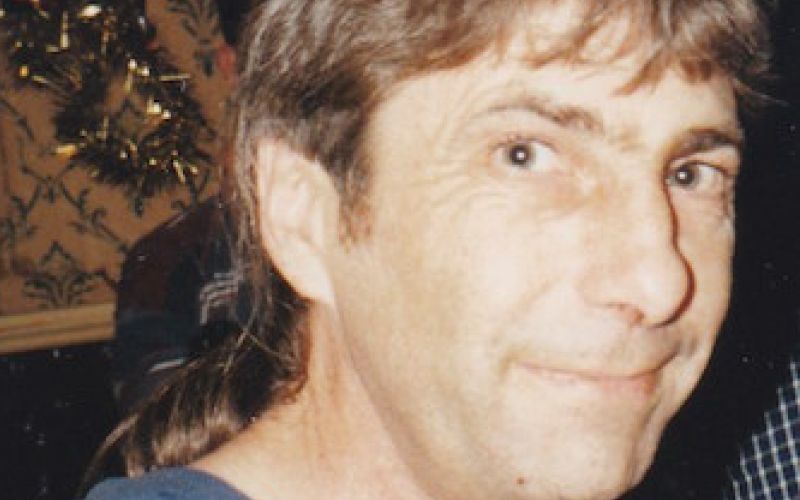
Among the many deaths in which the sanctions regime has played a part was that of David Clapson (pictured), who died in July 2013 after being left destitute by having his benefits sanctioned.
Although he was on jobseeker’s allowance (JSA), DWP was aware that he had diabetes, and he died from an acute lack of insulin, three weeks after having his JSA sanctioned.
Because he had no money, he couldn’t afford to pay for electricity that would have kept the fridge where he kept his insulin working, and he had also run out of food.
A note from the editor:
Please consider making a voluntary financial contribution to support the work of DNS and allow it to continue producing independent, carefully-researched news stories that focus on the lives and rights of disabled people and their user-led organisations.
Please do not contribute if you cannot afford to do so, and please note that DNS is not a charity. It is run and owned by disabled journalist John Pring and has been from its launch in April 2009.
Thank you for anything you can do to support the work of DNS…
 Instagram, Facebook and TikTok fail to act on animations spreading hate and lies about PIP claimants
 Disabled people who rely on PIP face ‘constant fear’ that physical activity could see them lose their benefits
 Leaked DWP ‘corner-cutting’ plans reveal changes to checks on assessments that will cause ‘even more risk’