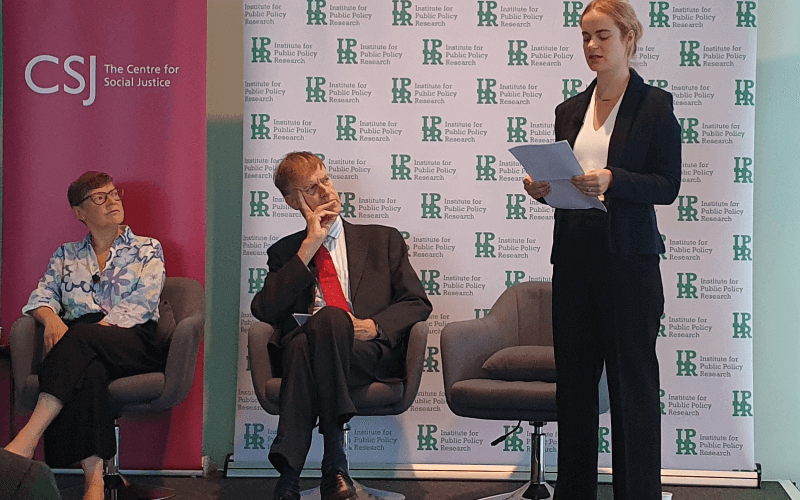
A minister has failed to explain why his boss set up a board of experts to examine “economic inactivity” without appointing a single representative of a disabled people’s organisation (DPO).
Sir Stephen Timms was asked about the decision of his boss, Liz Kendall, not to include any experts with lived experience of disability on her new Labour Market Advisory Board.
Kendall has made it clear that the key aim of the board is tackling the “spiralling inactivity” caused by a record number of people out of work due to long-term sickness.
But when asked on Monday about its membership, Sir Stephen failed to explain why there were no DPOs represented on the board, or apparently any disabled board members at all.
Disability News Service (DNS) told Sir Stephen that Labour had “repeatedly promised over the years that it would co-produce policy with disabled people and yet Liz Kendall failed to appoint any DPOs or experts with declared lived experience” to the new board.
DNS added: “It has been described as exclusionary. What has happened to that promise Labour made?”
Sir Stephen said Labour had made a “manifesto commitment to put the views and voices of disabled people at the heart of everything we do… and it is my job as the minister for disability, with a cross-government responsibility, not just responsibility in the DWP, to deliver on that commitment”.
He said he had had a number of engagements with “disabled people’s organisations”, and mentioned a meeting with Scope – which DNS pointed out was a disability charity and not a DPO – and planned to meet with the Voluntary Organisations Disability Group, whose members are nearly all service-providers and disability charities.
But he failed to address the issue of the membership of Kendall’s Labour Market Advisory Board.
Last week, disabled researcher Stef Benstead, author of Second Class Citizens, said it “should not be thinkable for any modern government department to have an advisory board that does not include representatives of the community impacted by the policy proposals”.
Catherine Hale, consultant researcher at King’s College London and founder of Chronic Illness Inclusion, described Kendall’s decision as “frustrating”, and Julia Modern, from Inclusion London, said that without disabled people’s input, the new board would be “as ineffective as it is exclusionary”.
Picture: Sir Stephen Timms at the fringe event on Monday where he made the comments
A note from the editor:
Please consider making a voluntary financial contribution to support the work of DNS and allow it to continue producing independent, carefully-researched news stories that focus on the lives and rights of disabled people and their user-led organisations.
Please do not contribute if you cannot afford to do so, and please note that DNS is not a charity. It is run and owned by disabled journalist John Pring and has been from its launch in April 2009.
Thank you for anything you can do to support the work of DNS…
 Secrecy of DWP’s board of experts set up to examine ‘economic inactivity’ and long-term sickness
 DWP disputes Access to Work claim made by its own disability minister
 Labour accused of ‘horrifying’ betrayal of disabled people after slashing Tory accessible housing target