A minister ignored concerns about proposed benefit cuts that were raised in a meeting by his own network of disability advisers, months before the government published its ill-fated universal credit and personal independence payment bill.
Minutes of a meeting in March show all nine chairs of the government’s regional stakeholder network (RSN) – most of whom are disabled people – raised concerns about reports of government plans for cuts and reforms to disability benefits.
The quarterly meeting of RSN chairs was held on 10 March, a week before the publication of the government’s Pathways to Work green paper, which announced billions of pounds of cuts to disability benefits, and more than three months before the bill was published.
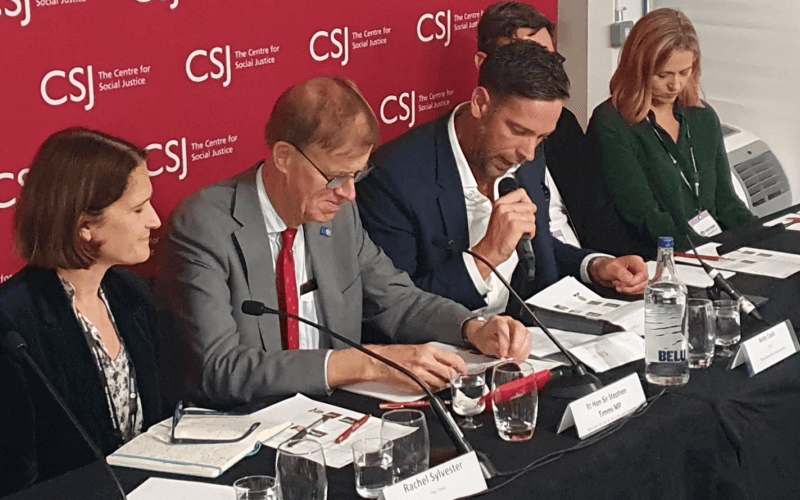
Two chairs even told Sir Stephen (pictured, second from left) that fewer of their members than usual had attended their latest network meetings because of the stigma, fear and stress around the issue.
Despite the concerns raised by his network chairs, Sir Stephen Timms, the minister for social security and disability, pushed ahead with the plans for billions of pounds of cuts to personal independence payment (PIP) and the health element of universal credit.
That refusal to listen to grassroots concerns led to last week’s backbench rebellion over the PIP cuts, and to further anger this week over cuts to the health element of universal credit that remained in the bill (see separate story).
Sir Stephen’s failure to listen to his own disabled advisers raises fresh concerns over his pledge to co-produce the review of PIP he will be leading, which is expected to report in autumn 2026.
Among those who raised concerns in the meeting, RSN South East chair Chloe Plummer warned Sir Stephen that she would not have been able to remain in work without her PIP, while media speculation and uncertainty about PIP proposals was causing “huge anxiety”*.
Justin Donne, chair of RSN East Midlands, spoke of the “fear around people being pushed back into work and the risk of losing financial help”, according to the minutes.
Louise Mckiernan, chair of RSN West Midlands, said there was a need for clarity around PIP “being a disability rather than work-related benefit” – clarity that ministers repeatedly failed to provide in the following months, while even adding to the confusion – while also pointing out that media speculation about the cuts meant disabled people feared losing their PIP.
RSN London’s Marc Goblot spoke of the “concerns about signalled PIP cuts”, while John McDonald, interim chair of RSN North East, said there was a “real sense of fear” about “potential cuts and being forced into work”.
Carl Suckling, deputising for the chair of RSN East of England, told Sir Stephen that stress caused by media speculation meant disabled people “live in fear of receiving a letter about life changing benefit cuts”.
And he said there was a need for “counter-messaging” from the government in response to the media portrayal of disabled people as “shirkers or spongers who play the system”.
Last month, Disability News Service reported how two disabled leaders had quit the RSN after months – and even years – of “inertia” and a failure to respond to their input, and raising serious concerns about the government’s commitment to listening to disabled people and about the work of the Disability Unit.
*Note: the quotes used in this article are from the government’s minutes, rather than exact comments made by the RSN chairs in the meeting
A note from the editor:
Please consider making a voluntary financial contribution to support the work of DNS and allow it to continue producing independent, carefully-researched news stories that focus on the lives and rights of disabled people and their user-led organisations.
Please do not contribute if you cannot afford to do so, and please note that DNS is not a charity. It is run and owned by disabled journalist John Pring and has been from its launch in April 2009.
Thank you for anything you can do to support the work of DNS…
 Conservatives’ £1 billion Motability VAT plan will decimate scheme and raise almost nothing, figures show
 Leaked DWP ‘corner-cutting’ plans reveal changes to checks on assessments that will cause ‘even more risk’
 Information Commission orders DWP to release secret report that examined quality of PIP phone assessments