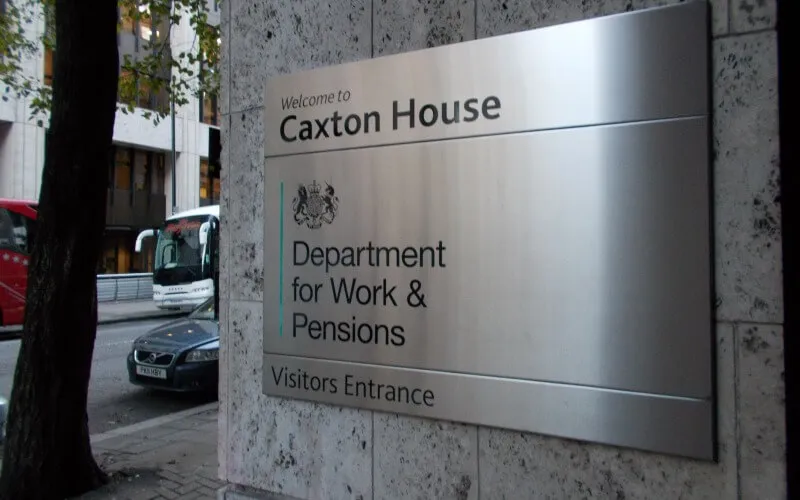
Disability News Service (DNS) has won a ground-breaking legal battle with the Department for Work and Pensions (DWP) over the release of a secret government report into the death of a disabled benefit claimant.
A DWP barrister told an inquest yesterday that the department’s attempt to prevent the publication of the draft internal process review (IPR) was “not some kind of cover-up”.
But Gordon Clow, assistant coroner for Nottingham and Nottinghamshire, ruled this morning (Thursday) that he would release the document to DNS.
DNS had asked the coroner holding the inquest into the apparent suicide of Philippa Day, from Nottingham, to agree to release key documents that are set to be used as evidence.
One of those documents is the draft IPR completed by DWP in the months following the 27-year-old’s death in October 2019.
Philippa had been diagnosed with type one diabetes when she was 18 months old, and later with emotionally unstable personality disorder, anxiety, depression and agoraphobia.
The inquest, which is set to continue into next week, has already heard repeated evidence of DWP’s failings from Philippa Day’s family, the mental health professionals who worked closely with her, and DWP staff (see separate stories).
Those mental health professionals had tried repeatedly to persuade DWP and its private sector contractor Capita to restore benefits that had been wrongly removed from her, and then ensure that she did not have to attend a face-to-face interview in a personal independence payment assessment centre.
Philippa appears to have taken her own life soon after learning that she would be forced to attend that assessment, a prospect that had left her “highly distressed” and even terrified.
DWP has been fighting since August 2014 to prevent the release of any of the scores of IPRs (previously known as peer reviews) carried out following the deaths of benefit claimants like Philippa over the last decade.
It eventually was forced by a tribunal in 2016 to release heavily-redacted versions of these documents, but they reveal only the recommendations made by the reviews.
But DNS learned that the legal team representing Philippa Day’s family – solicitors at Leigh Day and barristers at Doughty Street – had secured an unredacted copy of the draft IPR into her death.
The family this week supported the bid by DNS for the coroner to release the IPR, and internal reports prepared by its private sector contractor Capita.
DNS editor John Pring* addressed the inquest yesterday (Wednesday) and told the coroner that the IPR should be released “in the interests of transparency and accountability”.
He said this was particularly important “because the issue relates to whether their actions and/or policies are causing or contributing to the deaths of disabled people claiming benefits”.
He said the draft IPR was an “important historical document that will help to cast a light” on the government’s welfare reforms.
Pring said he believed that no IPR or peer review had ever previously been released outside DWP, even to the families of benefit claimants whose deaths have been closely linked to the department’s failings.
Simon Hilton, a barrister representing DWP, suggested to the coroner – mistakenly – that DNS would be able to secure a copy of the completed IPR into Philippa’s death through the Freedom of Information Act, which he said DNS had previously used successfully to secure such documents.
But DNS told the coroner that that was not true, as DWP was continuing to prevent the release of all but the recommendations of anonymised IPRs.
This means it is impossible to identify from these heavily-redacted documents which claimants they refer to.
Hilton said in response that it was possible he had misunderstood his instructions from DWP, and told Pring: “This is not some kind of cover-up, which is what you appeared to be implying earlier.”
Hilton also suggested that those reading news stories about the draft IPR would not realise that the recommendations were only in draft form, and that the final recommendations – which might impact on future government policy “in the benefits arena” – were “still being developed” and might yet change.
He also questioned how seeing the document would help in reporting the case and said it was “invidious and undesirable” that the draft IPR should be reported on, other than any mentions which occurred during the inquest.
Pring told the coroner that he would stress in any news stories that it was a draft document, and said that he trusted his readers to know the difference between draft and final reports, and was “disappointed that the DWP would not share that view”.
Sam Jacobs, a barrister representing the Day family, backed the DNS bid and told the coroner: “It is the family’s strong view that these documents should be disclosed in the interests of accountability and transparency.”
He said there was a “very significant public interest in understanding how DWP identifies whether there are problems in its systems” and “how quickly it is able to rectify those problems”.
The coroner said this morning, in delivering his decision: “In Philippa Day’s case, it is arguable that there was a breach by the state of its general duty to put systems in place which protects the lives of its citizens.
“It is also arguable that there was a breach of a duty which arose to take specific steps to seek to ameliorate the risk of Miss Day taking her own life.
“These are important matters and they therefore weigh in favour of the press being assisted in exercising the right to freedom of expression by access to a copy of evidence which has been presented within the inquest.”
He added: “I agree with the point advanced by Ms Imogen Day, sister of the deceased, that there is legitimate public interest in the press reporting as to whether or not the DWP operates in such a way as to avoid harm being suffered by persons with significant mental health problems.”
He concluded: “The reason for [Pring’s] request is to report on this inquest.
“It is in the public interest for this reporting to be facilitated and it is not contrary to the public interest for this report, notwithstanding that the findings and conclusions may change over time, to be provided to a member of the press to assist in the public’s participation in this inquest.”
He also noted that DWP had initially resisted releasing the IPR to him as the coroner.
The IPR – apart from one paragraph that is not relevant to the inquest and relates to proposed government policy, and so will be redacted – and an incident report prepared by Capita will be released to DNS at the point they are introduced into evidence during the inquest.
The coroner said that he had reserved his decision on whether to release another Capita report.
The inquest continues.
A note from the editor:
Please consider making a voluntary financial contribution to support the work of DNS and allow it to continue producing independent, carefully-researched news stories that focus on the lives and rights of disabled people and their user-led organisations.
Please do not contribute if you cannot afford to do so, and please note that DNS is not a charity. It is run and owned by disabled journalist John Pring and has been from its launch in April 2009.
Thank you for anything you can do to support the work of DNS…
 Conservatives’ £1 billion Motability VAT plan will decimate scheme and raise almost nothing, figures show
 Leaked DWP ‘corner-cutting’ plans reveal changes to checks on assessments that will cause ‘even more risk’
 Information Commission orders DWP to release secret report that examined quality of PIP phone assessments