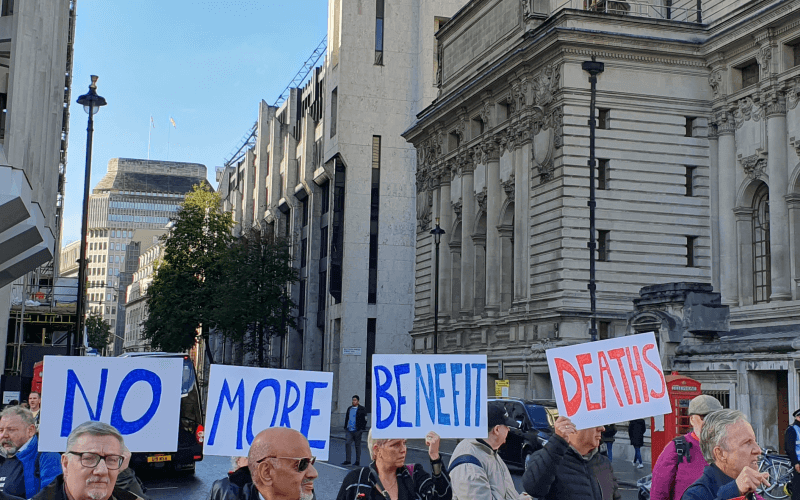
The number of deaths of benefit claimants investigated by the Department for Work and Pensions (DWP) through its system of secret reviews nearly doubled last year, according to figures hidden in DWP’s annual report.
The figures were published on page 94 of the department’s annual report and accounts for 2025-26.
They were ignored in the foreword to the report by work and pensions secretary Pat McFadden, who chose instead to focus on the “growing numbers signed off and written off on long-term sickness and disability benefits”.
The figures emerged as the government looks set to recommend cuts to spending on personal independence payment (PIP) later this year (see separate story), despite finding that the disability benefit is increasingly vital to disabled people to fill in the gaps caused by cuts to services.
Ministers have already introduced cuts for new claimants of out-of-work disability benefits, implemented in April through the health element of universal credit.
The new figures show DWP accepted that 166 cases of death or serious harm of claimants should be investigated through a secret internal process review (IPR) in 2025-26, compared with 90 the previous year.
Of these cases, 110 followed the death of a claimant, compared with 59 in 2024-25.
Although not every case finds blame was attached to DWP, the figures provide further evidence to justify long-standing calls for an independent inquiry into years of deaths caused by DWP’s actions, policies and failings.
IPRs are carried out when there is a suggestion that DWP’s actions or failings may have negatively contributed to a claimant’s circumstances, and the claimant has suffered serious harm, has died, or there has been an attempted suicide.
The 166 IPRs in 2025-26 compare (PDF) with earlier DWP figures that show 17 IPRs were started in 2015-16, 27 in 2016-17, 19 in 2017-18, 23 in 2018-19, 59 in 2019-20, 62 in 2020-21, and 65 in 2021-22, while 60 requests for an IPR were accepted in 2022-23, 53 were accepted in 2023-24 and 90 in 2024-25.
In the report, DWP claims one of the explanations for the increase in IPRs is a rise in reviews carried out by other organisations – such as safeguarding adults reviews – which often “automatically meet the criteria for an IPR to be completed, regardless of whether there is an allegation against the Department”.
DWP declined to say this week how many such reviews there have been.
The annual report also points to an “improvement in colleagues’ awareness of IPRs”.
It says the 166 IPRs led to 230 “key findings” that were shared with senior civil servants to “agree action and ownership for continuous improvement activity”, compared with 211 key findings in 2024-25.
In the same report that includes the new IPR figures, McFadden boasts that his department is where “policy meets real life”.
His foreword to the report does not mention safeguarding, despite a near-doubling in the number of claimant deaths investigated by his department.
Instead, he focuses on “the deep-seated and long-term challenge of youth inactivity and the growing numbers signed off and written off on long-term sickness and disability benefits”.
He also brags of how he halved the health element of universal credit for most new claimants, which he describes as reducing “a significant disincentive to work”.
DWP had declined to say by noon today (Thursday) if the latest IPR figures showed that benefit-related deaths were far more widespread than it had previously accepted, or whether ministers were concerned by the figures.
DWP failed to issue a statement about the figures and has said only that an increase in the number of cases meeting the criteria for investigation through an IPR does not automatically mean there will be a similar increase in what the department refers to as “learnings”.
*The Department: How a Violent Government Bureaucracy Killed Hundreds and Hid the Evidence, DNS editor John Pring’s book on the years of deaths linked to DWP’s actions and failings, is published by Pluto Press
 Leaked DWP ‘corner-cutting’ plans reveal changes to checks on assessments that will cause ‘even more risk’
 Information Commission orders DWP to release secret report that examined quality of PIP phone assessments
 DWP silent after Tory member of PIP review publishes report demanding child disability benefits are slashed