Disabled audience members face a “disability tax” of nearly £100 every time they attend a live music event, according to a survey by a disabled-led charity.
Attitude is Everything (AiE) found that disabled respondents across the UK reported spending on average an extra £99 to access a gig.
Although there are signs that access to music and other live events is improving, with three-fifths (58 per cent) saying access has improved in the last five years, nearly four-fifths of respondents still said that they could not rely on access provisions when attending a gig.
Access barriers are still such a factor that nearly all (94 per cent) disabled audience members said they felt at risk to some extent when attending gigs.
AiE said disabled people were saying they were putting themselves at risk by attending events that were failing to meet their access needs, including the risk of physical harm and mental distress.
AiE said the survey results showed that the music and live events sector was “moving in the right direction but requires further support to be more consistent in meeting the needs of disabled audience members”.
The AiE State of Access survey report also found that more than two-thirds (69 per cent) of disabled audience members faced additional access-related costs sometimes or frequently.
This could include extra travel or accommodation costs, having to pay for a personal assistant, or facing higher ticket prices than non-disabled people.
Three-fifths of respondents (58 per cent) said these extra costs had stopped them attending an event they wanted to attend.
One said: “Right now, accessibility varies hugely between venues, and the lack of consistency makes attending feel like a gamble.”
Those replying to the survey pointed to access barriers such as poor or inaccurate information about access, lack of seating or rest spaces, inaccessible booking systems, and staff attitudes.
One said: “The minute number of accessible seats or tickets mean I literally can’t spend my money to attend if those tickets are sold out, despite general access tickets being available in abundance.”
Three-fifths (62 per cent) of audience members who replied to the survey said they have had to explain their access needs repeatedly at a live event.
One of those who took part in the survey said: “I spend all of my time pre-event stressing about how the access will go when I arrive and then days post-event recovering from all of the energy expended advocating for myself.”
Catherine Pymar, the disabled chief executive of Attitude is Everything, says in the report: “Our findings show that the majority of disabled people in the live music space describe access as something they must negotiate, not something they can trust.”
She says the findings are “shocking, but sadly not surprising”.
The survey, which received nearly 300 responses, also heard from disabled artists and disabled professionals in the sector.
Four-fifths of artists (78 per cent) said they incurred extra access-related costs to perform, while more than three-fifths (63 per cent) have been prevented from accepting a gig by access-related costs.
Additional access costs averaged £138.28 per performance, the survey found.
One said: “I have performed at over 500 events. Only one has ever listened to my access needs.”
Disabled professionals in the sector also reported their extra disability-related costs, with an average of £184 additional access costs for every piece of work they take on, and a third (35 per cent) saying costs have prevented them accepting work.
Tom Kiehl, chief executive of UK Music, which represents the music industry, said: “The State of Access report acknowledges there have been some improvements, but that these have been inconsistently applied.
“Let’s make sure we use this State of Access report as a moment to turn the corner and ensure music can be accessible to everyone.”
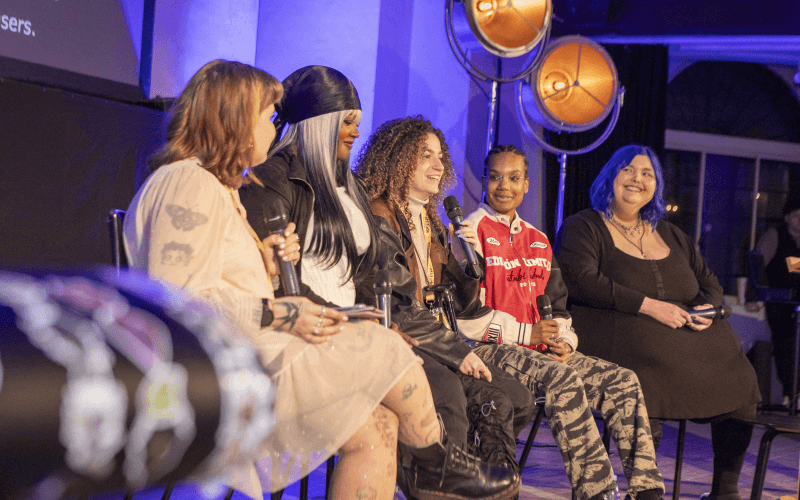
Picture: Attitude is Everything (AiE) staff and disabled people at the relaunch of AiE’s Live Events Access Charter in 2025
 Disabled peers speak of ‘daily fight’ against access barriers in House of Lords
 Lords is ‘aeons ahead’ of Commons on access, disabled MP tells colleagues
 Impact of loneliness on young disabled people is ‘wide-reaching’, new research finds