The equality watchdog has been forced by a committee of peers to defend its performance on ensuring that disabled people are protected by the Equality Act.
Three senior figures from the Equality and Human Rights Commission (EHRC) were giving evidence to the committee set up by the House of Lords to examine the impact of Labour’s Equality Act 2010 on disabled people.
But they faced tough questioning on concerns that the commission had failed to ensure the act was being enforced properly, and to tell disabled people what action it was taking on their behalf.
Baroness O’Neill, the commission’s chair, insisted that its budget was “adequate to fulfill our functions” but that it now needed to look “very carefully at the most effective and affordable ways of intervening in particular cases”.
She said the commission now does more “partnership working”, encouraging other organisations to “pay better and closer attention to their legal responsibilities”.
Last year, of the 41 legal cases it took, 19 were disability-related, she said.
But Baroness [Jane] Campbell, a former commissioner with both the Disability Rights Commission and the EHRC, was critical of the EHRC’s apparent failure to publicise its strategy for enforcing the Equality Act on its website.
She asked Baroness O’Neill: “What strategy do you employ to ensure that the disability provisions of the act are fully enforced and how do you choose the [legal] cases you intervene in and how do you monitor the effectiveness of your approach?
“How well do you think it is working and why don’t we know about it?”
Baroness O’Neill said that the commission was a “strategic regulator” and it was the courts’ job to enforce the Equality Act.
She said: “The tools we have are not the tools of enforcement. We have a strategic litigation policy, which is crucial for decisions about where and how we support cases.
“Naturally, given the budget as it really is there is no question of being able to support every single case that comes up.”
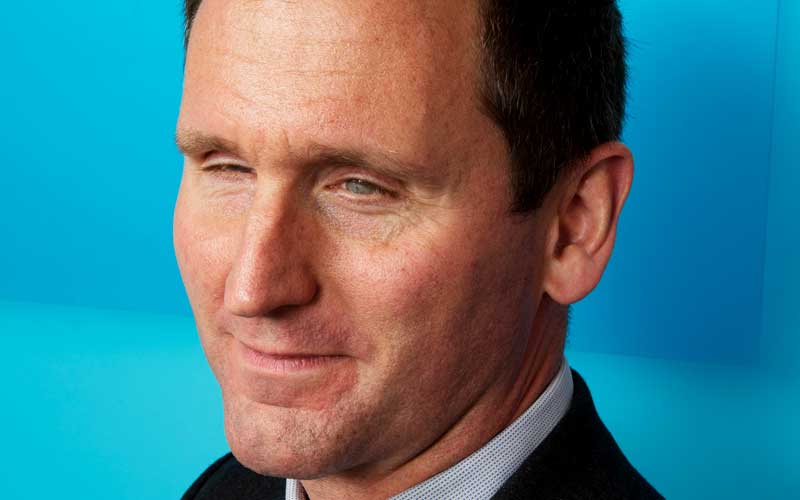
The Conservative peer Lord [Chris] Holmes (pictured), the commission’s disability commissioner, said that no disability-related legal case was taken or not taken without consultation with the EHRC’s disability committee, which he chairs.
Lord Holmes said: “No matter how many people any commission had, be it an equality commission or a disability-specific commission, it is ultimately going to come down to the work that happens with our partners, with organisations that need to be on the hook for this.”
He said the commission needed to make “strategic interventions to change a sector or a system or a piece of our society”, and to be “resourceful as well as resource-rich”.
But Baroness Campbell said the Disability Rights Commission had also worked with partners and had been an “empowering organisation”.
She said: “What we are trying to get to the bottom of is why so many disabled people are saying to us, ‘We don’t know what the EHRC are doing. We used to have a dynamic relationship with the predecessor body, we understand they don’t have as many resources and can’t do as many things [as the DRC], but quite frankly we don’t have a feel for what they are doing for us.’
“How do you think that we can re-engage that dynamic approach rather than what seems to be a highly strategic, intangible approach?”
Lord Holmes said he agreed with Baroness Campbell, and said that since taking over as disability commissioner, and recruiting a new disability committee, he had been working on increasing engagement with stakeholders.
He said the new disability committee was “a very high calibre group of people”, but “only came on stream fully in February”.
As part of the committee’s new engagement strategy, it is holding meetings each year in Scotland, Wales and in one of the English regions, whereas previously they were all held in London.
Lord Holmes said: “It is absolutely critical that we do re-engage and I take your point entirely that the voices of organisations, disabled people’s user-led organisations, individual disabled people, we need that intel and I am very committed to that level of engagement.”
He said the first regional meeting was held in Cardiff in May, with another due in Manchester next week, in which the committee will engage with the local council, disabled people’s organisations and other bodies.
 ‘Appalling’ and ‘frightening’ Reform ‘ready to legalise discrimination’ by scrapping Equality Act
 Government adviser on health, disability and work warns against Equality Act crackdown on employers
 Scottish and UK governments are failing to uphold disability rights, says watchdog