A new report aims to ensure that efforts by organisers of festivals and other live events to address the climate crisis do not impose further access barriers on disabled people.
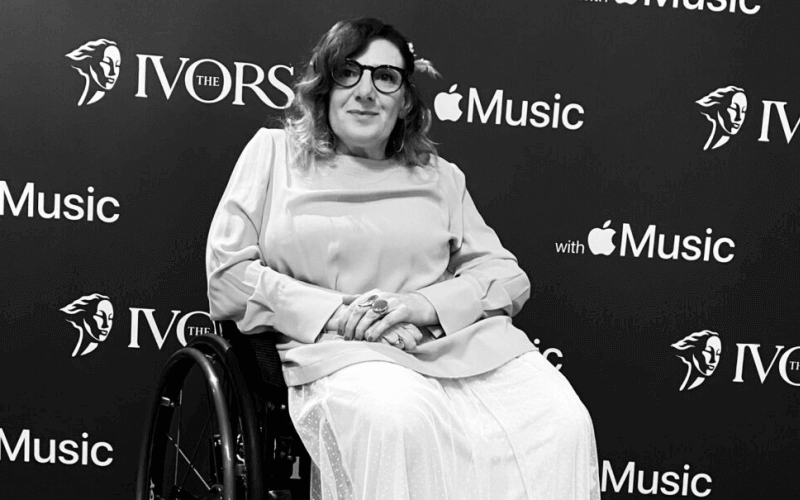
The idea for the project came from Suzanne Bull (pictured), founder of the disabled-led accessible music charity Attitude is Everything (AiE), who grew concerned during the Covid pandemic that disabled people were being “left behind” in the move towards sustainability.
She felt they were being excluded from climate change conversations, and their access requirements were not being considered, which meant practical solutions to address the climate crisis often damaged access.
The No Climate Action Without Us report and guidance has been developed by AiE and two non-profit organisations that work to provide climate change solutions for the arts and culture, Julie’s Bicycle and A Greener Future, with funding from Arts Council England.
The report highlights the key barriers that disabled people experience with sustainability initiatives, and describes some of the ways in which live events can introduce accessible solutions to combat climate change.
But the three charities warn that sometimes there might not yet be a solution that is both accessible and environmentally-friendly.
They add: “Disabled people sometimes might require the use of single use items, cars, or additional equipment but they should never be blamed or shamed for this.”
They say their report provides “foundations for the sector to build upon”, and they are now asking venue managers, festival organisers and promoters to test their ideas.
Responses to a survey by Julie’s Bicycle found that nearly half (46 per cent) of those disabled people who took part said they felt excluded from taking part in environmental efforts at festivals and live events.
A third (34 per cent) said they felt that environmental solutions were often not easy to use and failed to meet their access needs.
One of those who responded to the survey said: “We shouldn’t have to choose between what’s best for the planet and what’s best for us.”
When it comes to travel to and from events, public transport and shuttle services can be inaccessible, with links not close enough to the venue, while initiatives to make tickets cheaper for those using public transport can penalise disabled people who cannot use those services.
With facilities, the report says, many viewing platforms lack appropriate recycling bins; recycling systems often fail to account for single use or disposable items that are a medical necessity for some disabled people; there is a shortage of accessible compost toilets; and aids such as electric wheelchairs, medical fridges and CPAP machines can make it harder for event organisers to reduce their use of electricity.
On communication and information, sustainability staff are often not trained in accessibility, while accessibility staff are not trained in sustainability; and disabled people are ignored when planning sustainability schemes.
With food and water, the report says, many water stations are not low enough for wheelchair-users to access; the design of taps can be inaccessible; and plastic-free, organic food tends to be more expensive.
Disabled musician Blaine Harrison, lead singer and songwriter with the Mystery Jets and an AiE patron, said climate justice was “perhaps the most important conversation of our time, and from a grassroots level to the mainstream I feel that solutions around the environmental impact of our industry need to feel inclusive to all”.
Bull said: “Public demand is growing for businesses to take their environmental and access responsibilities seriously, and that public includes disabled people.
“More than one billion disabled people worldwide are more impacted by climate change than non-disabled people due to the additional access requirements and health concerns many of them have when disasters strike countries and our cities become clogged with polluted air.
“My hope is that this collaboration and the toolkit will be the catalyst for change.”
A note from the editor:
Please consider making a voluntary financial contribution to support the work of DNS and allow it to continue producing independent, carefully-researched news stories that focus on the lives and rights of disabled people and their user-led organisations.
Please do not contribute if you cannot afford to do so, and please note that DNS is not a charity. It is run and owned by disabled journalist John Pring and has been from its launch in April 2009.
Thank you for anything you can do to support the work of DNS…
 Access to Work cuts risk ‘decimating’ disability arts movement, disabled artists and consultants warn
 Disabled peers speak of ‘daily fight’ against access barriers in House of Lords
 Lords is ‘aeons ahead’ of Commons on access, disabled MP tells colleagues