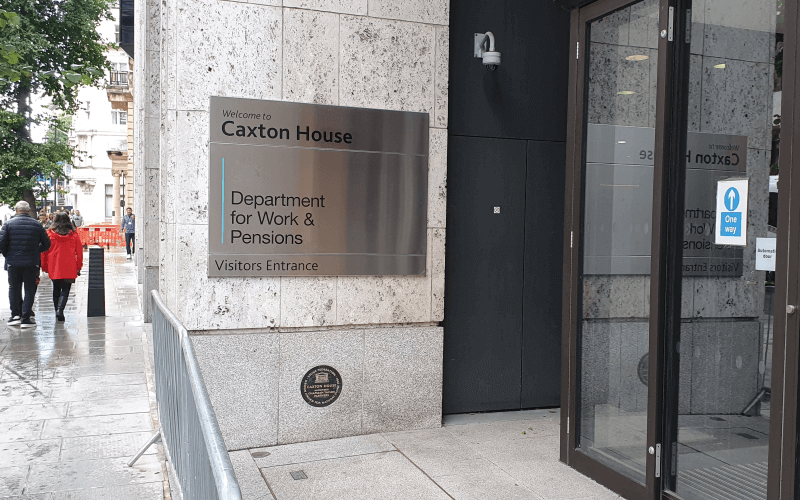
The Department for Work and Pensions (DWP) has claimed that “an issue” with data is preventing it releasing figures that would show just how many disabled people have been affected by cuts to the Access to Work disability employment programme.
Campaigners and advocates, including those working with disabled people who rely on Access to Work (AtW) support to stay in their jobs, warned again this week that support packages are being slashed by the Labour government.
They said the failure to provide accurate, up-to-date data was “a major warning sign” and “deepens the concern that something is being hidden”.
The most recent official figures only showed the number of people who had AtW provision in the year to March 2025, with no monthly figures.
It is believed that up-to-date monthly data would show just how steep the cuts have been in recent months.
Disability News Service put in a freedom of information request on 22 October to ask DWP to provide these up-to-date monthly figures for AtW approvals.
But when the department replied, it claimed it would be too expensive to provide the data.
It said this was because “we are investigating an issue with the Access to Work approvals data” and so it could not provide any figures “until the issue with the Access to Work approvals data has been resolved”.
Last month, the latest figures showed that the number of people who had any AtW provision approved fell by more than 10 per cent in the year to March 2025.
The figures showed that the number of disabled people who had AtW requests for aids and equipment approved plunged by 16 per cent on the previous year, while approvals for support for travel to work fell by 14 per cent.
And, at a time when ministers and opposition politicians are repeatedly suggesting that not enough people with mental distress or ill-health are in work, the number of approvals for mental health support from the government scheme dropped by seven per cent.
One disabled campaigner who works with AtW claimants has said that the figures from the last six months would eventually show how cuts to essential funding were “far more severe” than those shown in last month’s published figures.
The disabled people’s organisation Action on Disability has previously shown that the average AtW support hours of disabled people it had been working with plunged from 22.5 a week to just four in the last two-and-a-half years.
Disabled consultant, broadcaster and campaigner Shani Dhanda, co-founder of the Access to Work Collective, said this week: “The sudden loss of monthly approval data is a major warning sign and is in a long line of other confusing outcomes from the DWP.
“It’s happened at the exact moment support is continuing to be cut.
“People are losing support overnight. Awards are being slashed or removed completely.
“Many are stuck in backlogs that run for a year or more while being told to work without the adjustments they need.
“The consequences are severe: people losing jobs, falling into rent arrears, forced onto benefits and, in some cases, pushed into homelessness.
“This is not a small issue. It’s a growing crisis.
“If there’s genuinely a problem with the figures, DWP needs to explain it and fix it quickly.
“Right now the public is left in the dark while disabled people pay the price.
“Access to Work should be preventing poverty, not driving people into it. Missing data only hides the scale of the damage.”
Catherine Eadie, a social enterprise founder and Access to Work claimant, and a member of the Access to Work Collective, said: “The idea that there is suddenly an ‘issue’ with Access to Work approvals data, right at the moment when support is being cut, is difficult to take at face value.
“Disabled people are experiencing drastic reductions now, not in 12 months’ time when the next annual release appears.
“Blocking access to the more detailed figures that would show the scale of these cuts removes the only meaningful transparency we have.
“Across the collective we’ve seen a clear pattern: inconsistent application of the guidelines, shifting justifications from case managers, and decisions that don’t match the published rules.
“When a system already feels opaque, being told that the approvals data is temporarily unusable only deepens the concern that something is being hidden.
“Withholding them while disabled workers lose essential support creates the impression that the government is managing public perception rather than addressing the crisis.”
A note from the editor:
Please consider making a voluntary financial contribution to support the work of DNS and allow it to continue producing independent, carefully-researched news stories that focus on the lives and rights of disabled people and their user-led organisations.
Please do not contribute if you cannot afford to do so, and please note that DNS is not a charity. It is run and owned by disabled journalist John Pring and has been from its launch in April 2009.
Thank you for anything you can do to support the work of DNS…
 Scores of DWP failings linked to deaths were kept from MPs voting on benefit cuts, secret reports reveal
 DWP staff ignored rules on how to respond to claimants who report suicidal thoughts, secret reports reveal
 Government’s advisers warn DWP minister he may need to ‘shift entrenched concerns’ over work reforms