The charity that oversees the Motability car scheme says that “deeply troubling” Conservative plans to save £1 billion a year by removing VAT exemptions could instead “dismantle” the scheme and would raise just a few million pounds in revenue.
Motability Foundation’s boss, Nigel Fletcher, said this week that the Conservative proposals to remove VAT relief on Motability lease payments and the resale of its fleet of second-hand vehicles – announced at last week’s annual Tory conference – would put the scheme beyond the reach of hundreds of thousands of disabled people.
This is because the proposals would add thousands of pounds to the cost of a Motability vehicle, jeopardise the scheme’s sustainability and have “serious knock-on effects” for the economy and automotive industry, the charity told Disability News Service (DNS) this week*.
The Motability scheme works by buying cars, leasing them to disabled customers, and selling them after three years, with the resale value helping to keep the cost of the lease affordable.
But because the scheme operates on a low profit margin to make those leases affordable, Motability Foundation says that any new taxes would have to be added to the advance payments customers have to pay every three years when they lease a new vehicle.
The charity’s analysis has found that removing VAT relief on reselling its vehicles – one of the two policies suggested by the Tories – would be likely to add an extra £3,320 to the advance payment a disabled person needs to find every three years, and would reduce new applications by 74 per cent.
And if a Conservative government applied VAT at 20 per cent to new leases – the other new policy – it would be likely to add an extra £6,000 to the advance payment.
At that level, Motability Foundation’s modelling suggests, “almost all demand for the scheme would disappear”.
The combined measures could “theoretically” raise £1.7 billion a year, but once nearly all disabled people stopped using the scheme, the modelling suggests, tax revenues could fall to just £20 million by the fourth year, while wrecking the scheme, the market for wheelchair-accessible vehicles, and the wider UK car industry.
Motability Foundation believes that around 60 per cent of the scheme’s customers would struggle to access conventional credit, while many would not be able to afford the substantial upfront costs of obtaining a new car in the private market.
Around 30 per cent of them would find it difficult to obtain car insurance, which is included in the price of a Motability lease.
The charity also warns that the Tory tax plans would put at risk the specialist market for wheelchair-accessible vehicles, which depends on the scale of the wider Motability scheme.
Fletcher told DNS: “We recognise the pressures on public finances, but there is something deeply troubling about a policy that could dismantle a lifeline for disabled people while raising almost no additional money for the Treasury.”
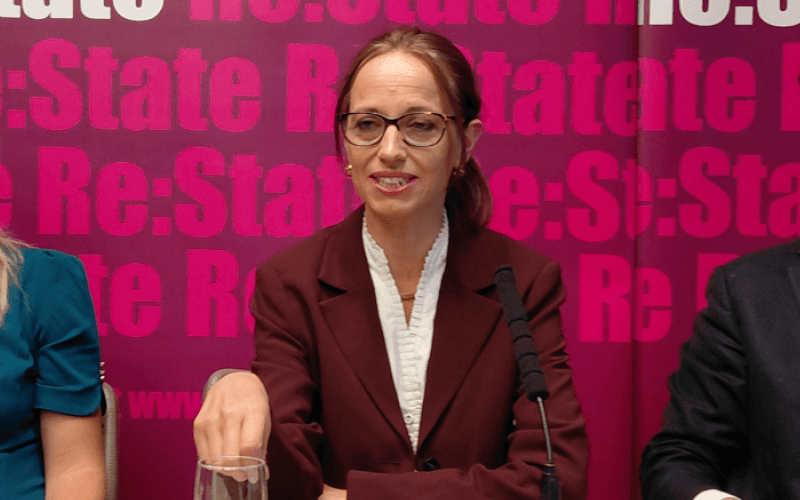
He also described repeated claims by shadow work and pensions secretary Helen Whately (pictured) that people can sign up to the Motability scheme with “acne” or “tennis elbow” as “extraordinary”, although only the Department for Work and Pensions (DWP) is able to confirm this, and it has so far refused to do so.
Fletcher said: “The Conservative party policy to remove tax reliefs from the scheme will not save the taxpayer £1 billion. It will cost the country dearly.
“It would take money away from the mobility allowance disabled people rely on to live independently, forcing them to pay more upfront.
“And because those additional payments would themselves attract VAT, disabled people would effectively be taxed twice, simply to access the support they need.”
He added: “We have offered to meet and brief key Conservative party members to ensure their policies are steeped in fact and that they understand how the scheme works and the wider social and economic consequences of their policies.
“Behind every Motability Scheme vehicle is a disabled person who relies on it to live independently, get to work, attend medical appointments or simply see family and friends.
“We should all be working to make life easier for disabled people, not putting new barriers in their way.”
Last week, Whately told the Conservative party conference: “A welfare system intended to keep poverty at bay and help people dreadfully injured in war now funds people to get free [Motability] cars for acne and tennis elbow.”
But Fletcher said: “Motability does not set the eligibility or assess applications for government mobility benefits – that is done by the DWP; however, I find it extraordinary that someone would qualify for the enhanced mobility allowance solely because they have acne or tennis elbow.
“Government does not share information with the Motability Scheme about customers’ individual disabilities.”
Asked this week about the Conservatives’ VAT plans, and Whately’s comments, DWP refused to criticise her or the party’s tax plans.
Instead, a DWP spokesperson said: “PIP is awarded based on how a condition impacts a person’s day-to-day needs, as opposed to the condition itself and many PIP claimants have multiple conditions.
“We are committed to ensuring the scheme continues to deliver for the people it was designed to support, and we’re reforming Motability to save the taxpayer £1 billion over five years.
“Supporting disabled people will always be our top priority and we are in regular discussions with Motability Foundation about the scheme.”
VAT changes introduced by Labour chancellor Rachel Reeves last November are already costing disabled people who lease a Motability car more than £400 each on average, the company that runs the scheme – Motability Operations – told DNS earlier this year.
Reeves announced last November that she was imposing VAT at 20 per cent on most advance payments for cars leased through the Motability scheme and removing the current 12 per cent insurance premium tax exemption.
Only vehicles with substantial adaptations for wheelchair- and stretcher-users were exempt from the new taxes, which were introduced in July (and in September in Scotland) on new Motability leases.
Motability Operations has absorbed some of the extra costs itself.
It has estimated that the tax changes would have added an average of £1,100 per new Motability lease if it had not introduced hugely unpopular changes to the scheme, such as lower mileage allowances – cut from 20,000 to 10,000 miles a year – increasing excess mileage charges from 5p per mile to 25p**, tightening its tyre replacement policy, and imposing a fee to take vehicles abroad.
Motability Operations told DNS in July that the impact of last November’s tax changes would see customers pay an extra £400 on average through increases to advance payments on like-for-like vehicles.
But it is not yet clear how much extra disabled customers are paying on average on top of this, through the increased excess mileage charges and the other changes.
Motability was also pressured by the government into removing all “premium” brands” – such as BMW, Jaguar and Mercedes – from the scheme.
*Motability Foundation is a Disability News Service subscriber
**21p for customers who do not pay VAT on additional payments, such as those with a wheelchair-accessible vehicle
 Information Commission orders DWP to release secret report that examined quality of PIP phone assessments
 Whately appears to agree social security spending is not spiralling after all… as Tories plan £36 billion-a-year cuts
 Shadow minister says parents don’t ‘game’ SEND system… but Kemi says disabled adults do ‘game’ the benefits system