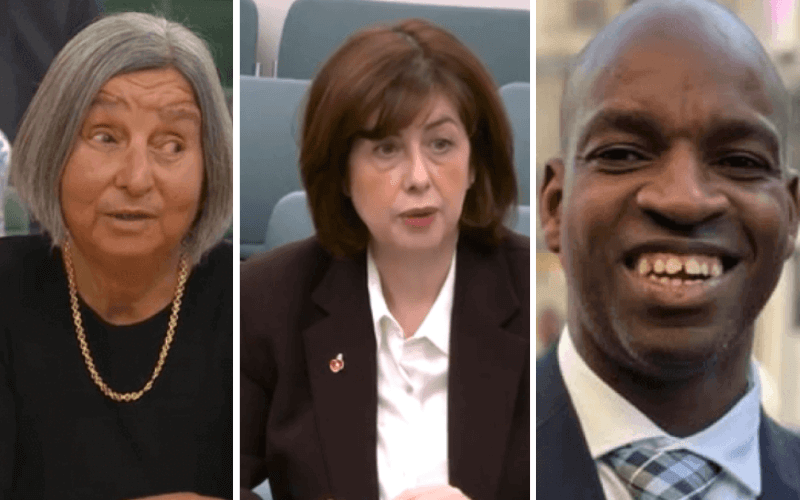
The education secretary has admitted that a government bill that will introduce sweeping reforms to the special educational needs and disabilities (SEND) system has been delayed because it is “not quite right”.
Lucy Powell, in her first evidence session before the Commons education committee, said she and her department had been working with the education sector, parents, schools, MPs and others to “really get these reforms right” and had been “working very closely, night and day, with our trusted partners, with parent groups, with our expert panel and with others to get it all right”.
But disabled people’s organisations (DPOs) said they had been sidelined by the government, with one leading DPO saying the Department for Education (DfE) was “not actively working” with DPOs and had silenced their voices.
In her evidence last week, Powell mentioned parents 12 times when discussing the SEND reforms and her department’s consultations, but she did not mention disabled people once.
The leading DPO campaigning for inclusive education called this week for the reforms to be scrapped because it said they would “deepen segregation and remove legal rights”.
The bill had been expected this month but is now set to be published “very early in the new year”, alongside the government’s response to a “huge” three-month consultation on its SEND reforms, which ended in May.
Powell told the committee: “On day one, when I came in as secretary of state, I said that the worst thing we could do… would be to produce a piece of legislation that is not quite right and that people do not have trust in from the day it is published.
“However long it takes to get that right is what we will take.”
But she said the government was already rolling out some of the changes that are part of the reforms, including “huge recruitment” to get specialist support into more schools, teacher training, and capital investment in more specialist spaces.
Some of these spaces will be in specialist units in mainstream schools, while others will be through new special schools.
According to the draft plans released earlier this year, all children with SEND will have a legal right to a new individual support plan (ISP) – reviewed at least annually – which will set out barriers to learning, day-to-day provision, any reasonable adjustments they need to be made, and intended outcomes.
But fewer disabled children will qualify for an education, health and care plan (EHCP), with those with lower support needs instead receiving “targeted” and “targeted plus” support in mainstream settings, a system which appears to mirror the pre-2014 system of statements, “school action” and “school action plus”.
Every secondary school will be expected to have an “inclusion base”, with an equivalent number of places in local primary schools.
The government will spend £1.8 billion over the next three years to create a bank of specialists such as SEND teachers, speech and language therapists and educational psychologists in every local area, to be known as Experts at Hand, which local mainstream schools can draw upon.
Powell said the new system would see “more support earlier on, more help and [children] not needing to have diagnoses in order to get the support that the child evidently needs”.
She said this new system was being piloted in Rochdale and had produced “some good results”, with an 80 per cent reduction in speech and language referrals, “because the help was in Rochdale schools earlier on”.
She said the reforms were “complex”, with “many layers and complexities to them”, which was “why we are determined to get the detail right in these closing stages, so that families and parents feel that there is a level playing field and accountability in the system”.
Powell told the committee: “We want to fully turn this oil tanker around in quite a major way, so that all children have the support they need to thrive and be included.”
Disability News Service reported in February that the government’s reforms would increase the proportion of children in “specialist” placements over the next nine years, despite ministers claiming they were moving towards more “mainstream inclusion”.
The plans will see many disabled children educated in specialist units in mainstream schools, but even the proportion of children in special schools will not have fallen by 2035.
Edmore Masendeke, policy and research lead at the Alliance for Inclusive Education (ALLFIE), told DNS this week: “Although the DfE claims to be working with key stakeholders on the SEND reforms, it is not actively working with disabled people’s organisations to ensure that the reforms are driven by disabled people’s voices and lived experience.
“Our voices have further been silenced though the release of one inaccessible consultation after another in rapid succession*.
“It’s clear that the DfE is prioritising the agendas of big academies over inclusive education for disabled children and young people.
“ALLFIE does not support any of the SEND reform proposals as they will not achieve inclusive education, as Lucy Powell wants us to believe.
“These reforms will instead deepen segregation and remove legal rights.
“They are based on outdated medicalised models that homogenise young disabled people’s experiences and assume a one-size-fits-all approach based on diagnosis or impairment.
“We are clear: these reforms will not make the education system more inclusive. They must be stopped!
“Consultation is not co-production, and pushing through reform that has not been co-produced will reinforce segregation that continues to harm disabled children and young people.”
Another disabled people’s organisation that campaigns on inclusive education, Disability Rights UK (DR UK), said it only had its first meeting with government officials about the SEND plans this week.
Fazilet Hadi, DR UK’s head of policy, said: “Disabled people’s organisations (DPOs) support the government’s aim of ensuring a genuinely inclusive mainstream education service; however, we recognise that this is still only an ambition and remains a very long way off.
“In the meantime, disabled children need their rights to educational support protected, through education, health and care plans (EHCPs) and through school-based support.
“The consultation earlier this year proposed weakening rights to EHCPs, creating specialist packages of support rather than providing personalised support, and creating new individual support plans with no transparency or accountability.
“It remains to be seen whether the proposals have been discarded or modified, following the consultation process.
“If the education for all bill, due in January, diminishes the rights of disabled children and young people, the DPO movement will oppose its provisions.”
*These include February’s consultation; a consultation in June on improving help and child protection; a consultation in July on early years funding; another in July on education otherwise than at school; and yet another in July on upfront SEND funding for mainstream schools
Picture: (From left to right) Fazilet Hadi, Lucy Powell and Edmore Masendeke
 New DWP figures fail again to provide clarity on employment disadvantage faced by disabled people
 Budget is ‘miniature sticking plaster’, disabled people warn as they await Timms and Milburn reports
 Covid inquiry criticised for sidelining disabled people who received support at home in pandemic