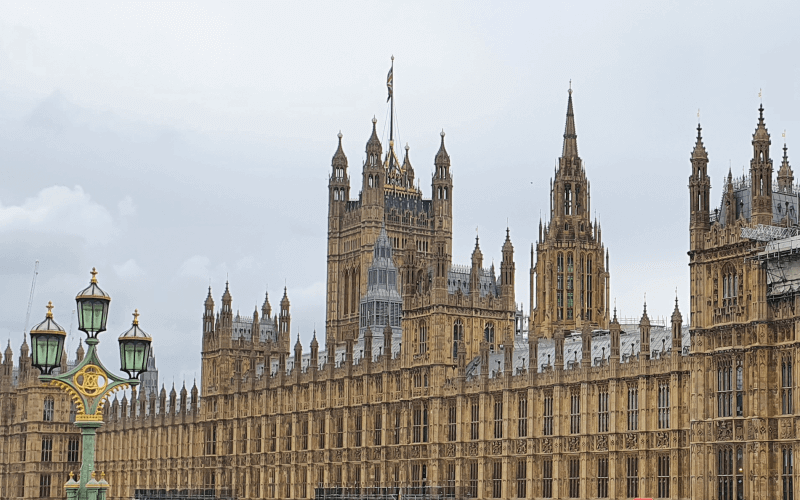
Three disabled peers have called on the House of Lords to make it harder for disabled people to be “coerced” or subjected to “undue influence” before requesting an assisted suicide, through measures in a controversial bill.
The trio were among a series of peers who suggested amendments to the terminally ill adults (end of life) bill – which applies to England and Wales – over concerns that it currently fails to provide the necessary protection for disabled people if assisted suicide is legalised.
Baroness [Tanni] Grey-Thompson, a crossbench disabled peer, proposed three amendments that sought to “explore coercion and ensure that people are free from undue influence, including social, economic and care-related pressures, not only active coercion, which is very difficult to prove.”
She told the House of Lords last Friday: “We should ensure that the law does not default to death as a substitute for deficient services, which is an ethical red line repeatedly emphasised by disability advocates and UN experts reviewing permissive regimes [that have legalised assisted dying].”
She warned: “What is presented as a voluntary choice may in fact be a choice made under hidden pressure.”
In the year between April 2022 and April 2023, she said, there were 242 deaths related to domestic abuse.
She pointed out that disabled women were twice as likely to experience abuse than non-disabled women, and that disabled people are more likely to experience abuse from an adult family member compared to non-disabled people.
And, she said, one in 10 domestic violence abuse cases are “perpetrated by someone with a caring responsibility”.
She and other peers were debating a series of amendments that were focused on improving protection in the bill from the risk of a disabled person being persuaded, coerced or encouraged to opt for an assisted suicide.
They included amendments around coercion, financial abuse, encouragement to choose an assisted suicide, and the need for “clear, objective safeguards to remove the possibility of improper motives influencing the process”.
Other peers proposed ways to offer protection from “more subtle, insidious influences that could affect a person’s decisions”, or from “systemic and institutional forms of coercion” such as those caused by the health and social care systems.
The Lords also heard how a disabled person might choose an assisted suicide because they felt they were a “burden” to relatives.
And protections were suggested from those who might seek to “induce, encourage, advise or influence” someone to take their own life through an assisted death.
The disabled Conservative peer Lord [Kevin] Shinkwin said his own experience of pain highlighted how “the sense of being a burden, or the burden of pain” can be “the most powerful and damaging form of coercion and perhaps the one from which we most need protection”.
He said it was crucial to highlight how “the subtlety of pressure, particularly as it relates to disability, can definitely stem from cultural attitudes”.
He said: “I give one example. I was laughed at in the street outside my home as recently as last weekend because of how I look as a result of my disability.”
He added: “How can being subject to such prejudice not affect a person’s mental well-being or their sense of self-worth?
“How could such a structural disadvantage, in terms of the cumulative effect of being constantly exposed to such negative and discriminatory attitudes, not affect a person in a vulnerable situation who is considering assisted dying?
“The fact that the sponsor of the bill does not appear to have factored it in does not mean that the rest of us should fail to do so.”
Another disabled peer, Lord Blencathra – former Conservative Home Office minister David Maclean – also pushed for amendments around coercion, and particularly supported one of the amendments proposed by Baroness Grey-Thompson.
He said: “When a person facing terminal illness is subject to circumstances such as chronic poverty, social isolation or a systemic lack of quality healthcare, their options are severely limited.
“In such scenarios, the choice to pursue end-of-life options may not be a true expression of free will but rather the result of enduring disadvantage and unmet needs.”
He added: “When terminally-ill individuals lack access to palliative care, social support or financial resources, they may feel compelled to consider end-of-life options not out of genuine preference but because their suffering is exacerbated by these systemic failures…
“End-of-life legislation to protect the autonomy and dignity of the terminally-ill must acknowledge that coercion and pressure are not limited to overt acts by individuals.”
He said that proposed amendments that expanded the protection around coercion would “significantly enhance the safeguards in the bill”.
He said: “These changes would help ensure that decisions to end life are made with the highest standards of voluntariness and autonomy, free from all forms of undue influence, pressure or encouragement, whether from individuals, organisations or internalised feelings.”
But Labour peer Lord Falconer, who is sponsoring the private members’ bill in the Lords – it is sponsored by Labour MP Kim Leadbeater in the Commons – dismissed nearly every one of the amendments proposed.
He said that no-one debating the bill in the Lords disputed that there had to be “appropriate and sufficient safeguards to ensure that there is no coercion”.
He outlined the bill’s existing safeguards, which include that a doctor – and then a second doctor – must be satisfied that the person seeking an assisted death is not being coerced.
A panel must then assess that the person is not being coerced, before the first doctor – after the patient has signed a second declaration – “has to be satisfied again that the person is not being coerced”.
The doctor providing the assisted death must also, at the last moment, be satisfied that the person is not being coerced.
Lord Falconer also pointed to new criminal offences, including a sentence of up to life in prison for inducing someone to take their own life through an assisted death by dishonesty, coercion or pressure.
He argued that there was no need to add “encouraged” or “influenced” to measures on coercion or pressure in the bill.
He said: “With regard to ‘influenced’, the multidisciplinary team or the person’s loved ones may well – with the best motives – influence somebody to go ahead with it.
“I do not criticise them for that if that is what the person wants and if it helps.”
He told fellow peers: “I am saying no to quite a lot of the amendments because, in my opinion, I do not think they are necessary and there is adequate protection.”
Baroness Grey-Thompson suggested that – following an earlier statement by a minister in the Commons – the doctors investigating possible coercive control would only have to be “51 per cent certain that there is no coercion for the panel to carry on and for an assisted death to be granted”.
Lord Falconer did not deny that these decisions would be made on the balance of probabilities, and he said the professionals involved would “have to do what is required”.
Two amendments he did not rule out were that there should be codes of practice for those assessing an assisted death request on whether the person had been coerced or placed under pressure.
Lord Falconer said the amendment on a “coercion” code of practice seemed “perfectly sensible” and he would “take it away and think about it”, along with a similar request around “pressure”.
The debate had been opened by Baroness Finlay, a crossbench peer and consultant in palliative medicine, a prominent opponent of legalisation, who had suggested that a decision to choose an assisted death should be “devoid of encouragement to end their life from any other person”.
Following Lord Falconer’s dismissal of almost all the amendments debated on Friday, she said she was “disappointed” that the debate had not ended with peers “saying that we will all sit down together” and discuss a way forward.
She said that she and other peers who drafted proposed changes around the coercion issues would now discuss how to bring back further amendments at the next stage of the bill “to manage the situation that we highlighted today, which is a very profound concern over coercion, abuse and all the other factors that go along with that.”
The government claims it remains “neutral on the principle of assisted dying” and on the passage of the bill, and that whether the law should change “is absolutely and rightly a matter for parliament”.
But last week, the Department of Health and Social Care refused to say if it was secretly working on how to implement the legislation, despite repeatedly claiming it has taken this “neutral” stance.
It was the second of four Fridays originally allocated to the committee stage of the bill in the House of Lords.
Although about 20 amendments were debated last Friday, peers have only managed to deal with a tiny proportion of the 1,100 amendments that have so far been proposed and will need to be debated during the committee stage.
In an attempt to secure a way through these amendments, the government’s chief whip in the Lords, Lord [Roy] Kennedy, said another eight Fridays in the new year would be allocated to the bill’s committee stage, between January and April.
A note from the editor:
Please consider making a voluntary financial contribution to support the work of DNS and allow it to continue producing independent, carefully-researched news stories that focus on the lives and rights of disabled people and their user-led organisations.
Please do not contribute if you cannot afford to do so, and please note that DNS is not a charity. It is run and owned by disabled journalist John Pring and has been from its launch in April 2009.
Thank you for anything you can do to support the work of DNS…
 Relief and tears after MPs reject assisted dying bill, as attention turns to palliative and social care
 Disabled MPs voted against assisted dying bill by two to one, records show
 Government admits disabled people may face ‘subtle pressure’ to choose an assisted death, if bill passes