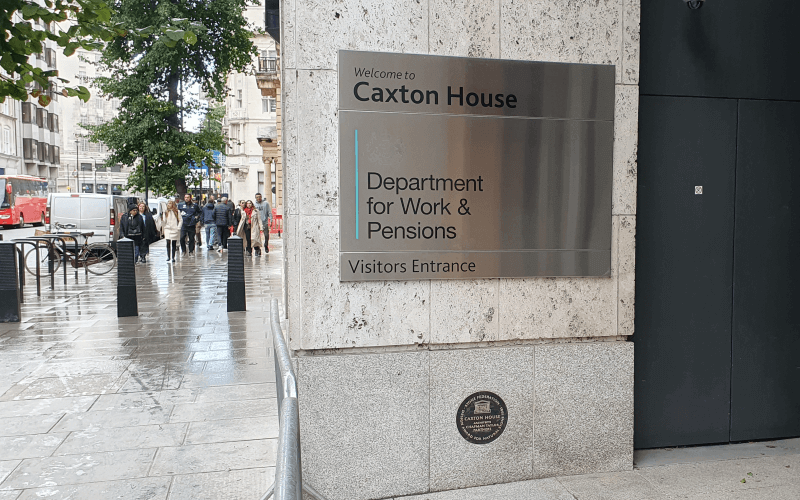
The disability minister is facing further questions over his commitment to transparency after the Department for Work and Pensions (DWP) refused to release the names of his new advisers on work and disability benefits, or even the organisations they represent.
Five “collaboration committees” were set up earlier this year by Sir Stephen Timms to advise him and his department, particularly on issues around disability employment.
But DWP has now told Disability News Service (DNS) that it will not release the names of any of the 50 or so members of the committees, or even any of the organisations they represent.
Sir Stephen, the minister for social security and disability – who has previously pledged more DWP transparency under the new Labour government – said in July that the committees’ recommendations would be “very influential in the final decisions that get made”.
But despite that, he is refusing to release the names of the disability charities, support providers and employers that are represented on the committees.
DWP previously said that committee members include “people with lived experience of our services, disabled people’s organisations, disability charities, healthcare professionals, academics, support providers and employer representatives”.
In response to a freedom of information request from DNS, DWP said it could not release the names of the committee members because it was “personal data” and “satisfies one of the conditions listed” in section 40(2) of the Freedom of Information Act.
It said there was “no strong legitimate interest that would override the prejudice to the rights and freedoms of the data subject”.
And it said it had made “confidentiality commitments to the individuals and organisations involved in these panels, to allow them to choose if they would like to publicly confirm if they are taking part in this process”.
The transparency failure follows last week’s revelation that DWP had imposed “gagging orders” on members of its new Independent Disability Advisory Panel.
One of the five collaboration committees is examining reform of the Access to Work scheme, while others will look at youth unemployment, the government’s Pathways to Work green paper, Labour’s new Right to Try Guarantee, and whether to change the age that young disabled people move from disability living allowance to personal independence payment from 16 to 18.
DWP said in April that the five committees would “provide discussion, challenge, and make recommendations” and “further develop our reforms”.
Sir Stephen told the BBC’s Access All podcast in July that there would be about 10 people on each of five collaboration committees, each of which would meet monthly until their final meetings next month.
He added: “And at the end of that time we’re looking forward to having their recommendations and ideas for what we should do.
“Those will be presented to ministers and will be very influential in the final decisions that get made.”
A white paper is expected to follow in October or November.
A note from the editor:
Please consider making a voluntary financial contribution to support the work of DNS and allow it to continue producing independent, carefully-researched news stories that focus on the lives and rights of disabled people and their user-led organisations.
Please do not contribute if you cannot afford to do so, and please note that DNS is not a charity. It is run and owned by disabled journalist John Pring and has been from its launch in April 2009.
Thank you for anything you can do to support the work of DNS…
 DWP silent after Tory member of PIP review publishes report demanding child disability benefits are slashed
 Ministers’ decision to slash accessible housing targets was ‘unprincipled’, but Timms says they were right
 Timms refuses four times to rule out cuts to PIP, but makes firm promise on cash payments