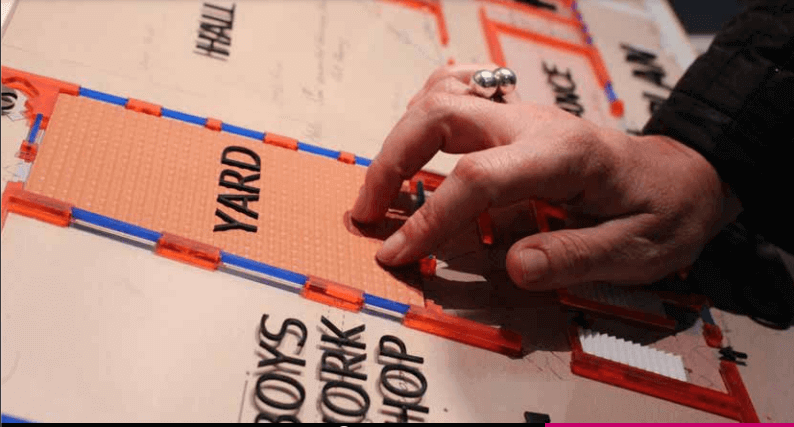
A ground-breaking programme – backed by National Lottery funding of nearly £1 million – aims to transform the way disability history is represented by museums, address the inequality disabled people face in their workforces, and improve access.
More than 20 museums across England will take part in Accentuate’s Curating for Change work placement programme, thanks to £950,900 from The National Lottery Heritage Fund.
Accentuate hopes the project will improve the way disability history is represented in museums and improve the accessibility of their collections.
Over the next 30 months, it will offer 18-month fellowships to eight disabled people – and 40-day traineeships to another eight disabled people – who want to pursue careers within the museum sector.
Each of the fellows will spend their 18 months researching a museum’s collection, with the aim of “uncovering hidden narratives relating to disabled people”.
Esther Fox, the disabled head of Accentuate, said: “It is crucial that these narratives are interpreted and presented from a lived experience of disability perspective to ensure a nuanced and authentic representation.”
Only four per cent of the museum workforce currently self-identifies as disabled.
Fox said: “Currently the representation of disabled people in museums, both as staff and within collections, is significantly lacking.
“This is not only inequitable, it is also a seriously missed opportunity to understand new perspectives of heritage and ways to meaningfully engage a wider range of people with museums.”
Accentuate says disabled people’s history is rarely exhibited in museums, while there are few objects in collections that reflect that history.
It hopes its project will embed change within the museums taking part, with lessons that can be shared across the sector, and provide a “much-needed platform” for disabled curators to demonstrate their skills and insights.
Fox (pictured) said: “We have undertaken significant consultation with D/deaf, disabled and neurodivergent people in the development of Curating for Change.
“We have heard about the extensive barriers they have faced.
“Most specifically, inaccessible recruitment practices, lack of flexibility in terms of remote and ‘on site’ working, lack of flexibility with working hours, employers not understanding the support available (such as Access to Work).
“Also, many jobs require extensive qualifications or ability to do physical things such as drive, lift boxes, climb ladders, which is often impossible for disabled people, even if they would be able to fulfil the role in every other way.
“There is also a significant problem with entry level jobs.
“Some people we heard from said they had done some sort of training programme, but they weren’t then deemed to be experienced enough to move into a curatorial role within a museum, but they were too experienced to go on further training or internship programmes, so they were stuck in a catch-22 situation.
“The fellowships aim to address this move into a curatorial career and to support museums in looking at ways to meet access needs rather than seeing these as barriers.”
All the fellowships and traineeships will be paid roles, and will include mentoring and professional development support, opportunities to build connections with the museums taking part in the programme, and access and travel bursaries.
The project will also set up disability heritage co-production groups at each of the museums hosting the fellowships – thanks to extra funding from Art Fund – to support the research and offer advice on creating content, and test different and accessible ways to interpret the disability-related material, both digitally and within the museums themselves.
Museums taking part in the programme include The British Museum, Museum of Liverpool, Black Country Living Museum, the National Railway Museum in York, Museum of London, and the Thackray Museum of Medicine in Leeds.
Fox said: “There is a commitment from right across the sector to improve equity and representation and Curating for Change will deliver the activities that will make this change a reality.”
Accentuate has also established a Museums Strategic Disability Network, which includes museums and organisations such as the Museums Association, the University of Leicester’s Research Centre for Museums and Galleries, and the Association of Independent Museums, and disabled-led organisations working in the field such as VocalEyes and Dash Arts.
The network will use lessons from the programme to help to identify policy recommendations and develop an action plan for the wider sector.
Accentuate works to create opportunities for disabled people in the cultural sector and is part of the cultural development agency Screen South.
A note from the editor:
Please consider making a voluntary financial contribution to support the work of DNS and allow it to continue producing independent, carefully-researched news stories that focus on the lives and rights of disabled people and their user-led organisations.
Please do not contribute if you cannot afford to do so, and please note that DNS is not a charity. It is run and owned by disabled journalist John Pring and has been from its launch in April 2009.
Thank you for anything you can do to support the work of DNS…
 Secret histories unearthed by author show how disabled people fought injustice through the centuries
 Social model support scheme that tackles barriers secures nearly £600,000 funding
 Activists’ shock as Scope ‘sacrifices integrity’ to partner with ‘hostile’ Daily Express