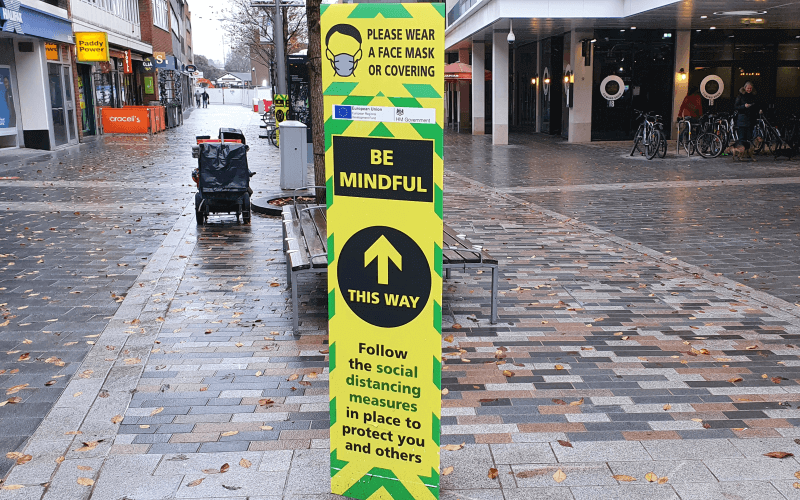
Disabled people who are still shielding from Covid have far less trust in the government than the general public and are far more likely to believe it handled the pandemic very badly, a survey has found.
The survey also found that immunocompromised people are far more likely to be experiencing poor mental health.
But those still shielding from the virus reported much higher levels of political participation.
The survey aimed to investigate how continuing vulnerability to COVID-19 affected people’s political engagement and mental health.
Forsaken but Engaged, a report on the survey findings, found that those immunocompromised people who participated in the survey “experienced higher levels of worry due to COVID-19, poorer mental health, lower perceptions of representation, lower trust in government, and poorer satisfaction in democracy and in terms of how the government has handled the pandemic”.
Four years on from the identification of the virus, more than 1.2 million immunocompromised people are still believed to be at high risk because their conditions and medications make the Covid vaccines ineffective.
Many are either still shielding or living restricted lives, trapped in “enforced isolation”.
The survey results were compared with a survey of the wider public.
Compared to the general population, immunocompromised people reported much higher levels of concern about the long-lasting negative impact of the pandemic on society (91 per cent were worried, compared with 60 per cent of the general public).
Nearly one in four (24 per cent) of those who are immunocompromised reported poor mental health, compared to nine per cent of the general public.
When asked to rate their level of trust in the government (on a scale from 0 to 10, where zero means “do not trust at all”), the average for immunocompromised people was just 1.19, two points lower than the general public (3.18).
And seven in 10 immunocompromised people said the government had handled the pandemic very badly, compared to three in 10 of the general public.
But their experiences of prolonged shielding appear to have increased their levels of political engagement.
Compared to the general public, in the past 12 months, 71 per cent of immunocompromised people said they had contacted a politician or government official, against just 18 per cent of the general public.
And 88 per cent said they had signed a petition (against 40 per cent of the general public), while nearly three-fifths (58 per cent) said they had posted or shared something about politics online (against 17 per cent of the general public).
Among its recommendations, the report calls for action to support and protect people who are still shielding, and those who may need to shield from a virus in the future.
It also calls on the Department of Health and Social Care, and the wider government, to recognise the psychological needs of those who have been shielding.
And it says the government should ensure those who are immunocompromised have adjustments put in place to allow them to vote in-person safely.
The Forsaken but Engaged inquiry was a collaborative project between the universities of Liverpool and Bath; the all-party parliamentary group on vulnerable groups to pandemics; Forgotten Lives UK – which campaigns on behalf of the 1.2 million people who are still at high risk from Covid because of a compromised immune system – and the national expert group for immunocompromised patients.
Mark Oakley, co-leader of Forgotten Lives UK, said: “This report highlights the stark contrast between the immunocompromised, who are still shielding, and the general population.
“They are now heading into their fourth Christmas shielding and this report shows how they are being ignored.
“The scale of increasing mental health issues caused by the isolation and the problems it is building for the future is shocking and this needs to be addressed urgently to protect their mental and physical health.
“It is no wonder that the report shows the level of dissatisfaction of government handling of the pandemic is double that of the general population.
“Those in this position have shown a stronger desire to vote, take part in political activities, and are four times more likely to try to contact their MP.
“It underlines that those affected by this need to be engaged with properly on all levels by politicians and facilitated to be able to do so safely.”
Dr Luca Bernardi, a senior lecturer in politics at the University of Liverpool, and one of the report’s authors*, said: “Our findings reveal that Covid is not a thing of the past for immunocompromised people, who feel left behind and unrepresented by the political system and whose trust in government is way lower in comparison with the general public.”
*The other author was Dr Jo Daniels, senior lecturer and clinical psychologist at the University of Bath
A note from the editor:
Please consider making a voluntary financial contribution to support the work of DNS and allow it to continue producing independent, carefully-researched news stories that focus on the lives and rights of disabled people and their user-led organisations.
Please do not contribute if you cannot afford to do so, and please note that DNS is not a charity. It is run and owned by disabled journalist John Pring and has been from its launch in April 2009.
Thank you for anything you can do to support the work of DNS…
 Inquiry hears how lack of accountability for disabled people’s Covid deaths caused lasting harm
 Tory government failed to protect disabled people in early months of pandemic, inquiry concludes