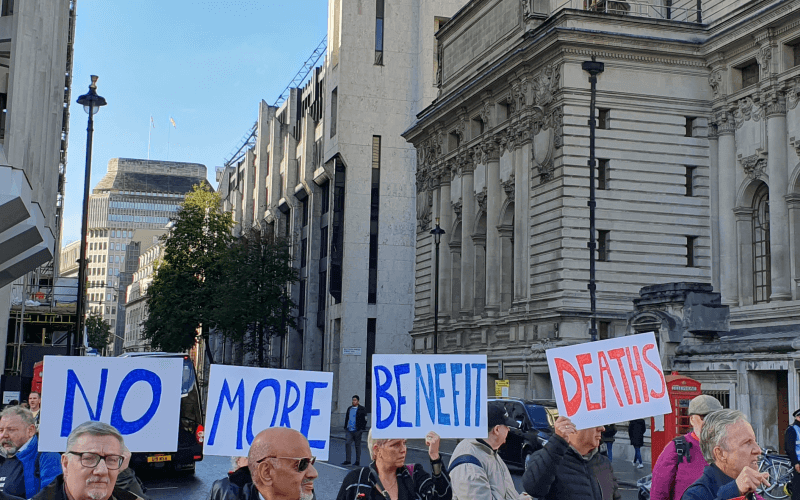
The Department for Work and Pensions (DWP) has been ordered to release a report that examined the quality of personal independence payment (PIP) assessments carried out by telephone, after one of them was linked to the death or serious harm suffered by a claimant.
The audit was ordered in 2020-21 after a secret review by DWP into a claimant of personal independence payment (PIP) who had been assessed by telephone and later died or suffered serious harm following significant failings by DWP and one of its contractors.
DNS only became aware of the audit report on the quality of PIP telephone assessments after it was mentioned in a series of short summaries of internal process reviews (IPRs) completed by DWP in 2020-21.
IPRs are carried out when there is a suggestion that DWP’s actions or failings may have negatively affected a claimant, and they have suffered serious harm, died, or attempted suicide.
The 2020-21 IPR summaries were finally published by DWP earlier this year after a freedom of information battle with Disability News Service (DNS).
Now a second freedom of information contest has led to the Information Commission ordering DWP to release the audit of PIP telephone assessments, as well as a “substantial assurance” that was given over the quality of future reports, although it is not clear who provided this assurance.
Earlier this year, DNS asked for copies of the audit report – dated 19 March 2021 and carried out by the Government Internal Audit Agency (GIAA) – and the “assurance”, under freedom of information laws.
Although DWP confirmed the information existed, it refused to release it.
Now the Information Commission has ruled that the information should be released to DNS.
It said in its decision notice that DWP had described the audit report as containing a “candid” evaluation of the system, and “frank” internal audit findings.
DWP had argued that releasing the report would “be likely to inhibit the free and frank provision of advice and the free and frank exchange of views by senior leaders, operational teams and auditors, including the GIAA” and “create a chilling effect across the internal audit cycle”.
But the Information Commission has now concluded that releasing the audit report would “promote public understanding” and “assist the public to understand how DWP monitored and assured the quality of telephony assessments” and how it reached “assurance judgements” following serious cases.
And, the commission said, it would “enable the public to scrutinise whether the audit recommendations have been acted upon in the five years since they were made and how they have been implemented”.
The decision notice also highlighted the length of time since the report was completed, which it said “reduces the weight” of DWP’s arguments.
It concluded that there was “a strong public interest” in releasing the information as it enabled scrutiny of “the administration of a significant public service”.
DWP told DNS yesterday (Wednesday) that it would set out in due course how it planned to respond to the decision notice.
The IPR summaries showed that, in 2020-21, 20 reviews identified the need to learn from DWP failures involving PIP claimants, and these produced a total of 34 “agreed activities” to put these failings right.
The short summary of the case of “Customer 23” – who either died or suffered serious harm – found that their PIP assessment “was not of required standard”, and that all the available evidence was “not considered when decision was made”, a frequent criticism made in such cases over the last 16 years.
DWP also failed to signpost Customer 23 to another benefit when one of their claims ended.
It is not clear from the summary whether the assessment was carried out by Atos or Capita, the two much-criticised private sector contractors in place at the time.
The summary revealed that the senior DWP officials who review IPR findings asked their PIP colleagues for assurances that assessment reports were “robust and meet the agreed standards” and that their decision-makers were “utilising all the evidence available to them”.
As a result, DWP ordered an audit of assessment reports and secured “a substantial assurance”, although it is not clear whether this assurance came from its PIP department, from Atos, Capita, or from both contractors.
The Department: How a Violent Government Bureaucracy Killed Hundreds and Hid the Evidence, DNS editor John Pring’s book on the years of deaths linked to DWP’s actions and failings, is published by Pluto Press
 Leaked DWP ‘corner-cutting’ plans reveal changes to checks on assessments that will cause ‘even more risk’
 DWP silent after Tory member of PIP review publishes report demanding child disability benefits are slashed
 Timms refuses four times to rule out cuts to PIP, but makes firm promise on cash payments