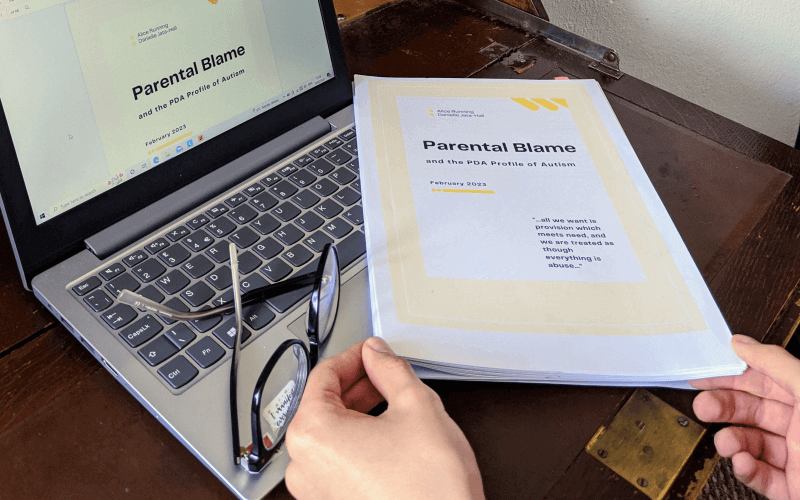
Neurodivergent parents and single mothers are frequently blamed for the behaviours of their autistic children, and even subjected to safeguarding inquiries, when they try to seek support from services, according to new research.
The report, based on a survey of more than 1,000 families of autistic children*, shows a “very real fear” among neurodivergent parents about disclosing to social services and other professionals that they are themselves autistic.
The findings suggest that safeguarding procedures, which can even lead to the child being placed in care, or a criminal investigation into the family, are more frequently being taken against lone mothers and neurodivergent parents than other parents surveyed.
Some of the parents who took part in the survey said their children had died while in inappropriate placements.
The authors say the blaming of parents for the difficulties their children are experiencing at home or school is a “widespread phenomenon” and appears to be “a systematic way of dealing with parents seeking support” from school staff.
They say it has created “a climate of real fear among parent carers”.
The report, Parental Blame and the Pathological Demand Avoidance Profile of Autism, focuses on the experiences of parents with autistic children who are believed to have pathological demand avoidance (PDA), which “presents as an anxiety-driven extreme avoidance of everyday demands, and a need for control which permeates all aspects of daily life”**.
Many parents are blamed for their child’s refusal to attend school, are told to seek support with their own mental health because of their insistence that their child has PDA, or are accused of inventing or exaggerating their child’s needs, or of emotionally harming or neglecting their autistic child.
One of the authors of the report, Alice Running***, is an autistic woman and mother of two autistic children; the other, Danielle Jata-Hall, is the mother of three neurodivergent children.
Their research follows their own experiences of being “subjected to misaligned scrutiny and blame by their respective local authorities”.
Nearly nine in 10 (88 per cent) of those who responded to their survey said they felt blamed for some part of their child’s behaviour or lack of progress.
And more than half (53 per cent) said professionals supporting their child had raised concerns about their own mental health.
Many reported that they were consistently told by professionals that they were at fault for their child’s behaviours, with many parents told they were a safeguarding risk to the child.
The report found that this appeared to happen more often to single parents and those without a professional background.
One parent said: “Every time I raise an issue my child is having [or] request further support, the school directly reply with a safeguarding concern.”
A mother who responded to the survey said: “A teacher told the school my child was not autistic and that probably her mother was harming her.”
Another parent said: “I sent information to my child’s social worker who then turned it round saying I’m looking to label my child and cover up my abuse.”
Out of 1,016 respondents to the survey, 111 families (11 per cent of respondents) had been subjected to some element of formal safeguarding procedures which stated that they were at fault for their child’s behaviour.
These safeguarding procedures included child protection inquiries, children being placed in care, and even prosecution of the parents.
Of these 111 families, 64 were lone mothers, and 85 identified themselves as neurodivergent.
One said: “Dealing with the [special educational needs] team has broken us. All we want is provision which meets her needs, and we are treated as though everything is abuse… and not a basic right.”
Another said: “I feel as if they’ve pushed me to the brink… I started off being honest and transparent about all the difficulties… I wouldn’t tell them if my head was hanging off now.”
More than half of the parents and carers who responded to the survey themselves identified as neurodivergent, and of those who chose not to reveal that status to the professionals working with their child, three-fifths (59 per cent) said they would fear repercussions from those professionals if they did so.
Running and Jata-Hall say their findings show the need for improved education among professionals about both neurodivergent parents and autistic children with PDA.
Running said: “There have been some devastating stories shared with us.
“In some instances, mothers have had their children removed from their care, and in others, children have died whilst in inappropriate placements.
“There is a climate of fear amongst families with autistic-PDA children, with many being too scared to ask for the disability support their children are entitled to.
“Families are experiencing real trauma because of engaging with support services.”
*More than 90 per cent of respondents were from the UK; the authors also point out that, due to the survey design and how it was publicised, families who have been subjected to parental blame may have felt more motivated to take part than those who have not
**More than 98 per cent of respondents said they believed their autistic child had PDA
***Alice Running writes about autism, and blogs at www.theautvocate.wordpress.com, and her book, Helping Your Child with PDA Live a Happier Life, is published by Jessica Kingsley Publishers. Danielle Jata-Hall blogs at www.pdaparenting.com and is the co-author of the children’s book I’m Not Upside Down, I’m Downside Up: Not a Boring Book About PDA
A note from the editor:
Please consider making a voluntary financial contribution to support the work of DNS and allow it to continue producing independent, carefully-researched news stories that focus on the lives and rights of disabled people and their user-led organisations.
Please do not contribute if you cannot afford to do so, and please note that DNS is not a charity. It is run and owned by disabled journalist John Pring and has been from its launch in April 2009.
Thank you for anything you can do to support the work of DNS…
 Sunday Times refuses to apologise for Clarkson column that compared disabled benefit claimants to dogs
 DWP launches research into support for autistic claimants, just months after death of David Panther
 Government research highlights how DSA support can help disabled students ‘achieve their goals’