The coronavirus crisis has left disabled people feeling “abandoned, ignored and devalued”, according to a new report by user-led organisations and their allies in the north-east of England.
The report, Manifesto for a Better Normal, focuses on four key areas that have been a concern for disabled people in the north-east during the pandemic: access and inclusion, health and social care, employment, and benefits.
The report calls for action from local organisations, including councils, as well as other service-providers and employers, but also the UK government.
Its recommendations include the need for extra investment and support “to ensure disabled people’s rights are protected both during and after the current crisis”; personalised support “that is flexible enough to meet individual needs”; and the involvement of disabled people in planning and decision-making.
But it also calls for organisations to comply with their existing legal obligations “to make reasonable adjustments, reduce discrimination and protect human rights”.
The project was led by a new disabled people’s organisation, Difference North East, with the involvement of user-led organisations including Disability North and Recoco.
Other disability and rights organisations involved include Inclusion North, Newcastle Vision Support, Just Fair, Skills for People, Project Choice and United Response.
One disabled person who contributed to the report said they had been relieved when they heard in the early days of the pandemic that supermarkets would “prioritise vulnerable people, giving them priority for delivery slots”.
But they added: “Imagine my horror and increasing frustration when I found out that a totally blind person wasn’t classed as vulnerable according to the [UK] government’s guidelines issued to supermarkets.
“At that point, I felt completely let down and abandoned.”
The report says that this approach of prioritising those with health needs put at risk many disabled people who were not “vulnerable enough” to qualify for support, while information from the UK government had often been inaccessible.
It also says that the move during the crisis to online services and support had highlighted the digital exclusion faced by many disabled people in the north-east, which had left too many unable to access essential information, goods, services and support.
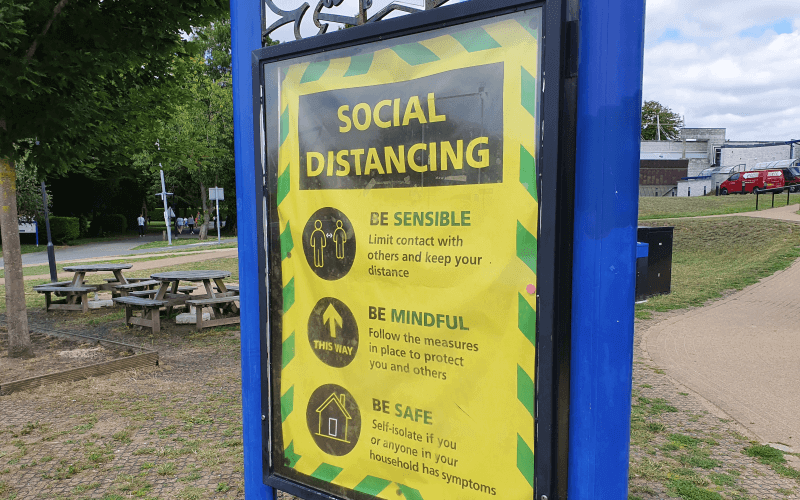
Measures that had been “rushed in”, such as changes to high streets to meet the need for social distancing, had been introduced without proper consideration of disabled people’s needs, says the report.
It adds: “Putting in place emergency measures does not negate the need for reasonable adjustments, it makes them all the more important.”
On health and social care, the report highlights the government’s delayed and confusing guidance for users of direct payments.
One disabled employer who uses direct payments said the government had treated this guidance as an “afterthought”, and added: “The stress to find clear, understandable information was anxiety provoking, disheartening and extremely taxing, as well as frustrating.”
On employment, the report says that, “for some, work has proved impossible because of the need to shield or not being able to access support”, while for others, “the adoption of homeworking has been liberating, enabling them to have greater control of their working environment and reducing travel problems”.
And on access to benefits, the report points to the “significant reduction” in new claims for disability benefits since lockdown measures were introduced, and significant increases in waiting times for benefit enquiries, with waits of up to one-and-a-half hours to get through on the personal independence payment and universal credit helplines.
As well as highlighting some of the many disabling barriers faced by disabled people in the north-east during the crisis, the report also points to some of the “enabling factors” that have emerged.
These have included charities being able – because they have been providing online support – to reach some service-users they would not normally be able to access.
Another enabling factor for some disabled people has been the increase in the use of “virtual” services, for example with the provision of online healthcare appointments, which for some had helped “reduce costs, time and stress associated with travelling to appointments”.
The report also points to the introduction of new electronic versions of some benefit claim forms, which it says have made claiming benefits easier for some disabled people.
Richard Boggie, Difference North East’s development manager, said disabled people were “entitled to be protected from the effects of this crisis under equality and human rights law” but that “too often they’ve been let down and have suffered terribly as a consequence”.
He said: “We know it’s been a difficult time for authorities and businesses, but too often disabled people have felt like an after-thought.
“This report will help organisations get it right, and all the charities involved are willing to help.
“If lots of organisations make small improvements in how they include disabled people, then we could make a massive difference across our region.”
Difference North East’s own launch event will take place online on Saturday 19 September, with speakers including its patron, Baroness [Tanni] Grey-Thompson.
A note from the editor:
Please consider making a voluntary financial contribution to support the work of DNS and allow it to continue producing independent, carefully-researched news stories that focus on the lives and rights of disabled people and their user-led organisations.
Please do not contribute if you cannot afford to do so, and please note that DNS is not a charity. It is run and owned by disabled journalist John Pring and has been from its launch in April 2009.
Thank you for anything you can do to support the work of DNS…
 Tories discriminate against disabled editor by blocking DNS from receiving key information at conference
 Free social care is coming… but only if you’re over 65, government confirms after Burnham speech
 Davey says social care system must ‘empower’ disabled people, but Lib Dems are silent on what this means