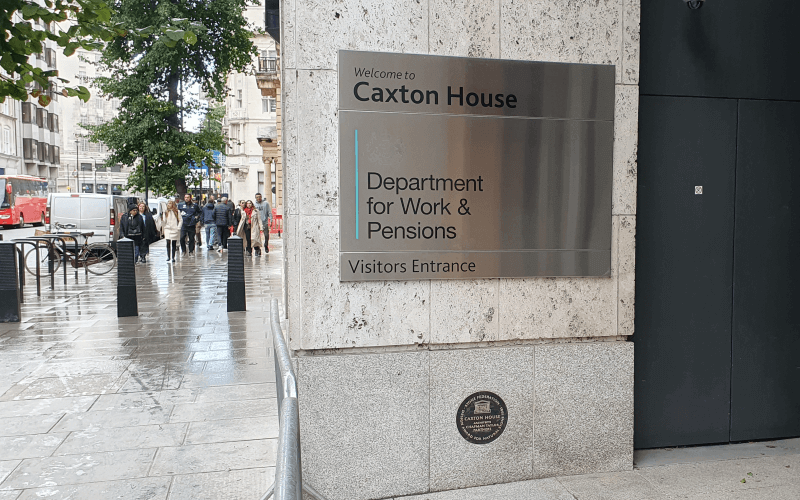
Tens of thousands of disabled people and allies have made clear to the government that they reject any plans to cut spending on personal independence payment (PIP) and other disability-related support.
The views came in response to a public consultation on March’s Pathways to Work green paper, with the government publishing its summary of those responses on 30 October.
The consultation, which ran until the end of June, received nearly 48,000 responses, including nearly 900 organisations.
Out of nearly 15,000 direct responses to a consultation question on the government’s original plans to cut PIP entitlement – which were later dropped after a backbench rebellion – more than half (52 per cent) called for the current criteria to be maintained, while 37 per cent highlighted the financial impact of losing PIP, and 18 per cent pointed to the mental health impacts of such a loss.
It is not possible from the document to measure how many respondents in total opposed cuts to PIP because of the way the Department for Work and Pensions (DWP) produced its report.
But in addition to the 15,000 direct responses, DWP also received more than 33,000 other responses – coordinated by three outside organisations – which did not reply directly to the questions posed in the consultation.
Again, DWP did not attempt to calculate how many of these responses opposed cuts to PIP, but it said there was “broad opposition to changes to the value or eligibility of PIP”.
It said these responses also opposed stopping disabled people under 22 from receiving the health element of universal credit, another reform proposed in the Pathways to Work green paper.
Opposition to this change was also overwhelming among those who responded directly to the consultation questions, with more than 42 per cent saying support should be based on need, not age, and more than 12 per cent highlighting that delaying access to the health element would cause financial hardship for young people and increase their risk of poverty.
The document appears to suggest that just four per cent of respondents backed delaying the payments until 22.
Elsewhere in the government’s consultation response, thousands of disabled people and allies made clear to DWP that if it wanted to improve its “current approach to safeguarding people who use our services”, it should abandon any cuts, ensure “financial stability”, and reform the assessment process to ensure “fair, transparent, unintrusive, individualised assessments delivered by trained medical professionals”.
Meanwhile, the government has all but confirmed that it has dropped its plans for a white paper based on many of the Pathways to Work proposals and has decided to proceed instead by announcing future proposals individually.
In response to last week’s Disability News Service (DNS) report that the white paper had been dropped, DWP eventually produced the following statement: “Today, we published the response to the Pathways to Work Green Paper and have already put in place the equivalent of over 1,000 full-time Pathways to Work advisers across Britain to help disabled people into work, as well as investing £1 billion a year for employment support by the end of the decade.
“We have also launched the Timms Review to ensure PIP is fair and fit for the future and are increasing the number of health assessments that are being conducted in person.
“We will be bringing forward other policy updates in due course.”
Following a DNS briefing last week, the Liberal Democrat work and pensions spokesperson Steve Darling asked Sir Stephen when the white paper would be published.
In his written response on Monday – which mirrored the statement given to DNS – Sir Stephen failed to mention the white paper but instead said DWP had appointed new Pathways to Work advisers and launched his PIP review (see separate story), adding: “We will be bringing forward other policy updates in due course.”
Further evidence that the white paper has been scrapped came in updated terms of reference for the PIP review.
The original terms of reference (PDF) made two mentions of the white paper, but both of these have been removed from the updated terms of reference.
The Benefits and Work website said the backbench rebellion over PIP appeared to have “put ministers off the idea of launching another full scale attack on benefits” and instead seemed to have persuaded them to “switch to guerilla tactics, choosing smaller individual targets which they believe will be easier to achieve”.
A note from the editor:
Please consider making a voluntary financial contribution to support the work of DNS and allow it to continue producing independent, carefully-researched news stories that focus on the lives and rights of disabled people and their user-led organisations.
Please do not contribute if you cannot afford to do so, and please note that DNS is not a charity. It is run and owned by disabled journalist John Pring and has been from its launch in April 2009.
Thank you for anything you can do to support the work of DNS…
 DWP silent after Tory member of PIP review publishes report demanding child disability benefits are slashed
 Timms refuses four times to rule out cuts to PIP, but makes firm promise on cash payments
 No decision from Timms on releasing secret reports on deaths, a year after speaking to DWP civil servants