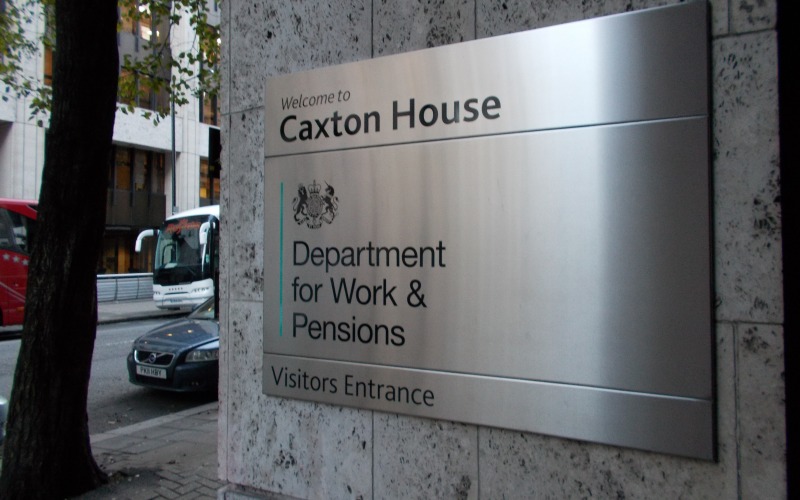
A new assessment regime for disability benefits that will reduce the influence of healthcare professionals and hand greater responsibility to civil servants is set to be rolled out across the country before ministers have seen a detailed evaluation of its impact.
Documents secured by Disability News Service (DNS) show that ministers are set to extend the Transformed Decision Making in Personal Independence Payment (TDM) pilot project this autumn, even though only early findings from the project will be available by then.
There is no mention in the documents of any concerns over how claimant safety will be affected by the project, which has previously been described as a “recipe for disaster” by Disability Rights UK (DR UK).
And, according to the documents, parliament has not been briefed on the project, despite the sweeping changes they are bringing to the personal independence payment (PIP) assessment system, which is already undergoing a major review.
TDM dramatically alters the PIP assessment process by removing key responsibilities from healthcare professionals such as nurses, paramedics and physiotherapists and passing them to DWP civil servants, who are highly unlikely to have clinical experience or qualifications.
Currently, healthcare professionals recommend the level of support they think a claimant needs from PIP, after assessing how their impairment impacts their day-to-day life.
It will now be the responsibility of DWP civil servants to make those recommendations.
The whistleblower who alerted DR UK to the scheme earlier this year warned at the time that the new process would “strip out essential medical nuance, leading to poorer quality, less accurate, and less fair outcomes” and lead many claimants to face “wrong decisions, increased stress, financial hardship, and unnecessary appeals”.
Three DWP updates on the pilot project were sent to Sir Stephen Timms, the minister for social security and disability, and work and pensions secretary Pat McFadden, in March, May and June this year.
DNS first reported on the TDM plans earlier this summer, after DR UK passed on the whistleblower’s concerns.
The project went live in March, with a few hundred PIP assessments a month carried out by DWP contractor Ingeus in south-east England, London and East Anglia.
But in June, it was extended to the rest of England and Wales through DWP’s other contractors Capita, Maximus and Serco, affecting about four per cent of all PIP assessments.
From January 2027, the project will be extended even further, with DWP civil servants telling Sir Stephen and McFadden that they expect 100 per cent of all PIP assessments to be delivered through TDM by next autumn.
The DWP updates reveal that McFadden decided not to alert parliament to the pilot through a written statement, although members of the steering group of the Timms Review into the PIP assessment were briefed.
It is not yet clear how much the TDM project will eventually cost or save.
DWP hopes it will open up more capacity for healthcare assessors working for its four subcontractors, so they can carry out more PIP assessments and work capability assessment reassessments, as well as increase the number of face-to-face assessments.
But the updates, obtained by DNS through a freedom of information request, warn that TDM is expected to “reduce decision making productivity” within the department and increase pressure on DWP case managers as they “take on a more active role in weighing evidence”.
The May update warned that the plan to roll out TDM was “ambitious and comes with risk” because “a decision to proceed” would need to be taken this autumn “before the impact evaluation is complete”, although “early evidence is expected to provide sufficient confidence” for the roll out to continue.
June’s update said initial testing of TDM had been “successful” with “no issues identified that prevented continuation or expansion”, with about 1,800 assessment reports completed and more than 1,200 decisions on PIP entitlement made through the TDM approach.
But it said it was too early to assess the impact of TDM on the productivity of DWP case managers and PIP assessors or to draw conclusions on the impact of TDM on the proportion of claimants being awarded PIP.
A small-scale evaluation of the project is likely to take place in early autumn but work to produce more “robust” findings is not expected until early next year.
It is not clear from the updates when these findings will be placed before ministers.
The June update also warned that it was a “politically sensitive time”, with the ongoing Timms Review of PIP and continuing “media scrutiny of benefit changes”.
It suggested that DWP’s communications strategy should “position TDM as a careful, evidence-led operational test, not a policy change, emphasising that no decisions on wider rollout will be made until evidence is established”.
It also mentioned the DNS report that first revealed the project in June – and mainstream media coverage that followed-up that story – and warned that “key risks” include “stakeholder concerns about reduced clinical oversight”.
It said that this would be addressed by “ongoing engagement emphasising that Case Managers make these decision [sic] now, and nothing has changed in that regard”.
At present, healthcare professionals assess a PIP claimant’s ability to carry out 10 daily living and two mobility activities.
They write a report for DWP, which includes recommendations on the level of difficulty the claimant has with each activity, known as descriptors.
This report, including the recommended descriptors, is then passed to DWP for a decision on whether the evidence supports the healthcare professional’s recommendations and the level of PIP the claimant is entitled to.
But under Transformed Decision Making – according to the whistleblower – healthcare professionals who carry out PIP assessments are now restricted to basic information gathering.
The DWP documents obtained by DNS suggest the whistleblower was correct, as the March 2026 memo said that TDM will be “refocusing Healthcare Professionals on providing clear, factual evidence, while reinforcing the role of DWP Case Managers to make the final decision using all available evidence”.
The vital work of suggesting which descriptors apply, justifying those descriptors, and deciding on entitlement, appears to have been passed from healthcare professionals to DWP case managers.
It is unclear how the programme will affect the £2.8 billion-worth of assessment contracts awarded to the four private sector outsourcing companies in 2023, which are set to last until 2031.
TDM is part of the wider Health Transformation Programme, introduced under the last government, which aims to improve the PIP system and develop a new assessment process.
 DWP silent after Tory member of PIP review publishes report demanding child disability benefits are slashed
 Ministers’ decision to slash accessible housing targets was ‘unprincipled’, but Timms says they were right
 Free social care is coming… but only if you’re over 65, government confirms after Burnham speech