Advice services provided by disabled people’s organisations (DPOs) are under significant financial threat, despite a surge in demand for the support they provide, new research has shown.
More than nine in 10 (93 per cent) of the DPOs who took part in a survey reported increased demand for their advice services in the last year, but more than two-fifths said they were at risk of closure.
And of the 29 DPOs that took part in the survey, 17 said it was likely that they would have to cut their services in the next year.
The figures came from a survey of members carried out by the AdviceUK network, which includes 58 DPOs.
One of the DPOs that contributed to a report on the research (PDF) was Equal Lives, whose advisers helped with nearly 900 issues last year, including benefits, social care, workplace accessibility and discrimination.
Sarah Little, advice and membership team manager for Equal Lives, said securing sustainable funding was “a constant challenge”.
She told AdviceUK: “Reduced local authority funding is forcing us to cut key services like welfare benefit form filling and appeal representation.
“The uncertainty of our funding with short-term contracts makes it difficult to plan ahead and doesn’t provide the stability we need to grow and innovate.
“Without reliable funding, our advice service faces a precarious future − potentially leading to staff restructuring or even closure.”
Andrew MacKay, chief executive of Disability Law Service, told AdviceUK’s researchers that legal advice services at his organisation were a “lifeline” but were under threat.
He said: “The lack of long-term funding is a constant strain on our resources and staff.
“Unfunded programmes like our community care and housing helpline risk closure without new support.”
Caroline Collier, from Inclusion Barnet’s Campaign for Disability Justice, told Disability News Service (DNS) this week: “At Inclusion Barnet, we know our local users really appreciate being able to talk to peer advisors who understand the barriers they face.
“More than that, we know that the fraying of the social security safety net – something the Campaign for Disability Justice is desperately concerned about – means skilled, appropriate advice is more important than ever.
“That’s why it’s hugely concerning to hear that 41 per cent of the DPOs surveyed were unsure their advice services would continue.
“We’re grateful to AdviceUK for highlighting this situation, but this goes wider even than advice services, important though they undoubtedly are.
“The Campaign for Disability Justice believes that, 20 years on from Improving the Life Chances of Disabled People (PDF)*, we need a new, ambitious strategy to revitalise DPOs, with a coherent plan to ensure they are commissioned to provide the local services disabled people need.”
The AdviceUK report also includes an advance statistic from a forthcoming report** by Disability Rights UK (DR UK) on how the “current funding landscape is structurally inequitable, inaccessible and fails to recognise the unique contributions and needs of DPOs”.
The DR UK figure shows that 90 DPOs between them received only 2.7 per cent of the total value of government contracts awarded to nine disability charities that are not led by disabled people, between April 2022 and March 2023.
Rebecca Tayler Edwards, DR UK’s DPO development manager, told DNS that, as laid out in the UN Convention on the Rights of Persons with Disabilities (UNCRPD), decisions affecting disabled people must not be made without the direct participation of disabled people.
She said: “By sidelining DPOs, governments and funding organisations violate the spirit of the UNCRPD and undermine the fundamental rights of disabled people to self-representation and self-determination.
“We demand an equitable distribution of funding to our communities based on the principles of empowerment, self-determination and support at home.
“Current funding models are setting back the full inclusion of disabled people.
“Non-disabled led organisations appropriate our language of empowerment yet do not enable disabled people to have access to decision-makers or people in power.
“In the context of a professionalised sector, organisations not led by disabled people financially benefit from talking about our oppression in the same society in which they are privileged by it.
“As organisations led by and for disabled people, we are coming together to demand funding justice for our sector.”
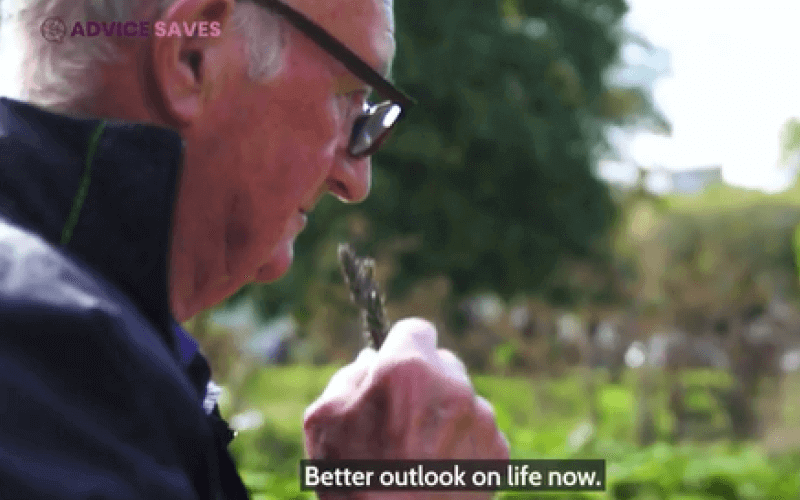
AdviceUK has released a short film (pictured) to highlight the role DPOs play in supporting disabled people, and it is calling for improved funding and support for the wider advice sector through its Advice Saves campaign.
Liz Bayram, chief executive of AdviceUK, said: “Deaf and disabled people’s organisations (DDPOs) offer a lifeline, providing essential advice, support and advocacy to enable people to live independent and fulfilling lives.
“Yet our research shows they are at breaking point.
“We are calling for sustainable funding solutions, and support for recruiting, training and retaining skilled staff to ensure the future of these vital services.”
She added: “With a government review underway on supporting disabled people in work, it is vital that its recommendations genuinely meet the needs of Deaf and disabled people and ensure that those who may be unable to work are not forgotten.
“At a time of rising demand and shrinking resources, DDPOs are the last line of support for many.
“We cannot afford to let these lifelines disappear.”
*A white paper, published by the Labour government in January 2005, which set out “an ambitious vision for improving the life chances of disabled people so that by 2025 disabled people have full opportunities and choices to improve their quality of life and will be respected and included as equal members of society”
**The Funding Gap: The Financial Disparity Between Disabled People-Led and Non-Disabled People-Led Charities in the UK, to be published by DR UK next month
A note from the editor:
Please consider making a voluntary financial contribution to support the work of DNS and allow it to continue producing independent, carefully-researched news stories that focus on the lives and rights of disabled people and their user-led organisations.
Please do not contribute if you cannot afford to do so, and please note that DNS is not a charity. It is run and owned by disabled journalist John Pring and has been from its launch in April 2009.
Thank you for anything you can do to support the work of DNS…
 SEND reforms ‘are a missed opportunity’ to dismantle the barriers driving disabled pupils from mainstream
 Inquiry hears how lack of accountability for disabled people’s Covid deaths caused lasting harm
 ‘Appalling’ and ‘frightening’ Reform ‘ready to legalise discrimination’ by scrapping Equality Act