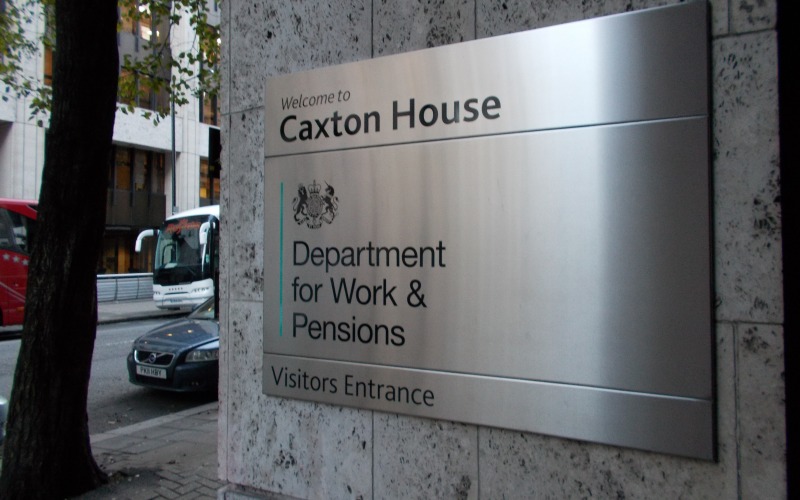
New figures show that Department for Work and Pensions (DWP) civil servants are questioning only a tiny proportion of the benefit assessment reports written by discredited government contractors Atos and Capita.
Campaigners have been trying for months to secure evidence that would explain why such a high proportion of personal independence payment (PIP) claims that are taken to appeal are successful.
Figures from social security tribunals show the proportion of claimants who won their PIP appeals rose by seven percentage points in a year, from 64 per cent in the fourth quarter of 2016-17 to 71 per cent in the same period of 2017-18.
The new figures, secured by Disability News Service (DNS) through a freedom of information request, may help to explain why so many appeals are successful.
Some researchers have suggested that DWP decision-makers are accepting too many PIP assessment reports prepared by Atos and Capita without subjecting them to proper scrutiny, despite increasing evidence of incompetence and dishonesty by the Atos and Capita healthcare professionals who write them.
DNS has previously spoken to a DWP civil servant working on the PIP “frontline”, who has said that DWP case managers have strict targets for the number of PIP claims they need to process every day and are quizzed by their superiors if they miss their weekly targets.
He has said they are “instructed to act on the assessor’s report, given that they are the medical experts”.
The new figures, provided by DWP following the DNS freedom of information request, appear to confirm concerns that DWP decision-makers are letting many substandard and misleading reports slip through the net.
DNS had asked DWP how many of its decisions on PIP eligibility were made without any attempt to seek further advice or clarification from Atos and Capita, discuss or resolve problems with them, or even return the report to be completely rewritten.
DWP initially said it would be too expensive to produce such figures, but DNS then asked it to test a random sample of 100 assessment reports from Capita and 100 from Atos.
This week, DWP produced those figures, which show that of a random sample of 100 Capita reports, 94 PIP decisions were made without any further contact at all with the company.
And of 100 Atos reports, 97 decisions were made without any further contact with the company once DWP had received the assessment report.
Campaigner John Slater, whose freedom of information work has previously produced crucial data about the DWP’s disability benefit assessment contracts, said the latest figures raised serious concerns about the actions of DWP decision-makers.
Figures he secured from DWP earlier this year showed that an audit of more than 4,000 Capita assessment reports – between April and December 2016 – found about 7.5 per cent were so poor as to be deemed “unacceptable”.
In all, 33 per cent of the audited Capita reports were found to be of an unacceptable standard, to need changes, or demonstrated that the assessor had failed to carry out their role properly.
But this week’s DWP response suggests that its decision-makers are making further checks on just six per cent of Capita assessment reports.
Slater said: “The DWP figures do not reflect the audit management information data it disclosed for 2016.
“Even when you take into account the age of the 2016 data, I would have thought that the number for Capita PIP reports might have been closer to 80 out of the 100 reports sampled.
“This suggests that decision-makers are not looking at the reports critically and are assuming they are accurate.
“I can’t offer anything specific on the Atos data as the DWP still hasn’t disclosed the audit data and the information commissioner is still pursuing the case.
“However, 97 out of 100 still seems unrealistically high.”
Disabled People Against Cuts researcher Anita Bellows, who has also carried out crucial work examining the assessment contracts, also raised serious concerns about DWP decision-makers apparently rubber-stamping more than 95 per cent of all Atos and Capita assessment reports.
She said: “Considering the number of successful appeals against a PIP decision, it is obvious the DWP has not addressed the issue of assessors’ reports and dishonesty.”
She said the figures on successful appeals showed that “very simple errors or untruths” are not picked up by DWP’s decision-makers when making the initial decisions, and then again at the “mandatory reconsideration” internal review stage.
Bellows said: “The figure of 71 per cent of successful PIP appeals is just incredible.
“It means that the DWP made a wrong decision in 71 per cent of cases, not only once but twice.
“There is no better illustration that the system is not working for claimants.”
A DWP spokeswoman refused to answer questions about the new figures, including whether they suggested that one of the reasons for the high rate of successful PIP appeals was that the department’s decision-makers do not have enough time to check assessment reports with Atos and Capita and are not encouraged to do so.
But she said in a statement: “We’re committed to ensuring that people get accurate high-quality assessments and the right decision, first time round.
“A relatively small number of all PIP decisions are overturned at appeal – four per cent.
“Our assessment providers have developed an audit programme with us which we also monitor.
“In addition, the department itself audits a robust random sample of all cases, applying a rigorous set of quality measures to assure that the standards expected by the department are being delivered across the full network.
“Where healthcare professionals fall below the required high standards and do not improve, processes are in place to revoke their approval to carry out assessments.”
The new figures follow years of mounting anger about the way PIP has been designed and run, since it was launched five years ago as a replacement for working-age disability living allowance.
They also follow a lengthy DNS investigation which found claims of widespread dishonesty by PIP assessors – from both Atos and Capita – with hundreds of claimants saying that their PIP assessment reports contained clear lies.
A note from the editor:
For nine years, Disability News Service has survived largely through the support of a small number of disability organisations – most of them user-led – that have subscribed to its weekly supply of news stories. That support has been incredibly valuable but is no longer enough to keep DNS financially viable.
For this reason, please consider making a voluntary financial contribution to support the work of DNS and allow it to continue producing independent, carefully-researched news stories that focus on the lives and rights of disabled people and their user-led organisations.
Please do not contribute if you cannot afford to do so, and please remember that DNS is not a charity. It is run and owned by disabled journalist John Pring, and has been from its launch in April 2009.
Thank you for anything you can do to support the work of DNS…
 Scores of DWP failings linked to deaths were kept from MPs voting on benefit cuts, secret reports reveal
 DWP staff ignored rules on how to respond to claimants who report suicidal thoughts, secret reports reveal
 Changes to energy bill discount scheme will discriminate against many disabled people, campaigners warn