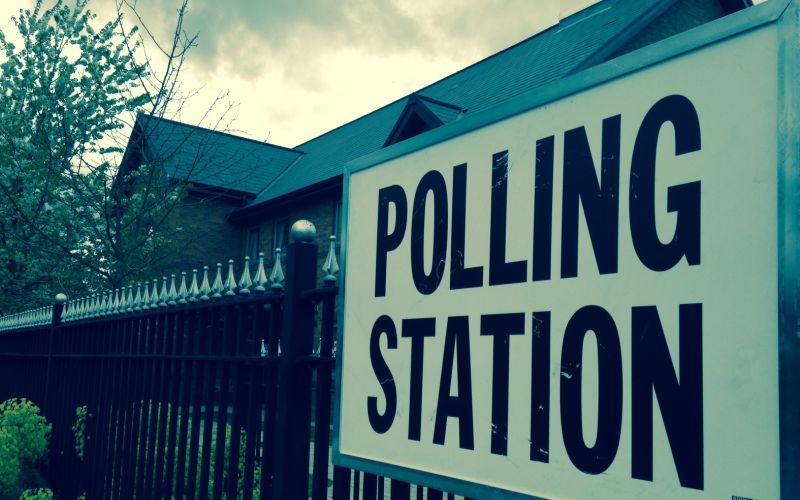
The Conservative government has failed to publish guidance that would have helped political parties support disabled people standing at next month’s general election.
The government’s much-criticised Disability Action Plan, published in February, pledged three actions that would “support both the recruitment and retention of disabled people in elected office”.
One of those pledges was to “develop and publish new guidance by summer 2024” on how political parties and elected public bodies “can best support disabled candidates”.
But there is no sign of the guidance on the Disability Unit’s web pages, and no announcements have been made by the unit, which has made just four announcements on its “news and communications” page in the last 12 months.
The government’s Disability Unit today (Thursday) refused to comment, after being asked what progress had been made on the guidance.
The action plan also pledged to work with disabled people to design a new way to provide financial support for disabled people seeking election to public office, to be launched in 2025.
A short-lived fund – the Access to Elected Office Fund (AEOF) – was originally set up in 2012 following Liberal Democrat pressure on its Conservative coalition partner.
It funded disability-related costs for candidates in parliamentary and other elections, before it was closed by the Conservatives after the 2015 general election.
It was eventually replaced three years later with the temporary EnAble fund in response to a legal action taken by a trio of disabled politicians who warned that the failure to reopen AEOF breached the Equality Act.
The fund initially only covered the 2019 English local elections, but it was later extended to cover the May 2020 local and police and crime commissioner elections, although these were postponed to the following year because of the pandemic.
It also provided retrospective funding for applicants who stood in the 2019 elections to the European Parliament.
The government has been promising to set up a replacement for the last three years.
A report commissioned by the government in 2018, and eventually published three years later, found that political parties and institutions such as local councils had repeatedly broken equality laws by failing to make reasonable adjustments for disabled politicians.
The report said disabled people in England and Wales faced a “multitude” of barriers across the different stages of the political process, from activism and considering running for office, to the selection and election processes, and once they had been elected.
Researchers found disabled politicians had been prevented from attending local party meetings because of access failings, had been invited to take part in inaccessible hustings events during election campaigns, and faced a lack of support from their party once selected.
And because of the barriers they continued to face, disabled politicians typically had to spend far more time fulfilling their duties than their non-disabled colleagues, after they were elected.
Disability Rights UK, which ran the EnAble fund with support from the Local Government Association – 88 per cent of applicants said they had had a “very positive” experience with the fund – this week criticised the government for failing to reinstate a support fund in time for the general election.
Disability Rights UK’s Anna Morell said: “Disabled people have been without democratic support funding for four years now.
“In that time, disabled people have missed out on being able to stand in local elections, police and crime commissioner elections, and now the general election.
“There are over 16 million disabled people in the UK, with just six MPs out of 650 in the last parliament on the record as being disabled.
“Our government will not be reflective of the society it serves until those figures change.
“Realistically, those figures can only significantly change when disabled people are valued enough to be given the resources we need to be able to stand for election.”
Morell also said that securing flexible working as an MP was difficult, while the built environment of many government offices was inadequate to meet the needs of disabled people.
She said the Houses of Parliament only had two accessible parking bays within its grounds, while the lifts in Portcullis House, where many MPs have their offices, are not big enough for mobility scooters or larger wheelchairs.
Deborah King, co-founder of Disability Politics UK, said: “Voters already distrust politicians.
“The failure to help disabled politicians stand for election shows they do not want fair competition.
“The delay in providing guidance and the failure to set up the AEOF smacks of self-interest.”
She said the government was also failing to support job-sharing for those seeking elected office, despite Disability Politics UK requesting that the Disability Unit ask the relevant minister to set up a working group to examine the issue.
Two years ago (PDF), Disability Politics UK worked with the Fawcett Society on a submission to the UN High Commissioner for Human Rights, which set out why this change was necessary.
A note from the editor:
Please consider making a voluntary financial contribution to support the work of DNS and allow it to continue producing independent, carefully-researched news stories that focus on the lives and rights of disabled people and their user-led organisations.
Please do not contribute if you cannot afford to do so, and please note that DNS is not a charity. It is run and owned by disabled journalist John Pring and has been from its launch in April 2009.
Thank you for anything you can do to support the work of DNS…
 SEND reforms ‘are a missed opportunity’ to dismantle the barriers driving disabled pupils from mainstream
 Inquiry hears how lack of accountability for disabled people’s Covid deaths caused lasting harm
 ‘Appalling’ and ‘frightening’ Reform ‘ready to legalise discrimination’ by scrapping Equality Act