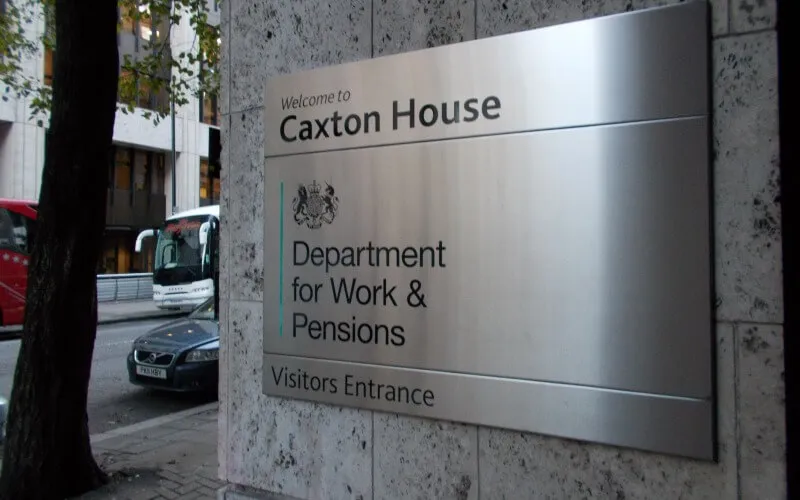
Government documents prove that the “right to try” reforms at the centre of Labour’s “landmark” plans to push more sick and disabled people into employment are “worthless” and “a disgrace”, disabled critics have concluded.
Labour pledged in its 2024 manifesto that it would “give disabled people the confidence to start working without the fear of an immediate benefit reassessment if it does not work out”.
It did this through “landmark” regulations that enshrine existing “right to try work” rules into legislation, which come into force today (30 April).
Ministers have insisted that this new legislation “removes [the] fear of immediate benefits loss for disabled people who want to try work”.
They also claim the legislation was developed in co-production with disabled people on one of the department’s so-called “collaboration committees”.
The new regulations were supposed to mean that claimants of new-style employment and support allowance (ESA), the health element of universal credit, and personal independence payment (PIP), would not automatically trigger a new assessment of their eligibility if they told DWP they were going to try work or volunteering.
Sir Stephen Timms, the minister for social security and disability, told MPs on Monday that the regulations would mean that “people claiming universal credit, new style employment support allowance and personal independence payment can take steps towards employment and be confident that doing so will not automatically trigger benefit reassessment”.
The changes were welcomed earlier this month by disability charities such as Mind, Mental Health UK and Mencap.
But new guidance, uncovered by the Benefits and Work website, has exposed Sir Stephen’s claim as “worthless”.
Benefits and Work highlighted this week how the changes fail to remove the fear of immediate loss of benefits.
Instead, said the website, DWP decision makers “are being told to pounce as soon as they become aware the attempt to try work is being made”.
This is because new guidance for DWP decision-makers (DMs), spotted by Benefits and Work, makes it clear that if a decision-maker decides that the type of work being tried suggests the claimant’s “functional ability” has improved, they will be able to order – immediately – a new work capability assessment or PIP assessment.
The guidance adds: “When notified that a claimant is working DMs should continue to consider whether the nature of the work undertaken might indicate that a change in functional ability has occurred.
“Where this is the case, a determination can be made that a further WCA should be carried out…”
A PIP reassessment can also be triggered immediately if the DWP decision-maker finds the claimant is “undertaking work of a particular nature”.
Benefits and Work said the DWP guidance meant the department had “hammered the final nail in the coffin” of Labour’s legislation even before it had begun.
The grassroots, user-led mental health group Recovery in the Bin (RiTB) told Disability News Service yesterday: “We are not surprised the DWP are misleading everyone again, and disabled people are again the targets.
“People have long felt that their impairments/conditions were being judged on work status; now we have proof.
“It confirms ministers’ promises are as worthless and empty as their souls. What an utter disgrace this Labour government is.”
The government’s own social security advisers – the social security advisory committee – had already warned, earlier this year, that a draft version of the regulations failed to provide the “clarity or assurance needed to achieve their intended purpose” and risked undermining the back-to-work confidence of disabled claimants of universal credit, ESA and PIP.
The committee also advised that DWP’s “messaging” should be “tested with claimants and advisers to check that it does not over-promise or imply a guarantee that the regulations do not provide, and it should be adjusted in the light of early experience”.
And it warned that the draft Right to Try legislation was “an inadequate solution, with potentially negative consequences” and “promises more than it can deliver” and “may give claimants false reassurance that attempting work will not lead to their benefits being reassessed”.
It eventually concluded that the proposals were “a cautious starting point rather than the comprehensive package likely to be required to secure claimant trust”, and it called for “updated and strengthened guidance” which “should be kept under review”.
Although ministers accepted four of the committee’s five recommendations – including one on guidance for decision-makers – with the other one partially accepted, it is believed the committee members have not seen the new guidance.
Asked this week whether Sir Stephen still believed in his pledge to claimants, in the light of the memo, a DWP spokesperson said: “Our landmark Right to Try legislation gives the confidence and clarity that disabled people need to know that they can try work without fear of immediate benefits re-assessment – something that more than a third of disabled people and people with health conditions in the DWP work aspirations survey said held them back.
“We are clear that the laying of these regulations is a first step, and the secretary of state has accepted the recommendations from the social security advisory committee to explore how the regulations can be strengthened in the future.”
Meanwhile, disabled people’s right to support from the social security system came under further sustained attack this week.
Conservative leader Kemi Badenoch yesterday (Wednesday) attacked the “ballooning benefits bill” in prime minister’s questions, just days after a report by the thinktank set up by former Labour prime minister Sir Tony Blair called for “an emergency handbrake for UK welfare”.
The report by the Tony Blair Institute for Global Change focused on mental health, and particularly anxiety and depression, and claimed there was a “moral imperative” to take action to cut spending on out-of-work benefits.
But it ignored years of evidence that showed the devastating impact that targeting out-of-work disability benefits can have on those with mental distress, with research linking previous attempts to force those with mental ill-health off benefits and into the workplace with 590 suicides in just three years.
The Blair report partly relied on polling that found many members of the public – most of whom will have had no specialist knowledge or lived experience of mental health or out-of-work disability benefits – believed certain conditions do not limit ability to work.
Badenoch’s comments in prime minister’s questions yesterday added to the assault on claimants, with the Tory leader claiming the government was “spending so much on welfare that we cannot afford to defend the country”.
The prime minister, Sir Keir Starmer, yet again did nothing to defend claimants, arguing only that the “broken welfare system” was “the one the Conservatives put in place”.
Both Badenoch and the Blair report ignored figures from The Office for Budget Responsibility in March which showed that the proportion of GDP* spent on social security was predicted to be at the same level in 2030-31 as it will be in 2026-27, at 11.2 per cent**.
*Gross domestic product, the size of the country’s economy in a particular year
**Chapter four of OBR’s Economic and Fiscal Outlook – March 2026, table 4.1, shows welfare spending as a percentage of GDP: https://obr.uk/efo/economic-and-fiscal-outlook-march-2026/
 Serco launches probe into benefit assessments boss who tweeted ‘help is for weak people’ and backed EDL
 Access to Work figures appear to show spending cuts, but DWP insists there is an explanation
 Website offers evidence to counter untrue claims that ADHD and mental distress do not lead to extra costs