
A Labour minister has dismissed a disabled MP’s warning that new anti-fraud legislation will open the door to “Orwellian levels of mass surveillance” of millions of people on means-tested benefits.
Liberal Democrat Steve Darling, his party’s work and pensions spokesperson, told MPs on Tuesday that the public authorities (fraud, error and recovery) bill risked amplifying the challenges faced by disabled people who rely on social security.
He called instead for a DWP “culture change” which would involve “working with people who are benefits claimants and people with disabilities to make sure that the system is a better fit and more fit for purpose”.
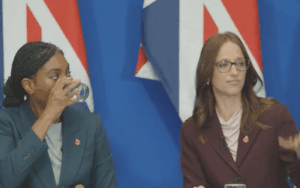
Darling (pictured) was among several opposition and Labour MPs who highlighted concerns about the bill’s impact on those in poverty.
The bill’s most controversial measure will force banks to examine the accounts of claimants of means-tested benefits for potential breaches of benefit eligibility rules and then pass that information to the Department for Work and Pensions (DWP).
The government currently plans to use the new powers to focus on claimants of universal credit, pension credit, and employment and support allowance.
Labour’s Neil Duncan-Jordan – who has been prominent among the party’s MPs in raising concerns about the government’s proposed disability benefit cuts – told the Commons it was the “very poorest”, including many disabled people, who would “effectively have fewer rights to privacy than everyone else” under the government’s plans.
He proposed an amendment to the bill, which would have restricted the new powers to cases where a benefit recipient was suspected of wrongdoing, but it was defeated by 238 to 85 votes.
Among the 11 Labour MPs who voted for his amendment were Dianne Abbott, Richard Burgon and Mary Kelly Foy, as well as the suspended Labour MP John McDonnell, Conservative David Davis and 45 Liberal Democrats, including Darling.
Burgon had told MPs: “Along with the proposed tightening of eligibility for personal independence payment, it moves us towards a hostile environment for benefit claimants, particularly disabled benefit claimants.
“We will end up treating them as suspects automatically.”
Duncan-Jordan said the government risked an “Horizon-style scandal on a massive scale, given the sheer volume of accounts that will be scanned”, with the new powers stripping benefit recipients of “the presumption of innocence”.
He added: “The last government stripped our welfare state to the bone during 14 years of deep cuts.
“Disabled people are already far more likely to be in destitution and to rely on food banks, but spying on millions of people or piling cuts on to a failed system will not repair our welfare model.
“The government must pause for thought, meet representatives of disability organisations, and build a fairer system with their consent and confidence.”
McDonnell said the bill was “adding a bit more stigma” to receiving benefits, which would act as a further disincentive to those who should be coming forward to claim them.
He said: “It is that terror of making an error, that fear of risking being penalised for claiming a benefit they may not be entitled to, or of being paid too much.
“Most of the constituents who come to our constituency surgeries have tried everything else by the time they get to us.
“They are the ones with the most chaotic lives, and they are the ones who get sanctioned time and again, not because of any deliberate act, but often because they have mental health issues, or because something in their life prevents them from attending that interview, or from applying for enough jobs in time.
“What will happen to them? They will be dragged into this system again.”
Liberal Democrat John Milne pointed to DWP’s worrying track record.
He said: “The implicit assumption is that we should trust in the DWP as a completely error-free organisation across the entirety of its massive operation.
“But the DWP does make mistakes. It makes mistakes all the time. And even when it knows that it has made a mistake, and it has been told so, it is very capable of making the same mistake all over again.”
He added: “Yes, there are some checks and balances within this legislation, but what is really needed is a profound cultural change within the DWP, and that is much harder to achieve.
“The common experience of people who have to deal with the DWP on a daily basis is that they feel that it is always looking to catch them out.
“Years and years of inflammatory rhetoric under a succession of Conservative governments have convinced people to regard the DWP as their enemy, not their friend.
“If anything, the bill digs that hole a little deeper.”
Andrew Western, the work and pensions minister for transformation, said the bill was “part of the biggest crackdown on fraud against the public purse in a generation” and that ministers were “supporting those who need the social security safety net, not the fraudsters who pick holes in it”.
He said Duncan-Jordan’s amendment would undermine the eligibility verification measure “entirely”.
He said: “The DWP must look into why the account has been flagged by the bank and ascertain whether an incorrect payment has been made.
“That is why, following receipt of the information from banks, the DWP will make further inquiries to determine whether a benefit has been incorrectly paid and whether that is due to fraud or error.
“It would be impossible for the DWP to suspect fraud before it has even established that a benefit has been incorrectly paid.”
And he disputed any similarities with the Post Office Horizon scandal.
Western told MPs: “The Horizon scandal emerged because evidence was taken from a single source. That will not be the case here.
“We will receive flagged information from banks of a potential breach of eligibility criteria.
“However, that will not be a sufficient source of evidence to prove fraud.
“That will trigger a look at the account, and if there is not an obvious reason why somebody is potentially in breach of eligibility criteria, a human investigation will be triggered that looks at a range of sources of evidence to establish the reason.
“Only then would there be any suggestion that fraud or error has occurred.”
Earlier this year, disabled activist Rick Burgess warned MPs that they could set in train the greatest miscarriage of justice in British history, if parliament approved the new surveillance powers.
Burgess, from Greater Manchester Coalition of Disabled People, told the Commons committee examining the bill that the proposed new powers were adding to an “absolutely enormous” level of “anger and distress in the disabled community”.
He said the bill appeared to be motivated by “ableist assumptions about how disabled people run their lives, or whether they’re more or less honest, or whether they’re more or less genuine than people who are not disabled”.
The public authorities (fraud, error and recovery) bill completed its Commons report and third reading stages on Tuesday and now passes to the House of Lords.
A note from the editor:
Please consider making a voluntary financial contribution to support the work of DNS and allow it to continue producing independent, carefully-researched news stories that focus on the lives and rights of disabled people and their user-led organisations.
Please do not contribute if you cannot afford to do so, and please note that DNS is not a charity. It is run and owned by disabled journalist John Pring and has been from its launch in April 2009.
Thank you for anything you can do to support the work of DNS…
 DWP forced to release report that includes ‘outrageous’ revelation about sub-standard assessment reports
 Tories announce seven ways they will attack disability benefits if they win the next election
 Badenoch ignores analysis that shows her ‘catastrophic’ £1 billion plans would decimate the Motability scheme