Disabled activists say Labour’s plans to means-test winter fuel payments will leave many current recipients having to decide “whether to starve or freeze”, after the government admitted that 1.6 million disabled people were likely to lose their entitlement.
Government figures showed that its plans to means-test the payment would disproportionately affect disabled people.
Although two brief assessments of the impact of the changes on disabled people and other groups were released on Friday, the government has refused to carry out a broader impact assessment of the policy because it said it could see no “significant” impact on the private, public or voluntary sectors.
The Disability Poverty Campaign Group (DPCG), which is led by Disability Rights UK and Inclusion London, said this conclusion was “thoroughly inadequate”, and it called for the cuts to be reversed, and for a full national equality impact assessment of all recent social security cuts and reforms.
It said this would “expose the cumulative impact of repeated cuts on disabled people” and other groups protected under the Equality Act.
DWP released the equality impact assessment of the policy on Friday in response to a freedom of information request.
It concluded that about 71 per cent (1.6 million) of disabled people who currently receive the annual payment would now lose that entitlement.
In a response to a separate freedom of information request, the Treasury released its own equality impact assessment, which it said was “part of advice provided to the Chancellor of the Exchequer ahead of her decision to target the Winter Fuel Payment”.
It concluded that the measure would “disproportionally negatively” affect disabled people, as pensioners “are more likely to have a disability than the rest of the population (54 per cent vs 13 per cent)”.
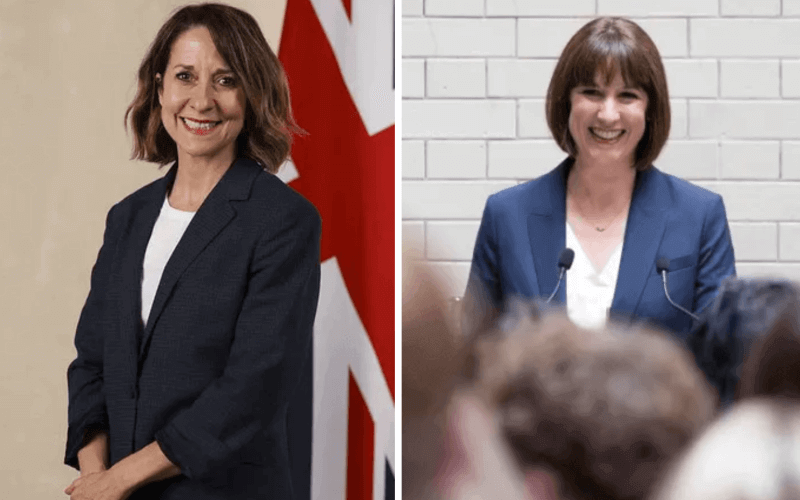
Disabled People Against Cuts (DPAC) yesterday (Wednesday) pointed to the expenses claimed by two ministers at the heart of the decision, chancellor Rachel Reeves and work and pensions secretary Liz Kendall.
The expenses claimed by Reeves from the Independent Parliamentary Standards Authority for energy costs at her second home reached nearly £1,500 in 2023-24.
Kendall claimed even more, with official figures showing she claimed £3,104 for energy costs at her second home in 2023-24, more than 10 times the annual winter fuel payment for those over 80.
The payment is currently a “universal” benefit, paid every November or December to everyone over the state pension age, with £200 paid to people aged between 66 and 79 and £300 to those aged 80 and over.
But Reeves announced in July that the government would restrict the payment to those receiving pension credit, and some other income-related benefits available to older people.
Earlier this month, the Department for Work and Pensions (DWP) launched a campaign to encourage take-up of pension credit, with up to 880,000 pensioners currently not claiming the benefit – worth an average £3,900 per year – despite being entitled to it.
About 780,000 of these older people are expected to be eligible for pension credit but to continue not to claim it, and will therefore also miss out on winter fuel payment.
Bob Ellard, a member of DPAC’s national steering group, said: “Removing the winter fuel payment from older people who are currently just about able to cope, will push them into the trap of deciding whether to starve or freeze.
“As has been widely commented, many people who are eligible for pension credit, don’t claim, not least because of the length and complexity of the forms needed to apply.
“This is Labour punching down to people who can’t fight back; it will end up with people dying in destitution.
“It’s disgusting, revolting, and Starmer, Reeves and all of Labour ought to be ashamed.”
DPCG said yesterday that it was “extremely concerned that such a major change to policy was pushed through so quickly, without adequate scrutiny”.
It said the changes would be “extremely regressive” because people experiencing digital exclusion and loneliness were likely to find it particularly hard to apply for pension credit in time to receive the winter fuel payment, as would older people with learning difficulties or mental distress.
DPCG said the policy would lead to increased winter deaths among older people, more hospitalisations, and probably an increase in non-payment of fuel bills and demand for food and energy banks.
Picture: Liz Kendall (left) and Rachel Reeves. Picture of Kendall by Lauren Hurley/No 10 Downing Street
A note from the editor:
Please consider making a voluntary financial contribution to support the work of DNS and allow it to continue producing independent, carefully-researched news stories that focus on the lives and rights of disabled people and their user-led organisations.
Please do not contribute if you cannot afford to do so, and please note that DNS is not a charity. It is run and owned by disabled journalist John Pring and has been from its launch in April 2009.
Thank you for anything you can do to support the work of DNS…
 New official figures disprove claims that social security spending is ‘spiralling out of control’
 Changes to energy bill discount scheme will discriminate against many disabled people, campaigners warn
 ‘Appalling’ and ‘frightening’ Reform ‘ready to legalise discrimination’ by scrapping Equality Act