The minister leading a government review of personal independence payment (PIP) has refused four times to rule out cuts to spending, but he has promised no disabled person will be forced to accept products or services instead of cash payments.
In an interview with Disability News Service (DNS) at this week’s Labour conference in Liverpool, Sir Stephen Timms said he could not “speculate about what might happen in the future”.
But he said that all but one of the other 14 members of his PIP review steering group were disabled people and they were “not going to be coming up with a suggestion that people should have their money taken and something else done with it”.
He and the rest of the steering group are currently discussing what the Department for Work and Pensions (DWP) has described as “emerging recommendations” from the PIP review through 15 workshops across the UK.
Their final report is due to be published in late November, but any policy decisions will be made by work and pensions secretary Pat McFadden.
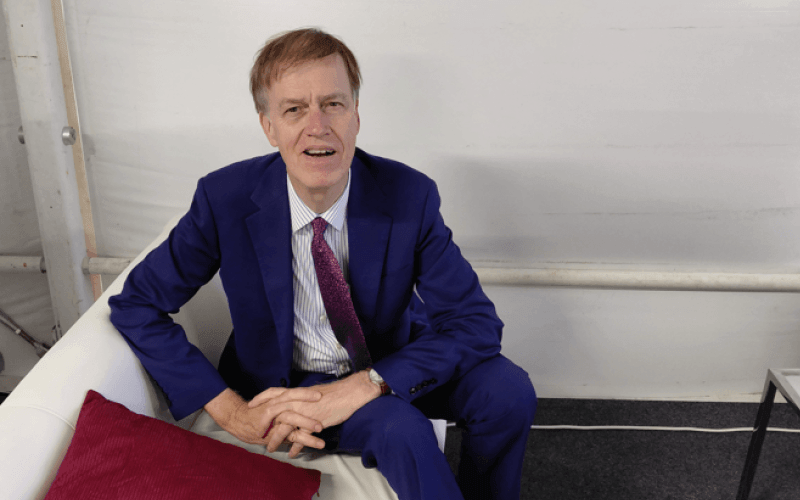
One point Sir Stephen (pictured) was clear on in the interview was that – according to the draft recommendations – no PIP claimant would be forced to accept products or services, such as therapy or mobility equipment, instead of cash.
He said there “may be circumstances in which it will be better for people claiming PIP to request the funding goes into a service of some kind rather than them receiving the cash”, as currently happens with the Motability scheme.
He added: “This is what is being suggested on a completely voluntary basis, completely voluntary.”
He provided the example of a disabled woman who told him of her difficulty in obtaining a rise and recline bed.
He suggested that DWP could arrange bulk purchasing of that kind of equipment for PIP recipients if there was enough demand.
Asked to confirm that no-one would be forced to accept services rather than cash, he told DNS: “Correct. Correct.”
But he was far less clear when asked whether ministers planned to tighten PIP eligibility as part of future spending cuts.
Sir Stephen said: “We will make recommendations in our report at the end of November and you’ve got a good indication of the kind of things we’re going to be saying, and we’re refining those through the workshops at the moment.
“That will go to the secretary of state. He will also have the Alan Milburn report [on young people not in education, employment or training] and he will then decide what to do.”
Asked again if he could rule out cuts to PIP, he said: “What I’m focusing on is the content of the review.
“What happens beyond that is a separate exercise; I’m not able to say one way or another what that might or might not entail.”
The interim report was criticised for failing to include recommendations around eligibility for PIP, but he said the final report would include “principles around eligibility” although there would “no doubt need to be some further detailed work done beyond that”.
Asked whether current or future PIP claimants who were autistic or had ADHD or mental distress or ill-health should be concerned about ministers’ plans – as those groups have been targeted repeatedly by right-wing media and politicians because of the growth in claimant numbers – he said: “I would be reassured, because this review has been taken forward by a group of very committed people.
“I’ve really enjoyed working with them; I think they’re a great group… who have the interests of disabled people very much at heart.
“Their recommendations I think are going to be profoundly influential on the government.”
Asked a fourth time if there could be cuts or tightened eligibility in the future, he said: “I’m not going to speculate about what might happen in the future.
“What I’m saying is that my review is going to come up with recommendations, including around principles of eligibility.”
 DWP forced to release report that includes ‘outrageous’ revelation about sub-standard assessment reports
 Tories announce seven ways they will attack disability benefits if they win the next election
 Badenoch ignores analysis that shows her ‘catastrophic’ £1 billion plans would decimate the Motability scheme