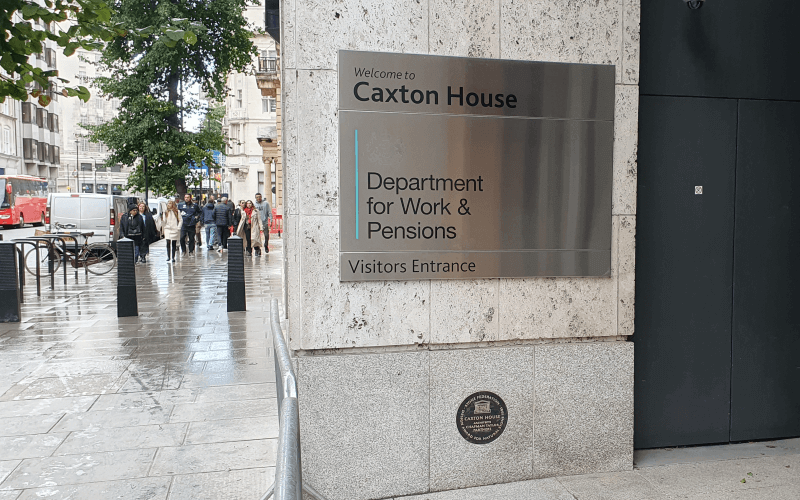
Ministers have been forced to admit that the proportion of Access to Work claims they are rejecting has leapt by more than a fifth this year, with disabled campaigners describing the figures as “unacceptable” and “clearly worrying”.
The figures, provided through a response to a written parliamentary question, show the proportion of applications rejected has risen by more than 22 per cent in 2025-26 so far, compared with 2024-25.
This follows a rise of more than 12 per cent in 2024-25, Labour’s first year in control of the Department for Work and Pensions (DWP)*.
It is the strongest evidence yet to support concerns being raised by disabled campaigners, who have been warning for months that Access to Work (AtW) support is being cut.
The figures came just days after Disability News Service (DNS) reported that DWP was claiming that “an issue” with data was preventing it releasing detailed monthly figures on AtW claims.
The new figures were released by Sir Stephen Timms, the minister for social security and disability, in response to a question from Labour’s former shadow minister for disabled people, Vicky Foxcroft.
Rather than requesting more detailed monthly data, as DNS had done, she had asked for the number and proportion of AtW claims that had been closed in each year since 2022-23.
In 2022-23, Sir Stephen told her, 31,482 applications were not approved, which was 30 per cent of all decisions.
The proportion of applications rejected fell to 24 per cent in 2023-24, the last full year of the Conservative government, but then last year under the new Labour government – which claims it is trying to increase the number of disabled people in work – it rose to 27 per cent of all applications being rejected (a 12.5 per cent increase).
And so far this year (April to October), the proportion of claims rejected has increased even more sharply, with 27,297 applications not approved, one in three (33 per cent) of all decisions, a rise of more than 22 per cent (six percentage points) on 2024-25.
Although he provided these figures, Sir Stephen failed to provide Foxcroft with data showing the frequency of reasons for rejections (which include “no contact from the applicant”, “insufficient evidence provided”, “applicant not eligible” and “application not pursued”.
Disabled consultant, broadcaster and campaigner Shani Dhanda, co-founder of the Access to Work Collective, said the increase in claims being rejected was “unacceptable”.
But she also called again for clarity from ministers on exactly what was happening within the AtW system.
She told DNS: “We still have no idea where people are being lost in the system, and the vague reasons given tell us nothing about what actually went wrong.
“What we see on the ground is chaos: phone calls going unanswered, people cut off mid-call, evidence repeatedly misplaced, and applicants waiting so long for approvals, change of circumstances or renewals, that work opportunities disappear.
“The fact that non-approvals have jumped to 33 per cent, the highest in recent years, while transparency has been stripped back, is unacceptable.
“Access to Work is meant to support disabled workers, not shut them out.”
David Buxton, chief executive of the disabled people’s organisation Action on Disability, which in October produced evidence showing the average AtW support hours of disabled people it had been working with had plunged from 22.5 to just four in two-and-a-half years, said the new figures were “clearly worrying”.
And he criticised the department for the lack of transparency over what was driving the increased rejections.
He said: “Without clear data, we are all being left to guess, but what’s absolutely clear is that disabled people need a system that works.
“We must push for workable, sustainable and effective solutions that genuinely support people to stay in work.”
He added: “The numbers point to a system that is struggling to meet disabled people’s needs.
“When more than 100,000 applications over recent years have not been approved, and when a third of decisions this year are non-approvals, that has a very real impact on people’s ability to stay in work or take up new roles.”
Catherine Eadie, a social enterprise founder and Access to Work claimant, and a member of the Access to Work Collective, added: “For those of us dealing with Access to Work daily, these figures match what we see: procedural errors, misinterpretation of guidance, misplaced evidence, and delays so long that people’s jobs and businesses become unviable while they wait.
“When approval rates drop this sharply and explanations get vaguer, trust is impossible.”
Foxcroft told DNS: “I encourage ministerial colleagues to investigate this concerning increase in the number of cases being rejected by the DWP and ensure that it feeds into their wider work on reform of the current programme.”
She said: “It has long been clear that Access to Work is not fit for purpose.
“I am pleased that ministers have acknowledged this and begun to take action through the Pathways to Work green paper.
“These statistics show, however, that there is still a long way to go towards removing the workplace barriers disabled people face every day.”
DWP is expected to announce its proposals for AtW reform in the next few weeks.
*It took control in July 2024, so the first three months of 2024-25 were under Conservative control
A note from the editor:
Please consider making a voluntary financial contribution to support the work of DNS and allow it to continue producing independent, carefully-researched news stories that focus on the lives and rights of disabled people and their user-led organisations.
Please do not contribute if you cannot afford to do so, and please note that DNS is not a charity. It is run and owned by disabled journalist John Pring and has been from its launch in April 2009.
Thank you for anything you can do to support the work of DNS…
 Scores of DWP failings linked to deaths were kept from MPs voting on benefit cuts, secret reports reveal
 DWP staff ignored rules on how to respond to claimants who report suicidal thoughts, secret reports reveal
 Government’s advisers warn DWP minister he may need to ‘shift entrenched concerns’ over work reforms