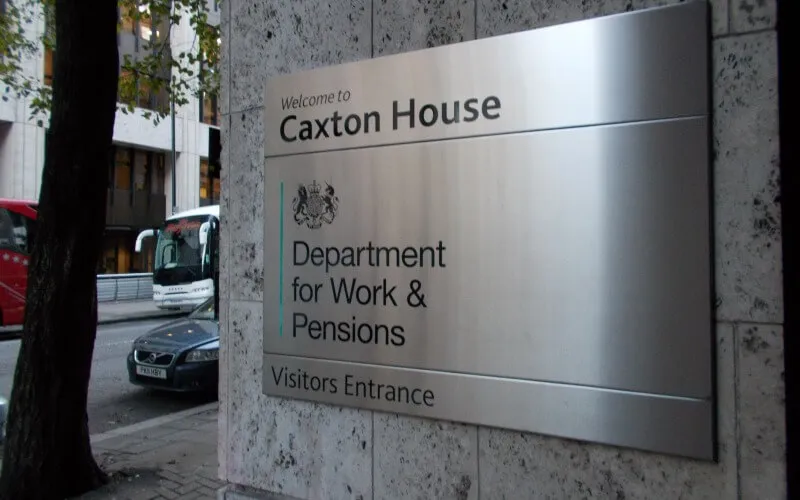
The high court has given two disabled campaigners permission to challenge the Department for Work and Pensions (DWP) over its failure to offer recipients of so-called legacy benefits the same £20-a-week increase given to those on universal credit.
The court will now decide if DWP breached the European Convention on Human Rights by increasing the standard allowance of universal credit by £20-a-week at the start of the pandemic, but not increasing the rate for 1.9 million employment and support allowance (ESA) recipients by the same amount.
Claimants of jobseeker’s allowance and income support have also been excluded from the uplift.
The two ESA recipients who are challenging the decision believe DWP’s failure was discriminatory and unjustified.
They have asked for their case to be heard within the next three months.
One of them, Philip Wayland, from Essex, told Disability News Service (DNS) that the case was about “basic fairness”.
He said: “The case is important to me because for far too long the sick and disabled community have been treated appallingly by many governments. This must change.
“The case is about basic fairness in the welfare system, especially during the pandemic, although the amount people are expected to live on is woefully inadequate at the best of times.”
He added: “Of course, the extra money would help me personally should the case succeed, but to be honest I have been motivated to bring this case because of seeing the many people who are in a much worse position than myself.”
Ken Butler, welfare rights and policy adviser for Disability Rights UK, said: “By restricting the £20 per week increase only to universal credit the government has discriminated against the millions of disabled people on other benefits.
“The judicial review action is great news and if successful will hopefully lead the way for the £20 uplift to be awarded and backdated to all legacy benefit claimants.”
In March, as part of its #20More4All campaign, Disabled People Against Cuts delivered mail bags full of the testimonies of disabled people to DWP, the Treasury and 10 Downing Street, describing the financial struggles they had faced during the pandemic, and calling for the uplift to be extended to those on legacy benefits.
Stephen Timms, the Labour chair of the Commons work and pensions committee, said: “We can see no reason why people should face hardship simply because – through no fault of their own – they happen to be receiving older benefits.
“At a time when living costs, especially for disabled people and carers, have been higher than ever, the government’s approach has undoubtedly left many facing hardship.
“We will await the outcome of this legal challenge with interest.
“But it would be better if the government acted to increase legacy benefits now, without forcing claimants to go through a lengthy legal process.”
William Ford, a solicitor with Osbornes Law, who is representing the two claimants, said: “This unfairness calls for a properly evidenced justification, particularly as almost two million disabled people are disproportionately affected by this decision and the pandemic generally.
“Thus far the government has failed to provide any objectively verifiable reason for the difference in treatment of people in essentially identical circumstances.”
A DWP spokesperson said in a statement: “It has always been the case that claimants on legacy benefits can make a claim for universal credit if they believe that they will be better off.”
Meanwhile, ministers have refused again to publish analysis DWP carried out to show how many disabled people would benefit from the move to universal credit (UC).
The request was made in a written parliamentary question by Labour MP Debbie Abrahams.
Justin Tomlinson, the minister for disabled people, failed to provide the analysis, but he did suggest that new analysis “comparing the benefit entitlement of UC claimants and legacy claimants” would be published “in due course”.
It is not clear if this will be the same analysis sought by Abrahams and if it will show how many disabled people will lose out in the move to UC, as well as the number who will gain.
Ministers have repeatedly claimed that around one million disabled households will receive a higher entitlement under UC than they would have received under the previous “legacy” benefits system.
But every time they repeat the figure, they fail to say how many disabled households are expected to receive a lower entitlement under UC.
DWP has told the Office for Statistics Regulation that the figure of one million households came from “internal analysis carried out to look at the impacts of a proposed policy change”.
DWP claims that this analysis “did not estimate how many people would lose out in the move to Universal Credit”, but only those who would gain.
But despite DWP admitting the existence of this analysis, it has refused to release it.
It even branded DNS “vexatious” for attempting to secure a copy of the analysis.
The most recent DWP equality impact assessment, published nearly a decade ago, in November 2011, suggested that the number of disabled households gaining financially from universal credit would be at least matched by the number losing out (with about 800,000 households in each group), with disabled people who are out of work particularly likely to lose out.
A DWP spokesperson said: “We do not have anything further to add to the response issued last week.”
A note from the editor:
Please consider making a voluntary financial contribution to support the work of DNS and allow it to continue producing independent, carefully-researched news stories that focus on the lives and rights of disabled people and their user-led organisations.
Please do not contribute if you cannot afford to do so, and please note that DNS is not a charity. It is run and owned by disabled journalist John Pring and has been from its launch in April 2009.
Thank you for anything you can do to support the work of DNS…
 DWP forced to release report that includes ‘outrageous’ revelation about sub-standard assessment reports
 Government ‘has silenced disabled people’s voices’ over SEND reforms
 Tories announce seven ways they will attack disability benefits if they win the next election