A member of the steering group reviewing the future of personal independence payment (PIP) has delivered a powerful rebuttal to research – co-written by a fellow member – which called for spending on disability benefits for children to be slashed.
There was concern and shock among many disabled campaigners earlier this month when it emerged that Jean-André Prager, a steering group member, had publicly called for substantial cuts to spending on disability living allowance (DLA) for children.
The call came in a short “research note” that was co-authored by the disabled policy adviser in his role as a senior fellow at the right-wing thinktank Policy Exchange.
Prager was previously a special adviser to three Conservative prime ministers but was appointed to the PIP review steering group last year by Sir Stephen Timms, the review’s co-chair and the minister for social security and disability.
Now a fellow member of the steering group has hit back at Prager’s research, dismantling its findings and suggesting that its conclusions were misleading and that its call for cuts would breach disabled children’s rights if they were implemented.
Steering group member Phil Stevens, chief executive of Disability Action Haringey (DAH), co-wrote the response to Prager’s call for cuts to DLA for children.
Among its recommendations, Prager’s research called on the government to restrict eligibility criteria for DLA for children – which is paid to those aged up to 16 – for the “three fastest-growing mental health conditions”, which would help save £11.9 billion over four years.
Prager’s research note said the number of children awarded DLA in England and Wales grew from 314,000 to 915,000 between 2010 and 2026.
Two-thirds of the savings should be used to cut the government’s budget deficit, he said, while one-third should be used to fund services such as Child and Adolescent Mental Health Services, family hubs and parental support programmes.
But Stevens points out in his response that, just because one part of the social welfare system is growing, it “does not establish that expenditure is excessive, that current awards are inappropriate, or that Disabled children should carry a disproportionate share of a wider fiscal savings programme”.
He says Prager’s research creates “a false impression that better services for Disabled children must be financed by reducing individual financial support available to other Disabled children”.
And, he warns, cutting child DLA would not remove a child’s impairment or their support needs, extra costs and the disabling barriers they face.
Instead, says Stevens, cuts could see costs move onto “families, education, health services, social care, local authorities, appeals and tribunals, or voluntary and community organisations”.
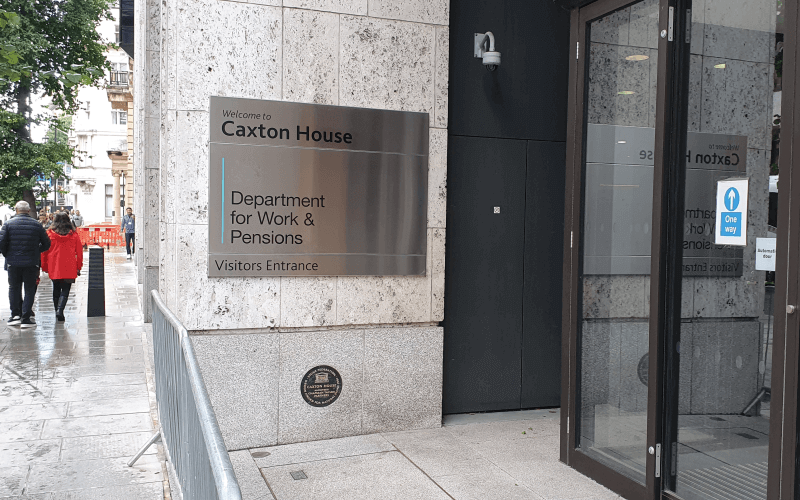
Because his response – like Prager’s research note – was focused on child DLA rather than PIP, the Department for Work and Pensions (DWP) did not object to it being published.
Disability News Service (DNS) understands that several steering group members, including its three co-chairs, have seen the DAH response.
Approached this week by DNS, Stevens said: “I stand by everything I have written, but in relation to the Timms Review I decline to comment at this time.”
DWP said the steering group shared ownership and responsibility for the running of the Timms Review, and that members voted on key decisions through one member, one vote.
DWP did not say if it supported the conclusions of the DAH response, but a spokesperson said in a statement: “The Timms Review is reviewing PIP and is being co-produced by a steering group of 15 members who are using a wide range of evidence and expertise to develop recommendations.
“Child DLA exists to help with the extra costs of caring for a seriously ill or disabled child.
“We know there is a rising demand for child DLA, which is why we have trained additional case managers to deal with these claims to a high standard.”
 Budget is ‘miniature sticking plaster’, disabled people warn as they await Timms and Milburn reports
 Alarm bells ringing after minister says all work is good for health, and he wants ‘everyone’ to get a job
 Instagram, Facebook and TikTok fail to act on animations spreading hate and lies about PIP claimants