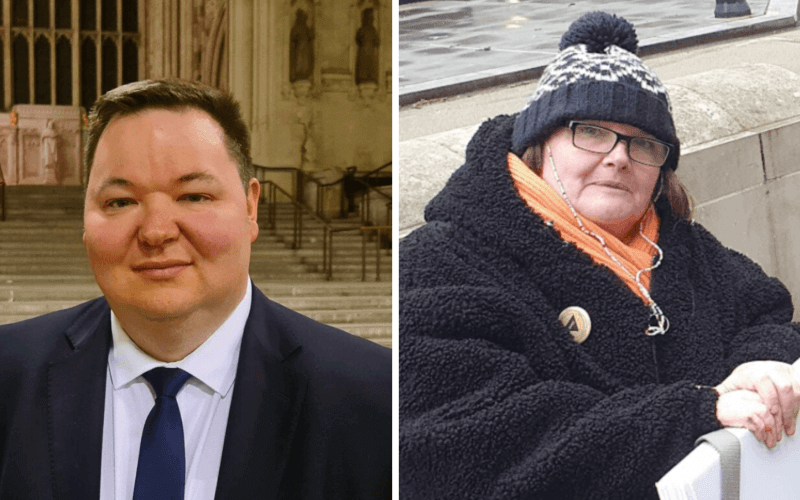
The employment minister – backed by the Department for Work and Pensions (DWP) – appears to have trashed the government’s long-held position that only “good work” is good for your health, while also calling for “everyone” to have paid jobs.
The new “extremely concerning” position presented by Andrew Western has alarmed disabled activists as they await the imminent publication of Alan Milburn’s review for the government on young people not in education, employment or training (NEETs).
The chancellor, John Healey, confirmed in yesterday’s budget speech that Milburn’s report, and that of the review on personal independence payment, would be published next month, with a response from the government by the end of December.
Labour ministers have stated repeatedly that only “good work is good for health”, accepting that many jobs can be harmful to many disabled people, particularly those experiencing mental distress.
This has been demonstrated by numerous deaths of disabled claimants who were subjected to attempts to force them off out-of-work benefits in the belief that they could secure paid jobs.
The government’s position on work and health dates back more than two decades through various governments to research commissioned by New Labour work and pensions ministers in the 2000s*, which concluded: “Work is generally good for health and well-being.”
That research was itself controversial as it took a “biopsychosocial” model approach, which many disabled people have always argued puts the blame for disability on the disabled person, rather than the barriers they face in society or the impairment or health condition itself.
The research’s conclusions appear to have gone unchallenged under the Labour governments of Sir Keir Starmer and Andy Burnham, until Western’s response to a written parliamentary question, which now suggests the government is preparing a harsher, less safe position ahead of Milburn’s report.
Western was responding to Tory MP Shivani Raja, who had asked what support was available to help disabled parents and carers secure “suitable employment”.
Western started his written answer – which would have been drafted by DWP civil servants – by saying: “We know that work is good for health and wellbeing, so we want everyone to get work and get on in work, whoever they are and wherever they live.”
This is a tougher and more dangerous approach than that taken previously by ministers.
In April, Sir Stephen Timms, the minister for social security and disability, said in a short interview that was posted online: “Good work is good for health. I think that’s the experience of huge numbers of people.
“And being out of work very often is not good for your health [but] there are always going to be people who are not able to work and it’s the duty of the social security system to provide them with decent support.”
Last year, in her ill-fated Pathways to Work green paper, the then work and pensions secretary, Liz Kendall, said: “There’s clear evidence that shows good work is good for health and plays a vital role in recovery.”
Paula Peters, a member of the national steering group of Disabled People Against Cuts (DPAC), said this week in response to Western’s comments: “This is extremely concerning.
“This is a full assault on claimants and should sound the alarm to all activists to raise concerns with their MPs and resist.
“Intensifying pressure on claimants to take any work which can be harmful to a claimant’s wellbeing and safety, or face the threat of sanctions, will increase claimants’ distress, move them further from the workplace and put pressure on the NHS and local services and, I can’t stress this strongly enough, put claimants’ safety at risk.
“Starkly put, it will lead to claimants’ deaths.
“This is an appalling move by the current government.
“Yet again it shows the scant disregard for claimants’ safety and wellbeing.”
Caroline Richardson, part of the Spartacus network of disabled researchers, was also concerned but suggested Western and his officials may have made an error rather than deliberately tightening the government’s position.
She said: “Despite having eight days to respond to the question, Andrew Western has provided a bland response with one glaring error: he has failed to note that work should be ‘good work’ – a prerequisite recognised across multiple disciplines and by Western’s own party.
“Perhaps this is a genuine mistake – but a person in such a position should not be making such schoolboy errors.
“I rather hope that this is the case, and not a feeble attempt to stamp a ‘hard man’ message for no reason, which would undoubtedly be met with the derision it deserves.
“He cannot rewrite the rules of work and human health arbitrarily.”
Another DPAC steering group member, Merry Cross, said there was “always a great risk that people with high levels of anxiety (particularly people who are autistic and people with ADHD) will self-harm or worse if they are pushed into work when they’re not ready or into a job that they know is unsuitable.
“It is both cruel and very dangerous.
“We are always left with the awful suspicion that our lives are not valued at all, or are less valued than those of the rich, for successive governments have shown that by letting them keep obscene amounts of income they care less about us than they do about keeping wealthy people happy.”
Ministers have repeatedly been told of the many deaths linked to DWP’s efforts to cut spending and force people with mental distress into work.
These include the death of Michael O’Sullivan, who died by suicide on the morning he was due to start a four-week work placement on a building-site, in September 2013.
He had previously tried to take his own life the previous year after being forced by DWP to attend a training course, where he was tormented and harassed by other much younger jobseekers.
Another disabled man who took his own life was 27-year-old Roy Curtis, who died in November 2018, six days after being told to attend a “fitness for work” assessment, despite DWP being repeatedly warned its actions had made him suicidal.
The previous year, his partner had warned DWP in a letter that the assessment process and the thought of having to prepare for work caused him to have “suicidal thoughts” and that he “would be severely endangered by any finding that he was suitable for work or any work-related activities” and that “any such finding would put him at an immediate threat of suicide”.
DWP would not say this week if Western had made a mistake or if his answer reflected a tougher position from the government.
But a DWP spokesperson said: “Our position has not changed.
“We have always been clear that we want to support everyone that can work to get into work and support them whilst they are at work to fulfil their full potential.
“There will always be people who are not able to work, and it remains our duty to provide them with decent support and living.”
*Is Work Good For Your Health And Well-Being?, Waddell and Burton, 2006
**The following organisations are among those that could be able to offer support if you have been affected by the issues raised in this article: Mind, Rethink and Samaritans
Picture: Andrew Western (left) and Paula Peters
 PIP review member delivers powerful rebuttal to research by colleague that called for cuts to child DLA
 ‘Deep concern’ over minister’s refusal to guarantee free personal care for working-age adults
 Instagram, Facebook and TikTok fail to act on animations spreading hate and lies about PIP claimants