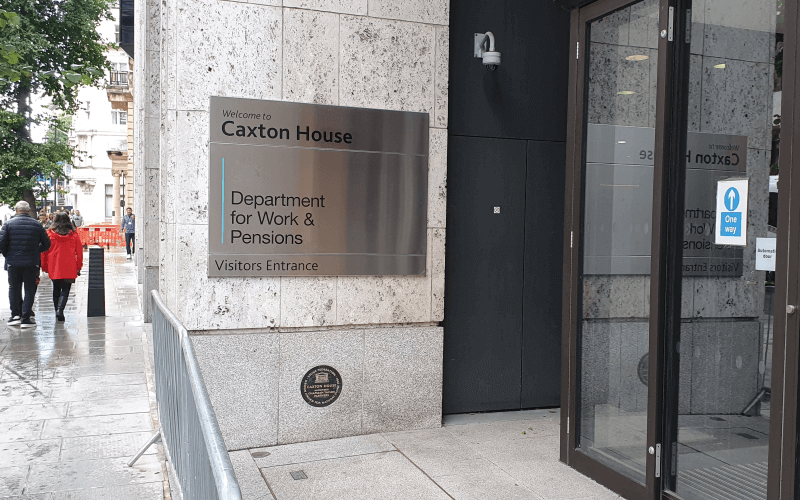
The Department for Work and Pensions (DWP) is secretly introducing changes to how it checks the quality of disability assessments, risking claimant safety and increasing the chance of dodgy reports slipping through the net, Disability News Service has learned.
A member of the DWP team that works on health assessments has contacted Disability News Service (DNS) to raise concerns about the plans.
They have described it as a “forced change” that had been introduced by DWP without any “rigorous” planning, and said it would benefit contractors Serco, Capita, Ingeus and Maximus.
They believe the changes could see the department missing safeguarding and other serious errors, with potentially fatal consequences.
Disabled campaigners warned this week that the new weakened regime would “introduce even more risk into the system for claimants, especially people who are not able to fight back or don’t have people to advocate for them”, and that it would leave disabled claimants to “pick up the pieces”.
The DWP source said they feared that DWP’s private sector contractors may have influenced the shift to what the department is calling its Assessment Audit and Reporting Regime (AARR).
DWP last night confirmed to DNS that it was reviewing how it checks the quality of assessments.
It is just the latest evidence to show how a toxic DWP culture that places a low priority on safeguarding, accuracy and claimant welfare, but a high priority on cost-cutting and forcing disabled people off benefits, has persisted over the last four decades whichever political party has been in government.
The changes are part of DWP’s attempts to cut the backlog of work capability assessments and assessments for personal independence payment (PIP).
According to the source: “As it has been explained to contract staff, the aim is to get more assessments through and to cut the time spent on each case.”
It comes just four months after DNS revealed how DWP was secretly testing sweeping new rules – known as the Transform Decision Making (TDM) programme and described by disabled campaigners as a “recipe for disaster” – on PIP assessments to reduce the influence of healthcare professionals and hand greater responsibility to civil servants, in another attempt to speed up assessments.
The current audit regime has four grades – acceptable, acceptable with feedback, acceptable with amendments (AA), and unacceptable – and those found to be unacceptable or acceptable with amendments must be rewritten before any decision is taken on a disability benefit claim.
But under the new system being tested by DWP, there would be a new red-amber-green system for those reports being sampled.
Only red reports would have to be corrected.
Amber reports, including those with significant shortcomings, which include some that pose risks to the claimant’s safety and would previously have been marked as AA, would be treated as acceptable.
This means that many of those assessment reports that would previously have had to be rewritten will now be allowed to pass without amendment.
Mistakes in these reports will have to be picked up during the mandatory reconsideration process – the initial appeal stage – or at the appeal tribunal, but only if the claimant decides to ask DWP to look at their claim again.
The DWP source said these changes mean that assessment reports could now be approved by the audit process even if they contain significant errors.
They said: “The practical effect is that a large share of reports which currently fail the published criteria and have to be corrected would no longer be corrected.
“Safeguarding and other serious errors that do not change the likely award could be ignored.”
They said they had been told DWP had tested its new approach, which showed it led to “more risk for claimants”.
The new system is set to be introduced in January, if approved.
The DWP source said they believed DWP was rolling out the new Assessment Audit and Reporting Regime so the changes to assessments introduced through the new TDM approach do not show the quality of assessments plummeting.
And they said they believed the changes “create capacity for suppliers and loosen quality and audit requirements, while the benefits have been overstated to directors and ministers”.
Fazilet Hadi, head of policy for Disability Rights UK, said: “Millions of disabled people rely on social security payments from DWP, to enable us to live with some degree of independence.
“These payments fall far short of covering the everyday costs of living or the additional costs of disability but the very least we should expect is for the assessment processes to be fair.
“Yet again, corners are to be cut and disabled people will be left to pick up the pieces.
“The weakening of the quality regime is all the more galling, as it comes three months after the PIP Review interim report set out the many ways in which DWP processes fail disabled people, in terms of fairness, negative assumptions, disability awareness, reasonable adjustments, accessibility and communications.
“The PIP Review draft recommendations published on 9 September set out measures to improve DWP processes, but can we trust these intentions when at the same time, quality checks on assessments are being reduced?”
Campaigner John Slater, who previously spent years using freedom of information laws to hold DWP to account for its failings, including around assessment audits, said he believed the latest revelations would increase the number of substandard assessment reports.
He said: “Given the drive by the current government to push through more assessments and reduce the number of people that qualify, the proposed changes introduce even more risk into the system for claimants, especially people who are not able to fight back or don’t have people to advocate for them.
“I suspect claims decided on incorrect and spurious information won’t be picked up by the new system.
“Equally, claims where the assessors ignored evidence (frequently reported by claimants) will also slip through the system.
“If assessors (pushed by their employers) believe the risk of being caught out has reduced then they will take even less time to consider the evidence provided by claimants and will deliver outcomes that are politically motivated rather than what can be justified by the medical evidence.
“Ultimately, I think this is likely to increase the DWP workload elsewhere (through mandatory reconsiderations and appeals) so it is unlikely to save money or make the system better.”
He added: “If people inside the DWP think these changes are dangerous then I think that is something to be worried about, as they don’t have a strong history of leaking and challenging changes.”
DWP said in a statement: “We’re reviewing how we check the quality of disability benefit assessments, having listened to feedback from a wide range of stakeholders.
“Any changes would not lower our standards for quality but would instead sharpen our focus on making sure claimants get the right outcome, their case is handled correctly, and their safety is properly considered.
“Claimant safety remains central to this work, with any concerns continuing to be identified and acted on through our established clinical processes, and no changes will be introduced before next year.”
 Information Commission orders DWP to release secret report that examined quality of PIP phone assessments
 DWP silent after Tory member of PIP review publishes report demanding child disability benefits are slashed
 Ministers’ decision to slash accessible housing targets was ‘unprincipled’, but Timms says they were right