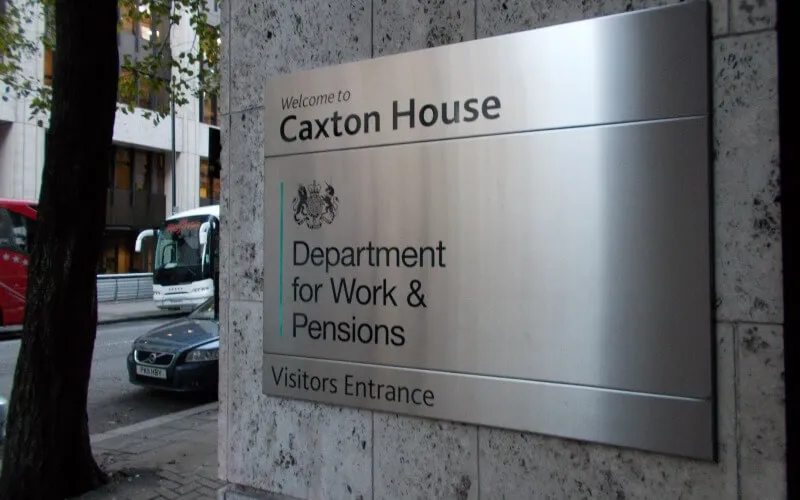
A new Department for Work and Pensions overpayments scandal could be brewing, after a series of reports that disabled people receiving certain benefits are being overpaid universal credit.
Disabled researcher and campaigner Caroline Richardson has been made aware of multiple cases of overpayments, all believed to be connected to claimants who receive both contribution-based employment and support allowance (ESA) and universal credit.
The issue appears to be connected to Department for Work and Pensions (DWP) systems recording ESA payments to be lower than they actually are.
This means the claimant’s monthly universal credit payment is increased to compensate for the ESA reduction, through DWP’s transitional protection programme.
The error means that many claimants have been overpaid universal credit and will eventually face demands for repayment of this money.
The errors are also impacting council tax, with one claimant being told to pay an extra £546 a year because the council believed her universal credit had increased.
There are fears it could also be having a similar impact on care charges.
Because Richardson checked her online universal credit journal before her benefits were paid into her bank account, she was able to contact DWP and try to stop her own £388 overpayment.
But despite a corrected statement appearing on her universal credit payments page, the following day a journal entry stated that the overpayment had been paid and would have to be repaid to DWP in instalments.
Richardson fears many other claimants will be unaware they have been overpaid.
Even though she notified DWP of the error, she says DWP’s online calculations are still not correct because the department has failed to take account of last month’s annual uprating of benefits.
She said: “I am struggling to understand how this has gone so catastrophically wrong, and whether it has gone wrong for everybody.
“This is going to cause disabled people an enormous amount of worry. It is just such a mess.
“It just seems like the whole DWP is functioning so badly, and they are blaming claimants for their mistakes.
“The more universal credit is rolled out, the more the errors in the software are going to be exposed.”
Disabled activist Flick Williams, a retired disability equality trainer and access consultant, has also been affected by the overpayments issue.
She has already repaid her £289 overpayment to DWP but has still been told to pay an extra £546 in annual council tax because her council believes her universal credit has increased.
Like Richardson, she fears many other disabled claimants across the country could be affected by the overpayment issue.
But she also fears that many people who receive universal credit, contribution-based ESA and council-funded care will find their care charges increased by their council.
She said she was “extremely concerned” about the impact the issue could be having on other claimants.
She said: “How many people would let their universal credit go into their account, not check it and just assume the money in their account was theirs to spend?”
She added: “The universal credit system was sold as being a simpler system but it’s more complicated than ever for those of us who were transitioned [from legacy benefits onto universal credit] but still retained contribution-based ESA.
“The system is absolutely not working as it was billed ie to be simple and straightforward, and it’s pretty apparent that the DWP are struggling to administer their own system.”
DWP said the issue was caused by what it called a data feed interaction, following the annual uprating of benefits, and claimed that it did not indicate a wider problem with universal credit.
It said it would be wrong to describe the overpayments as a developing scandal, and insisted that it took overpayments very seriously, was aware of this issue, and was working to resolve the cases of those affected.
A DWP spokesperson said: “We support millions of disabled people every year and are committed to ensuring they get the help they need.
“The automatic transfer of ESA amounts and the annual uprating of legacy benefits can cause a miscalculation of amounts transferred into universal credit and affect a small number of people each year.
“We are able to correct claimants’ records and recalculate any overpayments and encourage anyone with concerns to get in touch.”
Meanwhile, lawyers for disabled campaigner Andy Mitchell yesterday (Wednesday) began a judicial review hearing in Bristol to challenge the decision of Somerset Council to increase his council tax bill when he was migrated onto universal credit from legacy benefits.
The hearing is due to end today, with judgment likely to be reserved to a future date.
Mitchell said before the hearing: “Ten months ago, I would never have anticipated that migrating from ESA to universal credit would lead to a judicial review.
“The DWP gave reassurances that our income would be protected, so I was shocked and quite angry to receive a large council tax bill from Somerset Council after previously receiving a 100 per cent council tax reduction.
“Their discriminatory scheme targets disabled people, many of whom are some of Somerset’s poorest residents. Therefore, challenging the council in court is important.”
The government has previously said that local authorities “are responsible for designing their local council support schemes”, and that DWP “does not issue policy or guidance on this topic”.
Somerset Council declined to comment this week.
Carolin Ott, human rights solicitor at Leigh Day, which is representing Mitchell, said: “This case raises serious concerns about the way Somerset Council’s scheme operates in practice.”
She added: “The case has potential wider implications for many other residents in similar situations whose migration to universal credit has impacted their eligibility for council tax reductions.”
 DWP silent after Tory member of PIP review publishes report demanding child disability benefits are slashed
 Timms refuses four times to rule out cuts to PIP, but makes firm promise on cash payments
 No decision from Timms on releasing secret reports on deaths, a year after speaking to DWP civil servants