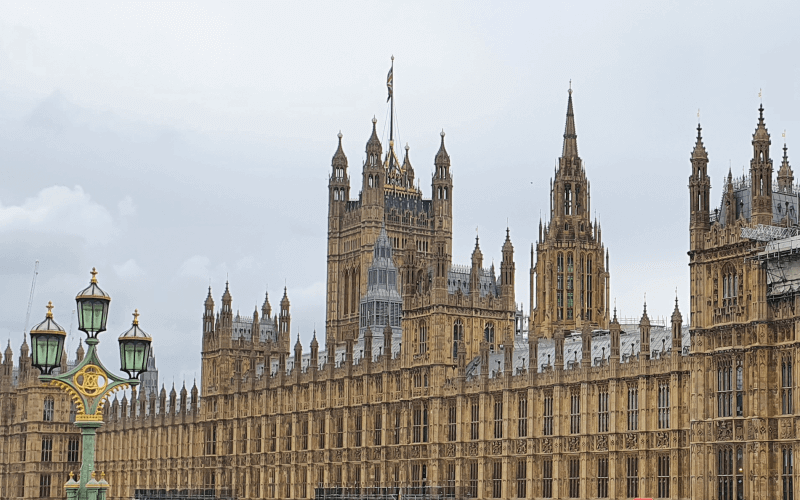
Peers have approved a government amendment that will strengthen disability hate crime laws, but disabled campaigners say there must still be a “total overhaul” of legislation.
The amendment means standalone “aggravated offences” will apply to disability hate crime, as well as hate crime motivated by sexual orientation, transgender identity, and sex.
This means an offender could be charged with an offence – such as assault, harassment, stalking or criminal damage – that is aggravated by hostility towards a disabled person, and they would then face a tougher sentence if convicted.
At present, aggravated offences only apply to racial and religious hostility, and a disability hate crime can only be addressed by a court during sentencing, where the sentence can be increased if prosecutors can prove an offence was motivated by disability-related hostility.
The amendment was introduced last week by a Labour minister as the Lords debated the report stage of the crime and policing bill.
Inclusion London, which has been campaigning for justice for disabled victims of hate crime in the UK since 2016, welcomed the amendment and described it as an “important step”, but it also called for further government action on disability hate crime.
Lord Hanson, the Home Office minister who introduced the amendment, told fellow peers that he hoped the extension would “prevent people being attacked, abused and harassed for issues to do with their identity as transgender people or people with disabilities”.
The disabled Liberal Democrat peer Baroness [Sal] Brinton said she had been told on a train, while commuting in the rush hour: “Why are you taking up space? People like you don’t work.”
She said: “That is not an aggravated offence.
“But when someone tried to kick me on a platform because they felt I should not be there because I was in a wheelchair and in her way, that would have been an aggravated offence if they had caught her.”
She added: “I am disabled, and sometimes people take it out on me… Frankly, members of our judicial system should be able to make up their minds about whether it is an aggravated offence.”
There was opposition to the amendment from some peers, mainly Conservatives, with much of it focused on the extension of protection to transgender people.
Other opponents included Conservative peer Baroness Cash, who said hate crime legislation was “not a demonstrably effective enforcement tool” and that it was “wholly wrong to divert resources in this way, in an already overstretched criminal justice system”.
But the disabled Conservative peer Lord [Kevin] Shinkwin supported the amendment.
He said discrimination was still “rife”, more than 30 years after the Disability Discrimination Act became law.
He said: “I know that because I experience it several times a day, day in and day out.
“It may be low-level abuse – smirks, nudging as I go past, laughter – but the effect it has on a person’s self-esteem and morale, when they are having to cope with so many other challenges in life, cannot really be described.
“It has to be felt to be believed.”
He added: “I would say that the law is inadequate and needs this amendment.”
Lord Shinkwin said the amendment was necessary because “the message needs to go out” that the kind of behaviour described by Baroness Brinton was “completely unacceptable”.
Lord Paddick, the non-affiliated peer and former Metropolitan police deputy assistant commissioner, said: “It is far more serious if you are targeted for attack because you are a member of a vulnerable group than if you are attacked at random, and the law should reflect that.”
The amendment was approved by 213 votes to 145, with three Conservative peers – including Lord Shinkwin and former Tory policing minister Lord [Nick] Herbert – voting against their party and in favour of the amendment.
The aggravated offences change was recommended by the Law Commission in December 2021, but it also made two other recommendations to strengthen disability hate crime laws.
It called for existing offences of stirring up hatred, which only apply to race and religion, to be extended to disabled and LGBTQ+ victims.
And the Law Commission also said an offender should be found guilty of a disability hate crime offence if they had been “motivated” by “hostility or prejudice” towards disabled people, rather than – at present – only by hostility.
The Home Office told Disability News Service last summer that it would be considering these two further recommendations.
Louise Holden, policy officer at Inclusion London, said this week: “We welcome the government finally recognising disability hate as a criminal offence in law, rather than just a sentencing uplift.
“This is an important step.
“But ‘hostility’ is still poorly defined, meaning the abuse some disabled people face won’t be identified as hate crime.
“We also support the commission’s recommendation to expand offences of stirring up hatred to include [those] against disabled people.
“We don’t just need a change in sentencing; we need a total overhaul of how these crimes are identified within a robust national hate crime strategy.”
 Ministers’ decision to slash accessible housing targets was ‘unprincipled’, but Timms says they were right
 Free social care is coming… but only if you’re over 65, government confirms after Burnham speech
 Home secretary delays implementation of ‘long-overdue’ measure on disability hate crime