
Andy Burnham’s record in engaging with disabled people’s organisations suggests he could end Labour’s “war on disabled people” if he becomes prime minister, but activists warned this week that “warm words will not be enough” to bring real change.
Among Burnham’s achievements are setting up the groundbreaking Greater Manchester Disabled People’s Panel, and his strong support for free adult social care and implementing the UN Convention on the Rights of Persons with Disabilities (UNCRPD) into UK law.
But disabled activists Disability News Service (DNS) has spoken to over the past week remain sceptical over what he would deliver for disabled people if he wins next week’s Makerfield by-election, is successful in a subsequent Labour leadership contest, and becomes the next prime minister.
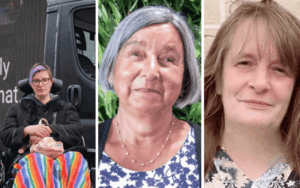
Shabaaz Mohammed, a member of Manchester Disabled People Against Cuts and of the disabled people’s panel – although he was not speaking on its behalf – has known Burnham since 2010.
He says, like many of those who have worked with him, that the former Labour health secretary is a “decent person” and is “personable” and “likes to be the nicest person in the room and leave a good impression”.
But, he says, his concern is whether he would deliver for disabled people as prime minister.
“If he’s got the right people around him, he will be OK,” says Mohammed. “If he doesn’t, I worry he could be pushed and pulled very easily.
“The situation [for disabled people] is so bad, we just need action. The scale of the problem is so huge that a few nice words here and there are not going to cut it.”
Disabled people, he says, will need to be “critical friends” to Burnham if he becomes prime minister.
“My biggest hope is he just improves our lives 10 per cent – that would be a huge achievement – and he keeps the community roots he has within his patch.
“What I don’t want is for us to be used as a community and once he gets to where he wants to go, we just get forgotten.”
Mark Harrison, a member of the steering group of the Reclaiming Our Futures Alliance (ROFA), says Burnham will need to “put his money where his mouth is, walk the walk, and end Labour’s war on disabled people.
“Our hope is he will scale up nationally what he has started in Manchester, coproducing policies and resourcing representative organisations of Deaf and disabled people to co-create and take the lead.”
In a climate of continuing media and political attacks on disabled people – particularly around benefits spending – there has been widespread disappointment among activists and disabled people’s organisations (DPOs) with Labour’s record on disability rights during the party’s first two years in power.
That disappointment spreads across social security, housing, transport, education, social care, and engagement, with no sign yet of the promised long-term disability strategy as the government approaches its second anniversary.
Burnham’s most high-profile success on disability rights during his time as Greater Manchester mayor has been providing funding and support for the Greater Manchester Disabled People’s Panel (GMDPP).
It was set up in 2019 to shape, challenge and influence policy affecting disabled people across Greater Manchester, by advising and consulting with Burnham’s Greater Manchester Combined Authority.
Shabaaz Mohammed says that Burnham has “done well to follow through with the panel and set it up”, although he is disappointed that he has not attended more meetings.
He agrees that – if Burnham makes it to No 10 – no other prime minister will have engaged so closely with disabled people and DPOs, although, as he says, “the bar is very low”.
Even so, if Burnham implemented the disabled people’s panel approach on a national level, that would be a significant win for disabled people, he says.
Other DPOs represented on the panel have been more guarded in their responses when asked about Burnham’s record.
Flick Harris, chair of Manchester Disabled People’s Access Group (MDPAG) and a panel member, said her group “really appreciate Andy Burnham listening and responding to the issues raised by disabled people since he has been mayor” and particularly in supporting the work of the panel.
She says the panel has made it easier for MDPAG to work with Greater Manchester Combined Authority and Greater Manchester local authorities.
“We hope he will continue to support disabled people’s organisations and encourage our voices to be heard and our views included if he gets elected as an MP,” she says.
A GMDPP spokesperson says Burnham’s commitment to the panel has been “crucial to democratising how we are governed”, with many other cities showing interest in having their own panels, while it has also influenced the creation of DPO Forum England.
Greater Manchester Coalition of Disabled People, which convenes the panel, was just as guarded in its response to DNS.
Its chair, Dennis Queen, a veteran disabled activist, says GMCDP was “proud” to have convened the panel – which meant a close working relationship with Burnham – and praised his “innovation” and willingness to work with DPOs.
Ellen Morrison, one of the most influential disabled activists in the party, as the representative of disabled members on Labour’s national executive committee, says Burnham’s record on disability rights as mayor “deserves recognition”.
But she says: “If there is a Labour leadership contest, and Andy stands as he has indicated, it must open up the urgent debate our party needs about its direction.
“Over the past two years, Labour has badly failed disabled people.”
She is another to warn that “warm words will not be enough” from Burnham.
She says: “Andy will need to set out clearly how he would repair that damage and build a social security system rooted in dignity, security and disabled people’s rights.
“He will inevitably face real pressure to compromise, including on cuts, and the test will be if he is prepared to resist it.
“I will be watching closely. And if there is a leadership election, it’s an important opportunity to make the case for a better social security system that truly works for disabled people.”
Kathy Bole, chair of Disability Labour, spoke with Burnham several months ago after Disability Labour asked him to become a patron in recognition of his support for disabled people, including speaking out against cuts to disability support proposed last year by chancellor Rachel Reeves, and for his work with the disabled people’s panel.
She told DNS: “When I met with Andy over Zoom with the Disability Labour officers, it was clear he was quite concerned about the plight of disabled people, not only in Manchester but across the country.
“I can only say that I was impressed with his candour, as were the others in attendance.
“We intend to work together, but this has yet to happen due to the local government elections, followed quickly by a by-election in Makerfield and possibly a leadership contest.”
But she is another to stress that his actions need to match his words, if he does become prime minister.
She stressed that Disability Labour will be supporting him in next week’s by-election.
“I will only judge Andy by the work he undertakes for disabled people in the future, where the rubber meets the road, so to speak,” she says.
Burnham has repeatedly called for an end to all social care charging, even telling a conference of disabled people’s organisations three years ago that care charges were “an abomination”.
And he has spoken publicly of his support for implementing UNCRPD into UK law, telling the same conference that it would be a “mistake” and a “very big backward step” for Labour not to include such a pledge in its general election manifesto.
Shabaaz Mohammed says that, if Burnham becomes prime minister and implements UNCRPD into UK law and introduces free adult social care, it would be “massive” and “completely transformational for the disabled community”.
But despite Burnham’s past support for an end to social care charging, Mark Harrison fears his social care policy will be to implement the recommendations of Baroness Casey’s commission on social care, which he says has not co-produced its work with DPOs.
He says ROFA wants instead to see Burnham adopt the roadmap to reform developed by disabled people through its vision for a National Independent Living Service.
Harrison also notes Burnham’s pledge to break with neo-liberalism, and says this should include implementation of the UNCRPD as part of a “complete paradigm shift in social policy as well as economics”.
Another potential positive is that Burnham has read The Department, DNS editor John Pring’s book investigating the years of deaths linked to the actions and failings of the Department for Work and Pensions (DWP).
Earlier this year, he promised Shabaaz Mohammed – who had given him the copy – that the book would inform his policies locally in Manchester.
It means that, if he becomes prime minister, Burnham will be fully aware of DWP’s track record, the continuing safeguarding concerns, and the ongoing calls for an independent inquiry into hundreds, and probably thousands, of deaths.
Burnham’s earlier record on disability rights, during his previous time as a minister, shadow minister and Labour leadership candidate, is not as impressive as his body of work as Greater Manchester mayor.
He stated in 2015 that he was concerned that “in some people’s eyes, Labour has become associated with giving people who don’t want to help themselves an easy ride”, although his commitment to removing care charges is longstanding.
But some disabled people believe his time as mayor has changed him for the better, and that his political beliefs have become more progressive since leaving Westminster.
Some say he would be better equipped to deal with disability issues – and will have had more engagement with disabled people and DPOs – than any prime minister in history if he wins the by-election and a leadership contest.
But there is also considerable concern about the promises he might make – or may already have made – to senior figures in the party to ease his path to No 10.
Shabaaz Mohammed says: “Let’s not get all starry-eyed and think he’s the king of the north; he could be the king of the north with a chocolate crown on his head.
“We are not in the business of a popularity contest. We need our lives to get better.”
Picture: (From left to right) Shabaaz Mohammed, Ellen Morrison and Andy Burnham
 Budget is ‘miniature sticking plaster’, disabled people warn as they await Timms and Milburn reports
 The Times blocks DNS from raising concerns with its readers about DWP deaths, in response to Burnham ‘welfare inquiry’ article
 Free social care is coming… but only if you’re over 65, government confirms after Burnham speech