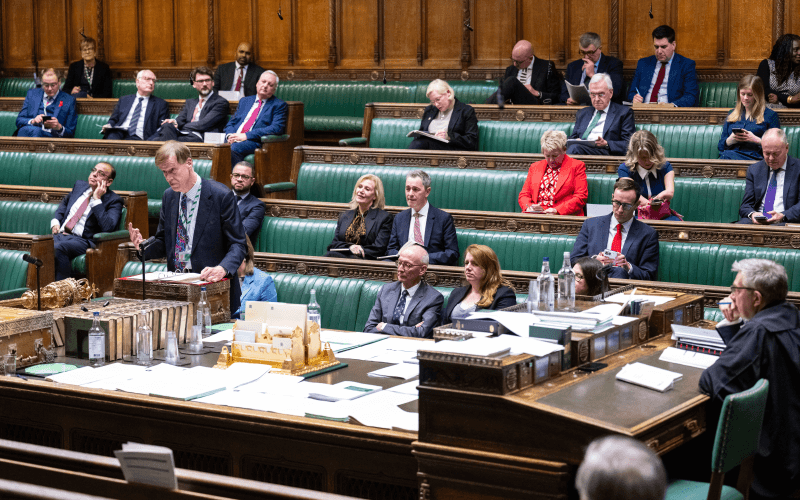
The Timms Review of personal independence payment (PIP) has opened the door to government cuts to disabled people’s benefits, despite calling for an improved process that is more “accessible, consistent and transparent”.
The review’s final report – largely co-produced with disabled people in a process that saw more than 40,000 people consulted through a call for evidence, workshops, a survey and expert sessions – repeated the conclusion of an interim report that found PIP was not fit for purpose.
It calls for a reformed benefit that is based on “dignity, equity, trust, choice and control”.
But despite a positive response to some of its recommendations from many disabled people’s organisations (DPOs) this week (see separate story), they have also raised serious concerns about the report’s failure to guarantee that it will not lead to substantial cuts to future spending on PIP, the main adult disability benefit in England and Wales*.
Their concerns appear to be justified, with the Guardian reporting yesterday (Wednesday) that the government was working on reforms to PIP for those 25 and over that “will involve some people receiving more, some receiving less and many losing their benefits altogether”, while prime minister Andy Burnham was “keen to start cutting the welfare bill as soon as possible”.
This would come alongside Alan Milburn’s call for benefits to be slashed for disabled young people, alongside stricter conditions and potential sanctions upon most of them.
Ministers are set to respond to the Timms report – and last week’s Milburn report – in the next few weeks, before a social security white paper early next year.
They have already committed to introducing a quicker route to PIP for people with “severe, well-evidenced conditions”, and those nearing the end of their life, one of the report’s recommendations.
And they have promised to reduce unnecessary award reviews for people whose conditions are “lifelong, progressive or unlikely to improve, where there is clear evidence that their needs are unlikely to change or are likely to worsen”.
But scattered throughout the report are clues to the government’s plan for spending cuts.
It explicitly states that future spending must remain “within” the level previously predicted by the Office for Budget Responsibility.
Even before the report was published, blundering employment minister Andrew Western dropped a significant hint when he told MPs, after being asked on Monday what steps ministers were taking to cut “welfare spending”: “We are increasing face-to-face health assessments, significantly reducing fraud, and have reduced the value of the universal credit health support payment.
“Of course, though, there will be more to do following our response to the Milburn and Timms reviews.”
The Timms report includes no suggested spending figures for PIP in the coming years, but there is significant scope in the document to allow work and pensions secretary Pat McFadden to cut PIP spending while still arguing that he is following the spirit of the Timms Review recommendations.
The report notes that PIP spending has “grown rapidly” and that it is forecast to continue increasing, while it “now operates within a broader environment of heightened public and political scrutiny”, including “negative narratives around disability”, which has “fuelled negative perceptions of PIP, which directly impacts the people who receive it”.
In one warning sign of where cuts might be implemented, the report says that any cash award “should be more responsive to individual needs and reflect both ongoing and occasional costs appropriately”.
It also says that new eligibility criteria should ensure PIP is “fit for purpose and better responds to real-life need” which it warns is “likely to require a rebalancing process to ensure that awards more accurately reflect individual needs”.
It calls for an “improved set of questions” to understand the extra costs a disabled person faces although it says this should not include direct questions about someone’s actual costs or a request to provide receipts.
And it says DWP should ensure this process “more fairly recognises the additional costs” disabled people face and warns that PIP “is not appropriate for those who do not incur any additional costs associated with being disabled”.
Any cuts, though, are unlikely before April 2028 at the earliest, with 2029 more likely.
Despite these concerns, there is much in the report that is being welcomed by disabled people this week, and they are treating it as more reassuring than the Milburn report.
Much of that is likely to be due to the decision to largely co-produce the report with a steering group mostly made up of disabled people.
The steering group want to see a “person-centred approach” to PIP which is “founded on dignity, trust and respect” and believe it should provide “greater security, greater choice, greater control and greater opportunity to participate”.
They also want the new system to build trust with the department, with DWP committing to culture change and a “less adversarial approach that respects the dignity and rights” of disabled people, with implementation of any reforms again co-produced with disabled people.
Among the recommendations, the steering group is calling for a reduction in unnecessary reviews of PIP awards and for those reviews to be more focused; better use of reasonable adjustments for claimants; improved quality and fairness of assessments; better account taken of fluctuating conditions; increasing availability of digital options that would allow disabled people to submit evidence and track the progress of their claim online; and improvements in how supporting evidence is used.
They are also suggesting a change from the current PIP assessment to a new “impact assessment”, which should review “how a person’s condition affects their daily life and determine entitlement to the cash award” and “seek to understand better the person’s additional costs”.
Where appropriate, they say, claimants should also receive information on – and be referred to – optional support and services, such as education, employment support or peer support schemes, although “referral through PIP should not mean that someone would be able to skip any existing waiting lists”.
And they should be referred to voluntary schemes that would let people exchange part of their cash PIP award for a service, as they already can with the existing Motability scheme.
The report also calls for disabled people with the highest support needs to be able to secure “tailored support” from DWP to help them through the PIP process, while there should also be peer support and advocacy for those disabled people who need it.
The steering group says it has designed the changes “to create a system that is more responsive to individual experiences and circumstances, focusing more support on those who need it most, while protecting independent living, dignity and control over their lives.
“It should also give people confidence to participate in everyday life without fearing that keeping active, volunteering or working would, in itself, negatively affect their award.”
The steering group also says the government should only go ahead with existing plans to scrap the work capability assessment if “robust safeguards” – co-produced with disabled people – ensure that claimants who cannot work, or whose health would be worsened by working, are not subject to work-related requirements in universal credit.
And there should be a “clear, fair and proportionate way” to assess who would meet the severe conditions criteria – entitling them to the higher universal credit limited capability for work-related activity rate and an exemption from further reassessments – if the PIP assessment process becomes the single gateway to both PIP and out-of-work disability benefits.
The report also warns that the impact of any PIP reforms on the Motability scheme – which was outside the scope of the Timms Review – would “need to be considered”, as it is “an important part of how PIP supports disabled people to participate in everyday life”, with further work needed to examine how the scheme “can continue to meet the needs of disabled people in the future”.
About 50 per cent of the 38,713 responses to the review’s call for evidence, which closed in May, said they did not believe PIP adequately met the additional costs they faced, while about 70 per cent raised concerns about the assessment and the way it was applied, with many describing assessments as “confrontational rather than supportive” and reporting feeling tested, judged or “caught out”.
More than 90 per cent of responses that mentioned the PIP assessment process described it negatively, including as “stressful, complex, dehumanising or psychologically damaging”.
*PIP is delivered by DWP in England and Wales, and by the Department for Communities in Northern Ireland, and has been replaced by the adult disability payment in Scotland, run by Social Security Scotland
Picture: Sir Stephen Timms speaking about his review on Tuesday; picture by House of Commons CC BY-NC-ND 4.0
 Disabled people’s organisations warn Timms Review ‘is hiding PIP cuts’ but welcome ‘rehumanising’ approach
 Ministers silent over Milburn’s foul-mouthed outburst after he was challenged on safeguarding
 Abrahams silent after attacking story that exposed how PM could avoid being quizzed on Timms and Milburn