The government looks set to accept most of the key recommendations of this week’s Milburn report, after its author demanded cuts of more than 40 per cent to spending on disability benefits for young people.
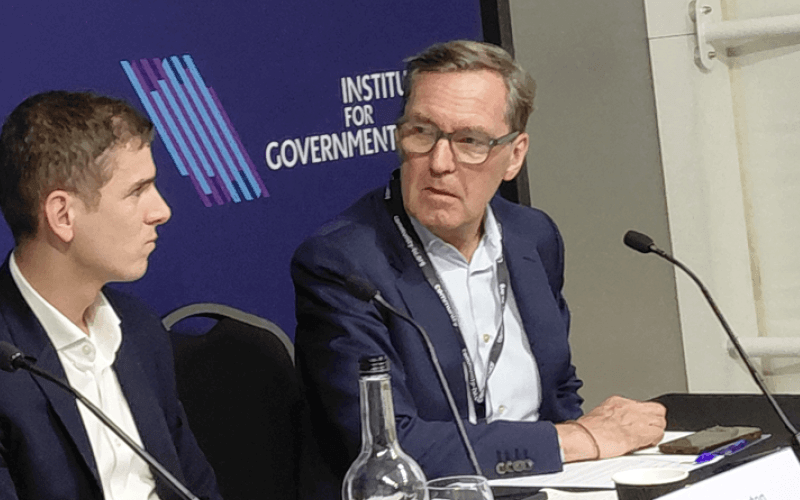
The report by former Labour cabinet minister Alan Milburn (pictured) seeks a “whole-system reset” that would spend far more on employment support but would pay for that by slashing benefits for disabled people under 25 and imposing stricter conditions and potential sanctions upon most of them, an approach he says would not be “pain-free”.
His report on young people who are not in education, employment or training says that spending on young people’s health and disability benefits should be cut in 2036-37 from a predicted £8.8 billion to just £5.2 billion, a reduction of 41 per cent.
Milburn’s plans could potentially see some young disabled people with high support needs losing out by nearly £1,300 a month in lost personal independence payment (PIP) and universal credit health element payments – with many more seeing cuts of hundreds of pounds a month – as they are asked to survive on a basic allowance of just £338.58 a month.
Milburn wants the government to build a separate system of support for young people to those 25 and over, but he also suggests – although this was outside the scope of his review – extending his ideas to all working-age disabled people.
He makes his views on social security expenditure clear when he says in his “welfare” chapter that “not all benefits spending is bad”.
Although the Milburn report is aimed at the whole of the UK, most of his recommendations would have to be agreed by devolved governments in Northern Ireland, Scotland and Wales before they could be introduced there.
This is because education, skills, health and local government are devolved in all three countries, while some benefits are devolved to Scotland, and social security is devolved in Northern Ireland.
His approach has provoked a horrified reaction from disabled people’s organisations, who have called its attack on young disabled people immoral, discriminatory and punishing, and have promised a fightback.
They have warned that the reforms would lead to increased poverty, destitution and homelessness, and “risk punishing an entire generation for structural and systemic barriers they did not create” (see separate story).
The government has already “strongly endorsed” the core principles of the report, although it has not approved Milburn’s detailed recommendations.
It will now wait for the final report of the Timms review into PIP – expected in the next fortnight – before setting out its “next steps on welfare reform”, with a white paper early next year and legislation later in 2027.
A centrepiece of Milburn’s report is his call to scrap the health element of universal credit for those under 25, which would be replaced with a new “severe and complex needs insurance”, which Milburn says would be “more generous” but would only be paid to the “small minority of young people with the most profound and long-term disabilities, where it is already clear they will likely never be able to work”.
He says that “as few people as possible” should qualify for this new benefit.
PIP would also be scrapped for those under 25 and replaced by a government-run – non-means-tested – “additional costs allowance” to cover disability-related extra costs, but it would only be paid if these costs were “well established, significant, and ongoing”.
All young claimants would be entitled to a new youth allowance that would be set at the standard rate of universal credit (currently just £338.58 a month).
In exchange, all young people would have a statutory entitlement to a place in education, training or work, and an entitlement to the “health, employment, functional and practical support” they need to take advantage of those opportunities.
This would be managed through a new Youth Opportunity Service (YOS), which would be delivered locally, suggesting that – if Milburn’s plans were implemented in full – it could lead to a substantial reduction in the power and reach of the Department for Work and Pensions (DWP).
There would also be a “health and disability fund”, run by each local YOS, that would pay for some extra costs, such as the one-off aids and equipment needed while a disabled young person was receiving support.
Staff at the local YOS would be given significant powers and responsibilities, which would include deciding what support should be offered to a young disabled person if their impairment “is complex or likely to be long term”, although responsibility for clinical care would remain with their GP.
It is not yet clear what qualifications or experience these YOS staff would be expected to possess.
Milburn says in his report that the “obligations” to be imposed on young people should be increased, through a new “duty to engage” which young people receiving benefits should have to agree to as part of a personalised “participation plan”.
A young person who “persistently refuses to engage” could potentially lose their youth allowance, with only a small minority of young disabled people – those with “profound and enduring disability” – not subject to this conditionality.
Milburn appears to be particularly targeting those with “anxiety, depression, ADHD and autism”, who he claims “routinely end up trapped in economic inactivity, when under the new system they would be both expected and enabled to be in work”.
Child disability living allowance would be extended from the age of 16 to 18, which Milburn says would provide “a two-year period to actively prepare young people for work and adult life”.
Milburn’s report makes sweeping recommendations across local government, health, education, skills, and social security.
This includes a suggestion that young people engaging with the Youth Opportunity Service should be guaranteed “practical health support” within three months, although he claims that “digital self-support will be enough for many young people”.
He also suggests there should be more segregated supported businesses, with the aim of “drawing on the heritage of Remploy” but modernising the principles behind it.
Milburn has also finally corrected his previous failure to make any reference to the vital safeguarding implications of his recommendations.
His interim report omitted any mention of the risks attached to pushing young disabled people with significant mental distress into employment support and the workplace, and he made no mention of the years of evidence linking DWP safeguarding failures and the actions of senior civil servants and ministers with the deaths of claimants*.
When challenged on this at Labour’s annual conference in September, Milburn shouted and swore at Disability News Service’s editor.
But he now appears to have acknowledged that he was wrong, and his final report includes a small section on safeguarding, although it is lacking in detail.
He says the obligation to participate only applies where that is possible and “should be suspended during serious acute illness or treatment, or crisis situations where participation is not realistic”.
This obligation should also not apply to the small minority of young disabled people receiving the new severe and complex needs insurance.
But he says that a young person who “persistently refuses to engage, after attempts to understand why and after reasonable routes to re-engagement have been tried” should lose their youth allowance.
Before that happens, there should be “multiple attempts to reengage and understand what has gone wrong”.
If there are any safeguarding concerns, he says, there should be discussions with “a home or neighbourhood contact and involvement of a trusted person with consent”, while sanctions “should be rare and reviewed regularly”.
*The Department: How a Violent Government Bureaucracy Killed Hundreds and Hid the Evidence, DNS editor John Pring’s book on the years of deaths linked to DWP’s actions and failings, is published by Pluto Press
 Disabled activists ready to fight back against ‘unsafe’ and ‘punishing’ cuts demanded by Milburn report
 Most Labour MPs appear to accept Milburn’s arguments for huge cuts to disabled young people’s benefits
 Burnham will evade questions from chair of work and pensions committee on Milburn and Timms reports