Thousands of disabled people across England and Wales could benefit from an activist’s “significant” high court victory over a discriminatory council that unlawfully charged him more than £1,100 in council tax after he was pushed onto universal credit.
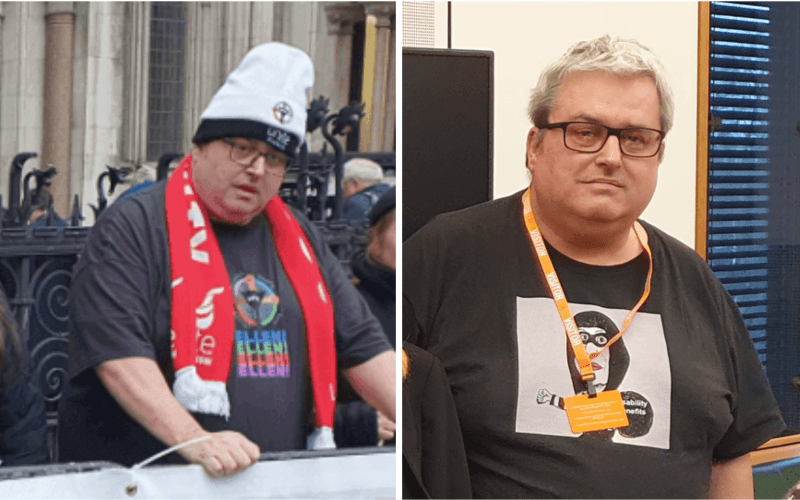
Andy Mitchell (pictured) took legal action against Somerset Council, after it suddenly demanded more than £1,100 a year in council tax when he migrated from employment and support allowance onto universal credit.
He had not previously had to pay any council tax, but the council treated as spare income the payments he received through the limited capability for work-related activity element of universal credit, and the transitional protection he received through the migration process.
He was left shocked and anxious, and concerned that the council’s demand would leave him unable to buy the independent living aids he needed, including an adjustable bed.
A high court judge has now accepted the arguments put forward by his legal team from solicitors Leigh Day, and ordered the council to reassess his council tax liability.
Judge Barry Clarke found that the rules of the local authority’s council tax reduction scheme were irrational and discriminated against disabled people, and that the council had breached its public sector equality duty.
Mitchell, who has campaigned for years against austerity measures brought in by successive governments, did not previously have to pay any council tax.
But after moving onto universal credit, he was told he would have to pay more than £1,100 a year, because of Somerset’s council tax reduction scheme, even though his circumstances had not changed.
The unexpected demand came despite disabled people being told by DWP that they would – at least initially – be no worse off on universal credit than on their previous benefits.
Although it is not the first such legal victory over the last 15 months, including an earlier victory by Leigh Day in September 2025, its lawyers believe the victory could have implications for similar council tax schemes operated by local authorities across England and Wales.
Leigh Day told Disability News Service (DNS) that it believed dozens of other councils could be operating similar schemes to Somerset’s.
Over the last year, it has been contacted by individuals from about 20 different local authorities with “similar concerns” about how their council calculates its council tax reduction award.
Mitchell said the judgment was “a huge relief”.
He told DNS that the judgement should have “a significant impact across the UK where councils operate similar schemes.
“This is what has kept me going during the periods where I have doubted myself.”
He was highly critical of the behaviour of his council, which ignored concerns raised by Citizens Advice and one of the councillors from the ruling Liberal Democrats, and said he was left “very upset” by the experience of claiming hardship support, with officials “making inappropriate observations”.
He said this week: “I have lost a lot of sleep over this; at times I have struggled and thought about giving up.
“Being turned down for hardship support days after my adopted father died was a real low point.
“Knowing how many other people are affected has kept me going when I have felt low.
“Knowing I had Disabled People Against Cuts supporting me made a big difference.”
He said earlier, in a statement: “When I was moved onto universal credit, I was told that my income would be protected and that I would not be worse off financially.
“Yet I suddenly found myself facing a council tax bill of more than £1,000 a year despite nothing changing about my health, circumstances or needs.
“I brought this case because I believed that could not be right, and I am delighted that the court has agreed.
“I know there are many other disabled benefit claimants who have experienced the same shock after moving onto universal credit and struggled to meet their council tax liability.
“I hope this judgment helps ensure that people are treated fairly and that no one is penalised simply because of the type of benefit they receive.
“This is money the council should never have demanded from thousands of disabled people across Somerset.”
Carolin Ott, part of Mitchell’s legal team at Leigh Day, said: “The issues raised by Andy’s case are not unique to Somerset.
“Other local authorities operate schemes that take a similar approach and we expect this judgment to have significant implications beyond Somerset.
“We are already hearing from people across the country who believe they have been adversely affected by similar council tax reduction rules.
“We would encourage anyone who thinks they may have been impacted to contact our team at [email protected].”
Somerset Council said it was considering an appeal.
In a statement, Cllr Liz Leyshon, the council’s lead member for finance, procurement and performance, said: “This case came forward following national changes to benefits which impacted on some local recipients of council tax reduction.
“Supporting residents in need always comes first, but this matter was complex and we believed we responded in the most appropriate way.
“However, we acknowledge the court’s judgement and recognise the impact of the changes on Mr Mitchell.
“Our immediate priority is to address Mr Mitchell’s case, ensure council tax reduction is being assessed lawfully, and establish whether any other residents may be affected.
“This ruling raises important questions about how national decisions have impacted on local council tax reduction schemes across the country, and we are considering whether there are any aspects of the judgement which a higher court should be asked to look at.
“We will provide a further update, including clear information for residents, once we have established the appropriate next steps.
“We remain committed to supporting residents who may need help with their council tax.
“We will review our draft council tax reduction scheme for 2027-28 in light of this judgement, with proposals to be considered by executive in early December.”
 Union report exposes how staffing crisis at DWP is harming ‘vulnerable’ claimants
 DWP forced to release report that includes ‘outrageous’ revelation about sub-standard assessment reports
 Tories announce seven ways they will attack disability benefits if they win the next election