Most backbench Labour MPs appear to have accepted the argument that there should be huge cuts to disabled young people’s benefits to pay for more employment support, with many disabled MPs also failing to speak out against them.
Two disabled Labour MPs – Nadia Whittome and Emma Lewell – did speak out in the Commons on Tuesday to raise concerns about the cuts.
The cuts would see spending on disability benefits for young people slashed by more than two-fifths, if the government accepts key recommendations from Alan Milburn’s review of young people who are not in education, employment or training (see separate story).
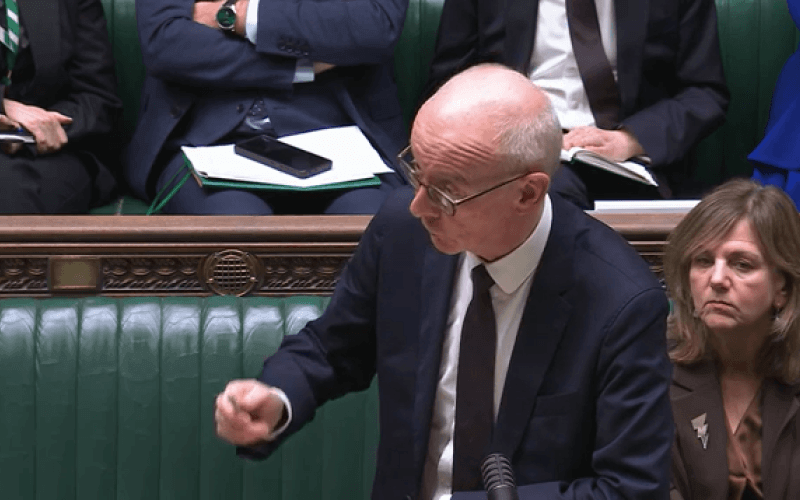
But more than 100 MPs spoke in the debate – most of them Labour backbenchers – and only a tiny handful raised the issue of benefit cuts, with nearly all of those who took part questioning work and pensions secretary Pat McFadden (pictured) instead about employment support.
The Commons debate suggests that disabled activists – who are already preparing for a lengthy fight against Milburn’s recommendations (see separate story) – will have an even harder battle convincing Labour backbenchers than they faced last year.
In the summer of 2025, the Labour government under Sir Keir Starmer was only able to bring in some of the cuts it had planned to disability benefits, following a backbench rebellion.
Tuesday’s debate showed that the current mood among Labour MPs appears to be much less resistant to proposals that would see billions of pounds in cuts to young people’s disability benefits in exchange for a guarantee of a place in education, training or work, and entitlement to the “health, employment, functional and practical support” they need to take advantage of those opportunities.
Most of the disabled MPs who spoke in the debate appeared determined to ignore Milburn’s suggested cuts to personal independence payment (PIP) and the health element of universal credit and focused instead on his employment support proposals.
But two did speak out.
Nadia Whittome told McFadden that she welcomed many of Milburn’s recommendations, but if they were funded by cutting disability benefits “the government will push young people into poverty, undermine their own aims, and repeat the very mistakes that they identify as having caused the crisis in the first place.
“Surely it is not the government’s view that disabled and sick people between the ages of 16 and 24 are less in need of PIP and the universal credit health element than anyone else.”
Another disabled Labour backbencher, Emma Lewell, asked McFadden if he understood “how anxious young disabled people are right now, because although the tone has changed, and that is welcome, we do not have all the details”.
She added: “Can he please confirm that the government’s plans will not leave these young people financially worse off?”
McFadden failed to do that in his reply, but instead said the government was offering a “new settlement” which “will not always be about money”, adding: “Ambition can be about support and help and helping young people to change their future.
“That is part of the new settlement that I am arguing for today.”
Other disabled MPs avoided talking about the cuts.
Steve Darling, who speaks for the Liberal Democrats on work and pensions, failed to mention the cuts, but he did call for the government to ensure its plans were co-designed with young people “to make sure that they are appropriately safeguarded”.
Labour’s Jen Craft welcomed McFadden’s statement on the Milburn report “and the opportunity it might give to our young people, who have been so badly let down in the past”, and spoke about employment opportunities for disabled young people.
She asked McFadden if “the jobs guarantee will apply to every young person, particularly to those with a learning disability”, but he failed to make that pledge in his answer.
Adam Dance, a neurodivergent Liberal Democrat MP, asked about funding for rural areas and support for neurodivergent young people and those with “special educational needs and disabilities”.
Disabled Labour backbencher Dr Marie Tidball, who opposed last year’s cuts, suggested that Milburn had not called for “crude cuts to benefits” – despite his report demanding cuts that could see some young disabled people with high support needs losing out by nearly £1,300 a month – and welcomed the government’s approach.
She supported Milburn’s call for a target to close the employment gap for young disabled people.
Neurodivergent Labour MP Josh Dean also ignored the call for cuts and asked instead what the government would do to “bring young people with us” and “engage young people, particularly those who are neurodivergent or living with a mental health condition, to shape the next steps following this review”.
Only a tiny number of Labour MPs spoke out about the proposed cuts to disability benefits.
One of them, Apsana Begum, told McFadden: “The review recommends paring back benefits for most young people, with only those with the most severe or complex conditions receiving additional support.”
Begum was the only MP to mention the catastrophic impact that the work capability assessment had on disabled people when it was introduced by the Labour government in the late 2000s and was taken on by the coalition government after 2010.
She said: “Work capability assessments have been riddled with administrative errors and failures in safeguarding, leading to hundreds of suicides, so how will the government ensure that any new eligibility criteria do not reproduce those harms for young disabled people in my constituency and elsewhere?”
McFadden did not attempt to answer that question, and instead told her: “There are several levels of support for people with sickness and disability issues recommended in the report, which is right and proper.
“The emphasis should be on participation and work, where possible, because we want to close the disability employment gap, which has been so stubborn for so many years.”
Labour’s Brian Leishman told McFadden there were “many excellent things in the Milburn review that are to be welcomed, but the idea that taking away from one group of people is going to get another group of people into work is not one of them”.
He said the review would “consign some people to destitution”, and added: “How can we think that withdrawing benefits from disabled people and putting them into poverty is acceptable?”
McFadden replied: “It is a life on benefits that leaves people in poverty.
“They are the same people, and what we want is to give them more opportunity so that they can have what everybody wants, which is the ability to earn, to have a job and to have the sense of pride, purpose and dignity that goes along with that.”
And John McDonnell, who has worked closely with the disabled people’s anti-cuts movement since 2010, asked McFadden: “It is a huge breakthrough to have a government who recognise the plight of young people in our country and will provide them with that extra support.
“However, receipt of the personal independence payment and universal credit health elements keeps 120,000 young people out of poverty.
“The question remains: if benefit cuts go ahead, why is it that young people are forced to pay for the new system? Why are we not taxing wealth?”
McFadden said he appreciated his concern but added: “The truth is that we are putting forward this new settlement because we believe that it is a better deal for young people.”
 Government looks set to accept Milburn’s call for 41 per cent cuts to young people’s disability benefits
 Burnham will evade questions from chair of work and pensions committee on Milburn and Timms reports
 Tories announce seven ways they will attack disability benefits if they win the next election